
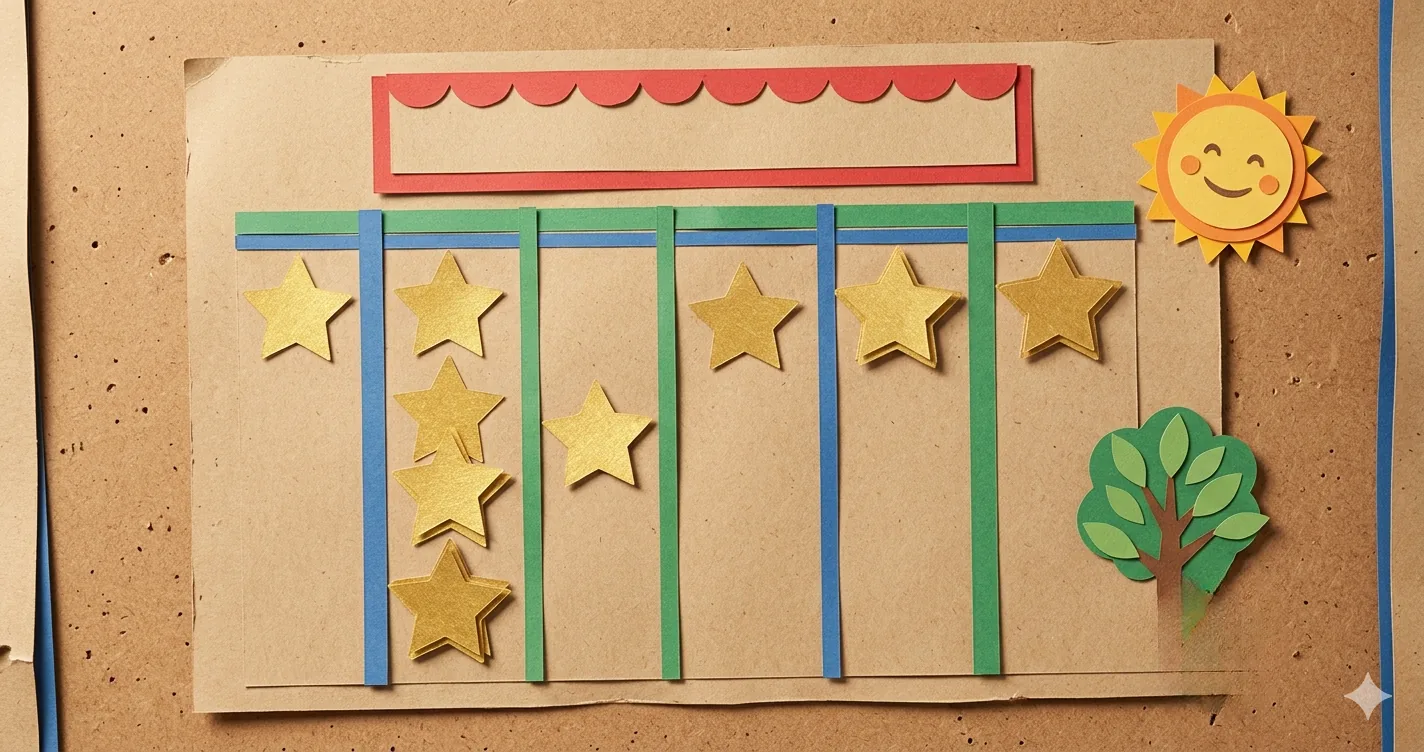
You bought the stickers. You drew the grid. Your kid’s sticker chart was thrilling for about four days. By the end of week two, it was buried under school papers on the counter, and nobody remembered what the reward was supposed to be.
Sound familiar? You are not alone. The sticker chart is one of the most widely recommended parenting tools in existence — pediatricians suggest them, teachers use them, parenting books are full of them. But most sticker charts for kids fail within three weeks. Not because the concept is wrong, but because the setup is wrong.
This guide covers how to build a reward sticker chart that actually works: the psychology behind it, the setup that prevents early burnout, age-specific adjustments, a free sticker chart printable, the five mistakes that kill most charts, and when to move beyond stickers entirely.
How a Sticker Chart Works (The Psychology)
This system is a form of positive reinforcement — one of the most well-studied concepts in behavioral psychology. The idea is simple: when a child performs a desired behavior, they receive an immediate, visible reward (a sticker). After accumulating enough stickers, they earn a larger reward. The visual tracker makes abstract progress concrete.
Why visual tracking matters for kids
Children, especially those under age 8, struggle with delayed gratification. Telling a 4-year-old “if you’re good all week, we’ll go to the park on Saturday” is almost meaningless to them. A week is an eternity. But a row of stickers that fills up one space at a time? That is tangible. They can count the spaces. They can see the finish line.
This is why kids sticker charts work when verbal promises do not. The system externalizes progress. It takes an abstract concept (“being good”) and turns it into something a child can literally point to.
The reinforcement loop
Effective charts create a three-step loop:
- Cue — the child sees the chart (or is reminded of the target behavior)
- Behavior — they complete the task (brushing teeth, putting away toys, finishing homework)
- Reward — they place a sticker on the chart and see visible progress
The sticker itself is not the real motivator. The act of placing it — the ritual, the parental acknowledgment, the visual progress — creates a dopamine hit that strengthens the behavior-reward connection. Over time, the behavior becomes habitual, and the chart is no longer needed.
That last part is critical. A well-designed chart is meant to be temporary. It is scaffolding, not a permanent structure. If your child still needs it six months later for the same behavior, something in the setup needs to change.
How to Set Up a Sticker Chart That Lasts
Most charts fail not because children lose interest in stickers, but because the system was set up in a way that guaranteed failure. Here is how to avoid the common traps.
Step 1: Pick one or two behaviors — maximum
The number one reason sticker charts for kids die early is scope creep. Parents get excited and list five or six behaviors: brush teeth, make bed, be nice to sibling, do homework, clean room, eat vegetables. The child looks at the chart and feels overwhelmed before they start.
Pick one behavior to start with. Two at most. The behavior should be specific and observable. “Be good” is not a behavior. “Put your shoes in the shoe rack when you come home” is.
Step 2: Set the right sticker-to-reward ratio
This is where age matters enormously. A 3-year-old who needs 20 stickers before earning a reward will lose interest by sticker number 4. A 9-year-old who earns a reward after every single sticker will find the whole thing patronizing.
| Age | Stickers Per Reward | Time to Earn | Example |
|---|---|---|---|
| 3–4 | 3–5 | 1–2 days | 3 stickers = choose a bedtime story |
| 5–6 | 5–7 | 3–5 days | 6 stickers = extra park time |
| 7–9 | 7–10 | 1 week | 10 stickers = movie night pick |
| 10+ | 10–15 | 1–2 weeks | 15 stickers = friend sleepover |
Step 3: Choose rewards that are experiences, not things
The most sustainable rewards are experiences and privileges, not toys or treats. “Choose what we have for dinner Friday” costs nothing and feels special. “Pick the family movie” gives the child status without adding clutter. Earned screen time is another natural fit — see our earn screen time chart guide for how to connect the two systems.
Step 4: Let your child help build the chart
A chart your child helped create is a chart they feel ownership over. Let them pick the stickers, choose the colors, decide where it hangs. This is not just arts and crafts — it is buy-in. Children who co-create the system are measurably more likely to follow through.
Step 5: Place the chart where it is visible every day
Out of sight, out of mind. The fridge door, the bathroom mirror, or the front of their bedroom door are all good spots. The chart needs to be somewhere the child sees it at the moment the behavior is expected — not tucked inside a drawer.
Sticker Charts by Age (3–5, 6–9, 10+)
The core concept stays the same across ages, but the implementation needs to shift as children develop. What motivates a preschooler will bore a third-grader, and what works for a 7-year-old will feel childish to a 10-year-old.
Ages 3–5: Keep it simple, keep it daily
Preschoolers live in the present. Their working memory is limited, their concept of time is fuzzy, and their attention span is short. A sticker chart for kids in this age range should have:
- One behavior at a time (brushing teeth, getting dressed independently, using the potty)
- Daily rewards — 3 to 5 stickers earns something small that same day or the next
- Big, colorful stickers they enjoy placing themselves
- Immediate placement — the sticker goes on the chart the moment the behavior happens, not at bedtime
At this age, the physical act of placing the sticker is half the reward. Let them peel it, position it, and press it down. That sensory moment cements the connection between behavior and reward.
Ages 6–9: Add structure, add choice
School-age children can handle more complexity. A reward sticker chart for this age range might track two behaviors simultaneously and work on a weekly cycle. This is also the age where children start to care about fairness, so the system needs to feel earned rather than arbitrary.
- Two behaviors max (one routine-based, one social or academic)
- Weekly reward cycle — 7 to 10 stickers earns a weekend privilege
- Choice of reward — offer two or three options and let them pick when they reach the goal
- Bonus stickers for exceptional effort (but use sparingly to preserve their value)
This is the age where the system can naturally connect to a behavior chart system. The chart tracks the specific actions; the behavior chart provides the broader framework.
Ages 10+: Stickers start losing their magic
By age 10, most children are socially aware enough that a wall chart with cartoon stickers feels babyish. But the underlying principle — visible progress toward an earned reward — still works. The format just needs to evolve.
- Replace stickers with checkmarks or a tally system if the child resists stickers
- Shift to a point-based system where different tasks earn different values
- Let them track their own progress — self-monitoring builds responsibility
- Consider going digital — an app-based system feels more age-appropriate and does not require a chart on the wall
If your child is in this age bracket and the paper chart is not working anymore, that is not a failure. It is a signal. The section on upgrading to digital covers what comes next.
Free Printable Sticker Chart Template
A good sticker chart template is simple enough that a 3-year-old understands it but structured enough that it actually tracks progress. The best templates share a few features:
What your template should include
- The behavior — written in clear, positive language (“I put my shoes away” rather than “Don’t leave shoes out”)
- A row of spaces — one per sticker, matching the reward threshold from the age chart above
- The reward — written or drawn at the end of the row so the child can see what they are working toward
- A date range — so the chart has a clear start and end, preventing it from lingering indefinitely
How to use it
Print the chart, fill in the behavior and reward together with your child, and hang it at their eye level. Each time they complete the behavior, they place a sticker in the next open space. When the row is full, they earn the reward. Start a new row or a new chart with the same or a new behavior.
For families tracking chores alongside behavior, a reward chart for kids can serve as a more comprehensive version of the sticker chart — same concept, broader scope.
5 Mistakes That Kill Sticker Charts
If your chart has stopped working, one of these five mistakes is almost certainly the cause.
Mistake 1: Tracking too many behaviors at once
A chart with six rows and thirty sticker spaces looks impressive. It also guarantees failure. When a child has to remember six different things to earn stickers, the cognitive load exceeds what most children under 10 can manage. They stop trying — not because they do not want the reward, but because the path to getting it feels impossible.
Fix: Strip it back to one behavior. Once that behavior is habitual (usually 3 to 4 weeks), add a second one.
Mistake 2: Setting the reward too far away
A 4-year-old who needs 20 stickers to earn a reward is being set up to fail. By sticker 8, they have forgotten what the reward was. By sticker 12, they have stopped caring. The chart dies silently.
Fix: Use the age-based ratio table above. When in doubt, make the threshold shorter rather than longer. Early wins build momentum.
Mistake 3: Removing stickers as punishment
This is the fastest way to destroy the system. Taking away a sticker a child earned feels deeply unfair — because it is. The chart is supposed to track positive progress. The moment stickers can be removed, the child stops seeing it as a path to reward and starts seeing it as a threat. Trust erodes, and the system collapses.
Fix: Once a sticker is earned, it stays. Period. If the child misbehaves, address it through a separate conversation or consequence — not by undoing their progress.
Mistake 4: Forgetting to place stickers consistently
This one is on the parents, not the kids. Your child brushes their teeth without being asked, and you forget to add the sticker until the next morning. Or you are busy and skip two days. The message the child receives is: “This does not actually matter.”
Fix: Build sticker placement into your own routine. Right after the behavior, right on the chart. If you cannot do it in the moment, set a recurring alarm on your phone for the first two weeks.
Mistake 5: Never graduating from the chart
A chart that runs for six months tracking the same behavior has failed in a different way. The child is now brushing their teeth not because it is a habit, but because they want the sticker. The moment you remove the chart, the behavior stops.
Fix: After 3 to 4 weeks of consistent behavior, begin spacing out the stickers (every other day instead of daily). Then move to verbal praise only. If the behavior sticks without the chart, you are done. If it regresses, restart a shorter round.
When to Upgrade From Stickers to Digital
There comes a point in every chart’s life where the system stops working. The child is older. The stickers feel childish. The chart falls off the fridge and nobody puts it back. This is not failure — it is graduation.
Signs the sticker chart has run its course
- Your child is embarrassed by the chart (common around ages 8–10)
- You are tracking more behaviors than a paper chart can handle
- The chart keeps getting lost, covered, or forgotten
- Multiple children in the house need different charts and the tracking becomes a part-time job
- The rewards need to be more varied than a single chart can represent
What digital systems do better
A digital reward system takes everything that works about the physical version and removes the friction. Progress is tracked automatically. Rewards are visible on the child’s own device. Parents do not have to remember to place stickers — the app handles the reinforcement loop. And for children who have outgrown physical stickers, a digital points system feels more grown-up while using the exact same psychology.
The transition also opens up new possibilities. A paper sticker chart cannot easily connect chore completion to screen time privileges. But a digital system can. Finish your reading — earn 15 minutes of tablet time. Complete a focus session — unlock a game. The same earn-based structure that made the sticker chart work, just adapted for how your family actually operates now.
How to transition smoothly
- Frame it as an upgrade, not a loss. “You’ve outgrown stickers. Let’s try something more like what older kids use.”
- Keep the same behaviors for the first week so the change feels familiar.
- Let them explore the new system — the novelty of a digital tool provides its own motivation boost.
- Phase out the paper chart rather than removing it overnight. Leave it on the fridge but stop using it once the digital system is running.
The goal was never the stickers. The goal was building habits. When the tool that builds those habits needs to evolve, let it.