
Your child stares at a math problem for ten seconds, drops the pencil, and says, “I can’t do this. I’m just not a math person.” They are seven. And somehow, they have already decided that their ability is fixed — a ceiling they cannot push past. If that scene sounds familiar, you are not alone. It is one of the most common moments parents describe when they search for growth mindset activities.
The good news is that mindset is not permanent. Children can learn to see struggle as a signal of growth rather than proof of limitation. But it does not happen through motivational posters or a single pep talk. It happens through specific language, repeated experiences, and a family culture that treats mistakes as data. This guide gives you 15 practical growth mindset activities for kids across three age groups, the language shifts that make the biggest difference, and a framework for weaving a growth mindset into everyday life.
What Is Growth Mindset (And Why Does It Matter for Kids)?
The concept comes from psychologist Carol Dweck’s research at Stanford. In her framework, a fixed mindset is the belief that intelligence, talent, and ability are innate traits — you either have them or you do not. A growth mindset is the belief that these qualities can be developed through effort, strategy, and learning from mistakes.
This distinction matters enormously for children because it shapes how they respond to difficulty. A child with a fixed mindset interprets struggle as evidence that they lack ability. A child with a growth mindset interprets the same struggle as evidence that their brain is working hard and getting stronger.
The research behind it
Dweck’s studies found that when children are praised for being “smart,” they become less willing to take on challenging tasks — because failure would threaten their identity as a smart person. When they are praised for effort and strategy, they seek out harder challenges because difficulty is no longer a threat. It is the path forward.
This is not abstract theory. The downstream effects show up in measurable ways: children with a growth mindset earn higher grades over time, show more resilience after setbacks, and report lower anxiety around academic performance. The mindset itself becomes a foundation for executive function skills like persistence, planning, and flexible thinking.
Growth vs. fixed mindset in everyday moments
The difference between growth vs. fixed mindset kids is not about personality. It is about the internal narrative running in their head when things get hard:
- Fixed: “This is too hard. I must not be good at this.”
- Growth: “This is hard. I haven’t figured it out yet.”
- Fixed: “She got it right away. She’s just smarter than me.”
- Growth: “She practiced a lot. I can practice too.”
- Fixed: “I made a mistake. I’m dumb.”
- Growth: “I made a mistake. Now I know one way that doesn’t work.”
Your job as a parent is not to eliminate frustration. It is to change the story your child tells themselves about what frustration means.
The Language Shift: Words That Build (or Break) Growth Mindset
Before jumping into activities, you need to address the single most powerful tool you already have: your words. The language parents use in response to effort, failure, and success is the foundation of teaching growth mindset. Get the language right and every activity becomes more effective. Get it wrong and even the best exercises fall flat.
Fixed mindset phrases vs. growth mindset alternatives
| Fixed Mindset Phrase | Growth Mindset Alternative |
|---|---|
| “You’re so smart!” | “You worked really hard on that.” |
| “I can’t do this.” | “I can’t do this yet.” |
| “You’re a natural!” | “All that practice is really paying off.” |
| “This is too hard for you.” | “This is challenging. What part can we start with?” |
| “It’s okay, not everyone is good at math.” | “Math takes practice. Let’s figure out where you got stuck.” |
| “See? That was easy!” | “You made that look easy because you stuck with it.” |
| “Don’t worry about the mistakes.” | “What did you learn from that mistake?” |
| “Maybe this just isn’t your thing.” | “You haven’t found the right approach yet.” |
| “Great job, you got it right!” | “I noticed you tried three different strategies. Which one worked best?” |
| “Why can’t you just focus?” | “Focusing is a skill. Let’s try breaking this into smaller pieces.” |
The “yet” principle
The single most powerful word in the growth mindset vocabulary is “yet.” When your child says “I can’t ride a bike,” adding “yet” transforms a statement of identity into a statement of timeline. It implies progress is coming. It reframes the present moment as temporary, not permanent.
Start using “yet” consistently and you will notice your child picking it up on their own. It becomes contagious — but only if you model it authentically. That means using it about your own challenges too: “I haven’t figured out this recipe yet” or “I’m not great at parallel parking yet.”
Praise the process, not the person
This is the single most important shift. When you say “you’re so smart,” you are praising an innate trait the child cannot control. When you say “you worked really hard on that” or “I noticed you tried a different strategy when the first one didn’t work,” you are praising actions the child can repeat. Process praise teaches children that their behavior — not their DNA — is what leads to success.
5 Growth Mindset Activities for Young Kids (4–7)
For younger children, growth mindset examples for kids need to be concrete, physical, and fun. Abstract concepts like “your brain is growing” do not land at this age unless they are tied to experiences the child can see and feel.
1. The “Yet” wall
Get a large piece of poster board and divide it into two columns: “I can’t do this yet” and “I can do this now!” Your child writes or draws things they are still learning (tying shoes, writing the letter R, riding without training wheels). When they master something, they move it to the “I can do this now” side with a date. Over weeks and months, the “now” column fills up — creating visible, undeniable proof of growth.
2. The impossible puzzle challenge
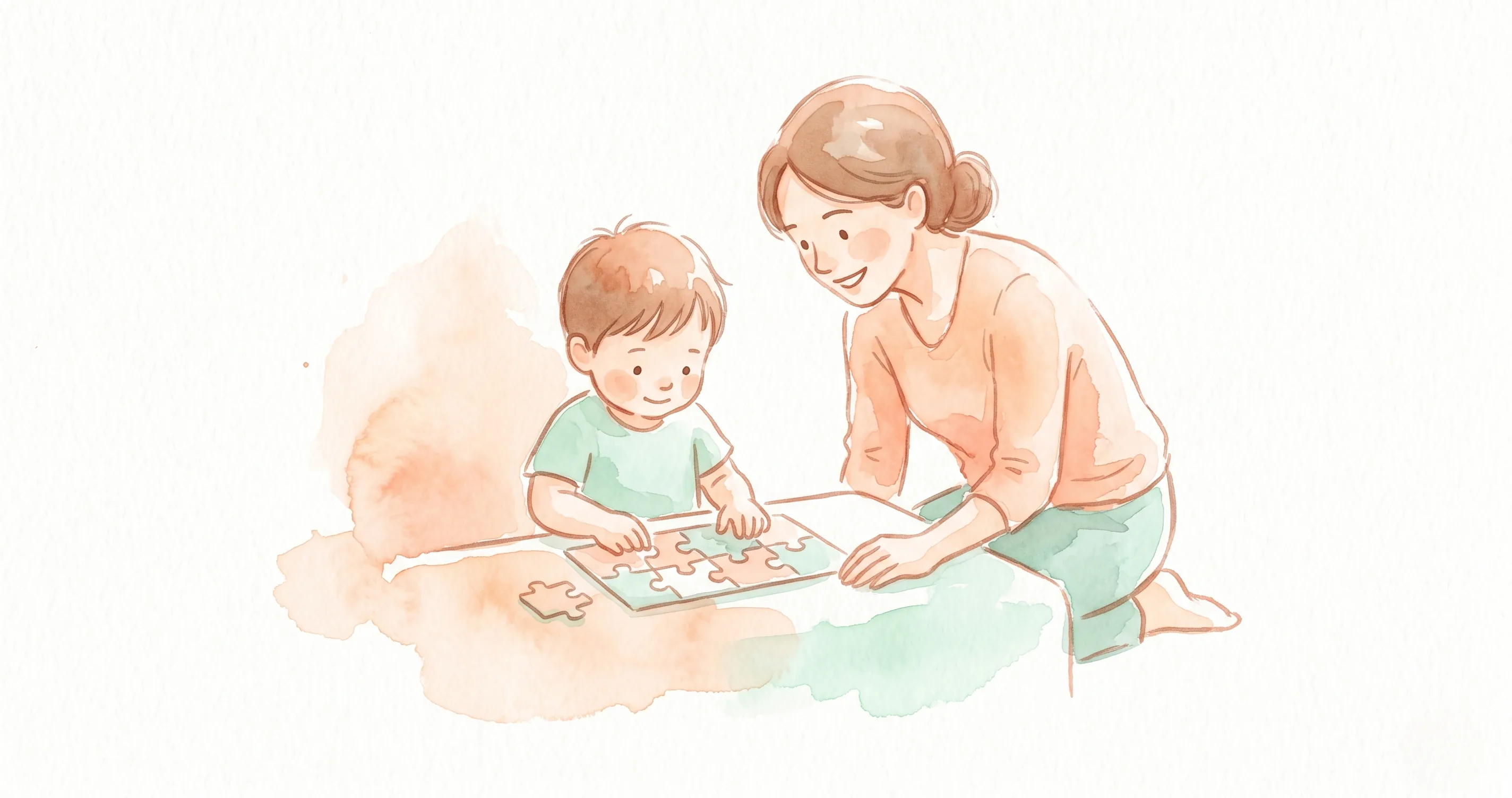
Choose a puzzle that is slightly above your child’s current level — not impossibly hard, but hard enough that they will not finish it in one sitting. Work on it together over several days. Each time you sit down, point out progress: “Look, yesterday we had 12 pieces done. Now we have 25.” The goal is not completing the puzzle. It is the experience of sustained effort paying off gradually.
3. “Famous failures” storytime
Young kids love stories. Tell them age-appropriate versions of famous people who failed before they succeeded: the author whose book was rejected 12 times before being published, the inventor who tested a thousand materials before finding one that worked. Keep them short, vivid, and focused on the moment the person wanted to quit — and what happened because they did not.
4. The cooking experiment
Pick a simple recipe and make it together. Pancakes are perfect for this. Deliberately let things go imperfectly — a pancake that is oddly shaped, batter that is too thick. Talk through what happened: “This one came out a little flat. What should we try differently with the next one?” Cooking is one of the best growth mindset activities because the iteration cycle is immediate and tangible. You adjust, you try again, you eat the results.
5. The brain stretch exercise
Teach your child that their brain is like a muscle. When something feels hard, their brain is “stretching” — getting stronger. Make a physical gesture together (stretching arms wide) that they can do whenever they hit a hard moment. This gives them a concrete action to take instead of shutting down. Over time, the gesture becomes a cue: difficulty means growth.
5 Growth Mindset Activities for Older Kids (8–12)
At this age, children can handle more abstract thinking and are developing a stronger sense of self. Growth mindset for kids in this range works best when it connects to their real-world interests — school performance, sports, social dynamics, and hobbies they care about.
1. The “yet” journal
Give your child a notebook dedicated to growth. Each week, they write down one thing they cannot do yet, one strategy they plan to try, and (on the next page) what happened when they tried. After a month, they have four entries showing effort, strategy, and results. The journal becomes a personal record of their own resilience — evidence they can point to when the next hard moment arrives.
2. Skill breakdown mapping
When your child faces something overwhelming — a book report, learning a new instrument, starting a homework assignment — help them break the big skill into smaller subskills. Write each subskill on a sticky note and arrange them in order. As they master each one, they remove the note. This teaches two growth mindset principles at once: large goals are just collections of small steps, and visible progress fuels motivation.
3. The strategy swap
When your child is stuck, instead of saying “try harder,” ask: “What strategy are you using? What’s a different strategy you could try?” This reframes the problem from “I’m not good enough” to “this approach isn’t working.” Over time, children learn to distinguish between themselves and their strategies — a critical shift. The problem is never them. The problem is always the approach, and approaches can be changed.
4. Mistake of the week
At dinner once a week, every family member shares a mistake they made and what they learned from it. Start with yourself. When children see their parents openly discussing errors without shame, they learn that mistakes are normal, expected, and useful. This ritual normalizes failure at a deep level — not through lectures, but through lived experience.
5. The challenge ladder
Create a visual ladder with five rungs. The bottom rung is something your child finds easy. The top rung is something they currently think is impossible. Fill in the middle rungs together with progressively harder steps. As they climb each rung, they physically mark it off. The ladder makes growth visible and shows them that “impossible” is usually just “five steps away from where I am now.”
5 Growth Mindset Activities for Teens (13+)
Teenagers will reject anything that feels like a lesson. Teaching growth mindset to teens requires subtlety — the activities need to feel like conversations between equals, not exercises assigned by a parent.
1. The effort audit
Ask your teen to pick one area where they feel stuck — a subject, a sport, a social situation. Together, honestly audit how much deliberate effort they have actually put in versus how much time they have spent avoiding or going through the motions. This is not about blame. It is about awareness. Most teens discover that what they thought was “trying hard” was actually “hoping it would get easier.”
2. Rewrite the narrative
When your teen says something fixed-mindset (“I’m terrible at public speaking”), ask them to rewrite it as a growth statement. Not in a forced way — as a genuine exercise: “If you had to rewrite that sentence to be more accurate, what would you say?” Most land on something like “I haven’t had much practice speaking in front of groups.” The rewrite makes the limitation feel temporary rather than permanent.
3. Study someone else’s process
Teens respond to authenticity. Find interviews, documentaries, or behind-the-scenes content about people your teen admires — athletes, musicians, entrepreneurs, creators — that show the messy middle of their journey. Not the highlight reel. The struggle. The failures. The years of unglamorous work before the breakthrough. Let the content do the teaching.
4. The two-week skill sprint
Challenge your teen to learn something completely new in two weeks — juggling, a card trick, a basic song on guitar, a coding project. The skill does not matter. What matters is documenting the process: a short daily note or voice memo about how it felt, what worked, what did not. At the end, they have a two-week record of their own learning curve — proof that competence comes from practice, not talent.
5. Reflect on past growth
Ask your teen to think about something they are good at now that they once found difficult — reading, swimming, a video game, cooking. Walk through the timeline: when did they start? When was it hardest? When did it start to click? This is not a lecture. It is a structured reflection that helps them see their own growth pattern. Once they can see the pattern in their past, they can trust it in their future.
Turning Failures Into Growth Moments
Every parent knows they should “let kids fail.” But in practice, watching your child struggle is one of the hardest things in parenting. The instinct to rescue is powerful. The key is not eliminating that instinct — it is developing a framework for when to step in and when to step back.
The three-question framework
When your child fails at something — a test, a project, a social interaction, a game — resist the urge to fix it or minimize it. Instead, ask three questions:
- “What happened?” — Let them describe the situation without judgment. Just listen.
- “What did you learn?” — Help them extract information from the experience. Not a lesson about life — practical information about what works and what does not.
- “What would you try differently next time?” — This question is the bridge from failure to strategy. It transforms a dead-end moment into a planning moment.
These three questions work at every age. For a four-year-old whose block tower fell: “What happened? What did you learn about where to put the big blocks? What will you try next time?” For a twelve-year-old who bombed a test: “What happened? What did you learn about how you studied? What would you change?”
Model your own failures
Children learn more from what you do than what you say. When you burn dinner, miss a deadline, or forget something important, narrate your own process out loud: “I made a mistake. I was trying to do too many things at once. Next time I will set a timer.” This is not performing for your child — it is letting them see the growth mindset in real-time action.
The difference between rescuing and scaffolding
Rescuing means solving the problem for your child. Scaffolding means giving them just enough support to solve it themselves. A child struggling with a puzzle does not need you to place the piece. They need you to say, “What if you try turning it? What colors do you see on the edge?” Scaffolding preserves the child’s ownership of the accomplishment while preventing the kind of prolonged frustration that leads to giving up entirely.
Making Growth Mindset Part of Daily Life
Fifteen activities are useful, but the real transformation happens when growth mindset becomes the default operating system of your family — not something you “do” on Tuesday evenings, but something that shapes how everyone talks, thinks, and responds to difficulty.
Build it into routines
The most effective families integrate growth mindset into moments that already exist:
- Morning: “What’s one thing you want to get better at today?”
- After school: “What was the hardest thing you did today? How did you handle it?”
- Dinner: Each person shares a struggle and what they learned.
- Bedtime: “What’s something you couldn’t do at the start of the week that you can do now?”
None of these take more than two minutes. But accumulated over weeks and months, they reshape how your child thinks about difficulty, effort, and their own potential.
Connect it to real challenges
Growth mindset is most powerful when it is applied to things your child actually cares about. If they are struggling with a sport, use growth mindset language around practice. If screen time self-control is the challenge, frame it as a skill they are building — not a rule they are following. If homework is the battleground, help them see that getting started is the hardest part and everything after that is momentum.
Watch for fixed-mindset triggers
Every child has specific triggers that activate their fixed mindset — comparison with siblings, a particular subject, a skill they have been told they are “not good at.” Identify your child’s triggers and prepare your response in advance. When the trigger hits, you will not have time to think of the perfect growth mindset phrase. Having it ready makes the difference between reinforcing the fixed mindset and redirecting toward growth.
Be patient with yourself
Here is the part no growth mindset article tells you: you will get it wrong. You will say “you’re so smart” out of habit. You will rescue when you should scaffold. You will lose patience when your child gives up for the fifth time in a row. That is okay. Changing your own language patterns is itself a growth mindset challenge. Model the process. Correct yourself out loud: “Actually, what I meant to say was that you worked really hard on that.” Your child will learn as much from watching you adjust as they will from anything you teach them directly.
Growth mindset is not a destination. It is a practice — for your child and for you. The fifteen activities in this guide are starting points. The language table is a reference you can come back to. But the real work is the daily, imperfect, ongoing effort to change the story your family tells about what difficulty means. That story — more than any worksheet or exercise — is what will shape how your child faces every hard thing for the rest of their life.