
Your four-year-old just hit their sibling. Again. You have read that gentle parenting discipline is supposed to work, but in the heat of the moment it feels like nothing is working. You are not sure whether to validate feelings or set a consequence — and the internet seems to say both at the same time.
Here is the thing most articles leave out: gentle discipline is not about choosing between empathy and boundaries. It is about doing both, simultaneously, in a specific order. This guide breaks down exactly how that works — with gentle parenting discipline examples for hitting, tantrums, defiance, and the moments when you are running on zero patience.
What Is Gentle Parenting Discipline?
Gentle parenting boundaries are built on a simple principle: every feeling is valid, but not every behavior is acceptable. A child who is furious because their sibling took a toy has a right to that anger. They do not have a right to express it by hitting. Gentle discipline holds both truths at the same time.
This is different from traditional discipline in one critical way. Traditional discipline tends to suppress the feeling in order to stop the behavior: “Stop crying or I will give you something to cry about.” The behavior might stop temporarily, but the child learns that their emotions are dangerous or shameful — not how to manage them.
Gentle parenting discipline flips the order. You acknowledge the feeling first. Then you address the behavior. The child learns two things simultaneously: my emotions are safe to have, and there are limits on how I can express them.
The core beliefs behind gentle discipline
- Children are not giving you a hard time — they are having a hard time. Most misbehavior is a communication of unmet needs, not deliberate defiance.
- Connection before correction. A child who feels connected to you is more likely to cooperate than one who feels controlled by you.
- Discipline means “to teach,” not “to punish.” The goal is building internal self-regulation, not external compliance through fear.
- The relationship is the foundation. Boundaries delivered with warmth preserve the trust that makes long-term cooperation possible.
None of this means you let your child do whatever they want. It means you stop the behavior firmly while treating the child with the same respect you would want if you were overwhelmed and struggling.
The 3-Step Framework: Validate, Boundary, Alternative
Most gentle parenting advice sounds great in theory but falls apart in practice because it lacks a repeatable structure. The 3-step framework gives you something concrete to reach for when your brain is in fight-or-flight mode alongside your child.
Step 1: Validate the feeling
Before you address the behavior, name what your child is feeling. Get to their eye level. Use a calm, steady voice — even if your heart is pounding.
- “You are really angry right now.”
- “I can see you are frustrated because you wanted more time.”
- “That felt really unfair to you.”
This is not about agreeing with their interpretation of events. It is about letting them know their emotional experience is seen. When children feel heard, their nervous system begins to calm. When they feel dismissed, the escalation intensifies. Research on co-regulation shows that a calm adult presence physically helps a child’s brain downshift from fight-or-flight to problem-solving mode.
Step 2: Hold the boundary
Once you have validated, state the boundary clearly and without negotiation. Short. Simple. Firm.
- “I will not let you hit.”
- “The toys stay on the shelf at the store.”
- “Screen time is done for today.”
Notice what is absent: threats, bargaining, lengthy explanations. The boundary is stated as fact, not as a debate topic. Gentle parenting punishment is a contradiction in terms — the boundary itself is the discipline. You are not adding suffering on top of the limit. You are simply holding the line.
Step 3: Offer an alternative
This is where gentle discipline diverges most clearly from punitive approaches. Instead of leaving the child with only a “no,” you redirect their energy toward something acceptable.
- “You cannot hit your brother, but you can stomp your feet or squeeze this cushion.”
- “We are not buying that toy today, but you can add it to your birthday wish list.”
- “Screen time is over, and now you get to choose: drawing or building with blocks.”
The alternative serves two purposes. It gives the child agency in a moment where they feel powerless. And it teaches them that there are acceptable outlets for big feelings — which is the actual skill you are building.
Gentle Parenting Discipline for Hitting and Pushing
Hitting is the scenario that makes parents doubt gentle parenting the most. It feels urgent. It feels like it demands an immediate, forceful consequence. And it is the exact moment where the 3-step framework matters most.
Why kids hit (it is not what you think)
Children under 6 hit primarily because their prefrontal cortex — the brain region responsible for impulse control — is still developing. They are not choosing to be violent. They are overwhelmed by a feeling they do not yet have the neurological wiring to regulate. Understanding this does not excuse the behavior. It informs how you respond to it.
The positive discipline hitting response
Here is exactly what gentle parenting discipline for hitting looks like in practice:
- Physically intervene immediately. Gently hold their hands or move their body away from the other child. Safety first, always.
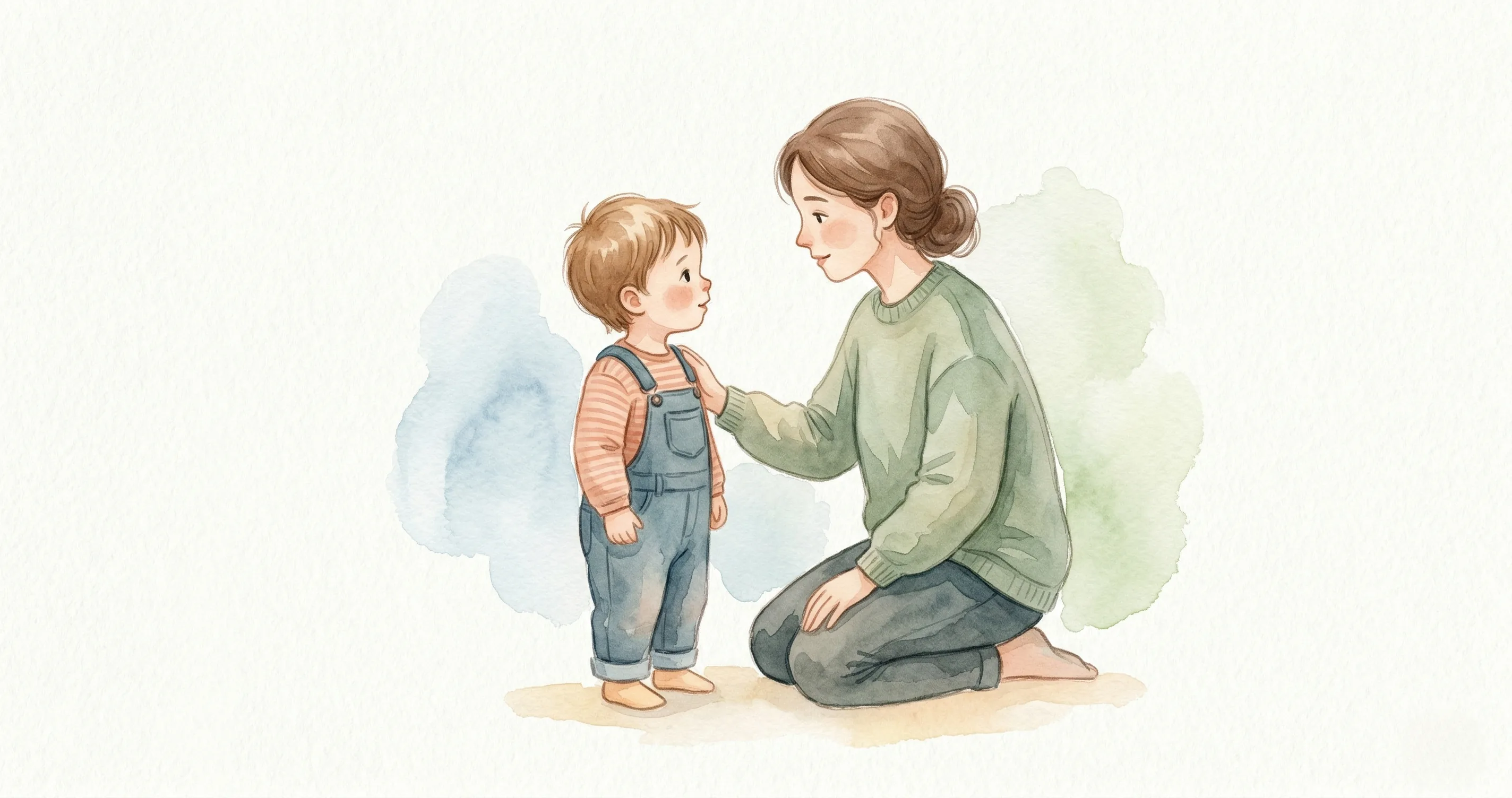
- Get to eye level. Kneel down so you are face-to-face. This is not a power move — it is a connection move.
- Validate. “You are so angry right now. I get it.”
- Boundary. “I will not let you hit. Hitting hurts bodies.”
- Alternative. “When you feel that angry, you can hit this pillow, stomp your feet, or come tell me.”
- Stay close. Do not walk away after setting the boundary. Your calm presence is part of the regulation process.
What about repeated hitting?
If your child hits multiple times in a row, the answer is the same framework on repeat. Each time, physically intervene, validate, hold the boundary, and offer the alternative. It will feel like a broken record. That is the point. Consistency over weeks and months is what rewires the neural pathways — not a single perfect response.
If the hitting happens in a specific context every time (a playdate, transitions, sibling conflict), that is data. It tells you where to add proactive support — coaching before the situation, staying closer during it, or adjusting the environment so the trigger is less intense.
Gentle Parenting Discipline for Tantrums and Defiance
Tantrums and defiance feel different from hitting, but the framework stays the same. The difference is in what the “alternative” step looks like.
Tantrums: when the feeling takes over completely
A tantrum is not a discipline problem. It is a nervous system overload. The child’s emotional brain has temporarily overwhelmed their thinking brain. No amount of reasoning, threatening, or explaining will work until the storm passes.
During a tantrum, your job is simpler (and harder) than you think:
- Keep them safe. Move objects they could hurt themselves on. Guide them to a soft surface if they are thrashing.
- Stay present. Sit nearby. You do not need to talk. Your physical presence says “I am here and you are safe.”
- Wait. The tantrum will peak and subside. Trying to teach during it is like trying to have a conversation during a thunderstorm.
- Reconnect after. When the calm comes, offer a hug, a drink of water, and simple words: “That was a really big feeling. I am right here.”
The teaching happens after the tantrum, not during it. Once your child is regulated again, you can briefly name what happened: “You were upset because screen time ended. It is okay to feel sad about that. Tomorrow you can earn more time.” This is where screen time tantrums and gentle discipline intersect — the boundary stays, but the relationship stays too.
Defiance: when the “no” is deliberate
Defiance looks different from tantrums because the child appears calm and in control. They look you in the eye and do the thing you just asked them not to do. It feels personal. It usually is not.
Defiance in young children is often a developmental need for autonomy — they are testing where the edges of their world are. In older children, it can signal that they feel unheard, over-controlled, or disconnected.
The gentle discipline approach to defiance:
- Resist the power struggle. If you escalate, they escalate. Nobody wins.
- Acknowledge the autonomy need. “I can see you really do not want to do that right now.”
- Hold the boundary with a choice. “Shoes need to go on before we leave. Do you want to put on the red ones or the blue ones?”
- Follow through calmly. If they refuse both options, say “I am going to help you put them on” and do it without anger.
The choice within the boundary is the key move. It gives the child a sense of control within the limit you have set. Most defiance dissolves when children feel they have some agency.
What Gentle Discipline Is NOT (Common Misconceptions)
The biggest obstacle to gentle parenting is not the method itself — it is the misunderstandings that surround it. Here is what gentle parenting discipline is not.
It is not permissive parenting
This is the most common misconception. Permissive parenting avoids conflict by dropping boundaries. Gentle parenting walks straight into the conflict and holds the boundary while the child is upset about it. If anything, gentle parenting boundaries are harder to maintain than punitive ones because you have to stay regulated yourself while your child is falling apart.
It is not letting children “get away with it”
The child who hits and hears “I will not let you hit, you can stomp your feet instead” has not gotten away with anything. They have been physically stopped, their behavior has been named as unacceptable, and they have been given a concrete alternative. The fact that they were not punished does not mean there was no consequence. The boundary is the consequence.
It is not always being calm and perfect
You will lose your temper. You will raise your voice. You will say something you regret. This does not mean gentle parenting has failed. What matters is what happens next: repair. Going back to your child and saying “I yelled earlier, and that was not okay. I was frustrated, but you did not deserve that. I am sorry” teaches them something powerful — that adults make mistakes too, and relationships can survive ruptures when someone takes responsibility.
It is not the absence of consequences
Natural and logical consequences are a core part of gentle discipline. A child who throws food loses the food. A child who refuses to wear a coat gets cold. A child who breaks a sibling’s toy helps repair or replace it. These are not punishments — they are the natural results of choices, experienced with parental support rather than parental satisfaction.
| Approach | Feelings | Boundaries | Long-Term Goal |
|---|---|---|---|
| Punitive | Suppressed or dismissed | Enforced through fear | Compliance |
| Permissive | Validated | Dropped or absent | Avoiding conflict |
| Gentle | Validated | Held firmly with empathy | Self-regulation |
When Gentle Parenting Feels Like It Is Not Working
You have been validating and boundary-setting for weeks and your child is still hitting, still tantruming, still refusing to put on shoes. It feels like gentle parenting is broken. Here is what is actually happening.
The timeline is longer than you expect
Punitive discipline produces fast visible results. A sharp “no” or a time-out stops the behavior immediately. But it does not teach the child what to do instead — it just suppresses the impulse through fear. Gentle discipline works on a longer timeline because it is building a skill (emotional regulation) rather than triggering a fear response.
Most families see meaningful shifts in behavior after 4 to 8 weeks of consistent gentle discipline. That is not 4 to 8 weeks of perfection — it is 4 to 8 weeks of mostly holding the framework, repairing when you do not, and trusting the process.
The behavior often gets worse before it gets better
This is called an “extinction burst.” When you stop responding to behavior in the expected way (punishment, yelling, time-outs), the child temporarily escalates to test whether the old rules still apply. If you were yelling before and now you are validating, they may push harder to see if the yelling comes back. This is not failure. It is progress. It means the child has noticed the change and is testing its permanence.
Check your own regulation first
Gentle discipline requires the parent to be regulated before the child can be. If you are running on no sleep, chronic stress, or unresolved anger, the framework will feel impossible — because it is impossible to co-regulate a child when your own nervous system is in survival mode.
This is not a guilt trip. It is a diagnostic question. If gentle parenting feels like it is not working, the first place to look is whether you have the emotional bandwidth to execute it. Sometimes the most important parenting decision is taking care of yourself so you can show up for your child.
Some situations need additional support
Gentle parenting is effective for the vast majority of childhood behavior. But some children have sensory processing differences, developmental delays, or trauma histories that require professional guidance in addition to a gentle approach. If the behavior is intensifying despite months of consistent effort, consulting a child psychologist or occupational therapist is not a failure of gentle parenting — it is an extension of it.
Building Consistency Without Burning Out
The hardest part of gentle parenting discipline is not knowing what to say. It is saying it for the 400th time when you are exhausted and your child is screaming in a grocery store. Sustainability is the real challenge.
Lower the bar for yourself
You do not need to nail all three steps perfectly every time. Some days you will validate and hold the boundary but forget to offer an alternative. Some days you will skip straight to the boundary because you are human and it is 6 PM and dinner is burning. The goal is not perfection. The goal is a general direction.
Aim for the framework 70% of the time. The other 30%? Repair. A genuine “I am sorry I snapped earlier” teaches resilience and emotional honesty. Your children do not need a flawless parent. They need a real one who keeps trying.
Automate the easy decisions
Decision fatigue is one of the biggest threats to consistent discipline. Every boundary you have to think about in real-time depletes your willpower. The solution is to move as many decisions as possible into systems that run without your active involvement.
For screen time specifically, this is where a tool like Timily can help. Its reward and redemption system lets children earn screen time through completed tasks — chores, reading, focus sessions — so the boundary is built into the system rather than enforced by you in the moment. When the balance runs out, the system holds the line. You get to stay the parent who says “I know that is frustrating — what do you want to do next?” That is positive discipline applied to one of the most common daily friction points.
Script your hardest moments
Identify the 3 to 5 situations where you lose your cool most often. Write a literal script for each one. Tape it to the fridge. Practice saying it when you are calm so it becomes automatic when you are not.
Example scripts:
- Hitting: “I will not let you hit. You are angry. You can hit the pillow.”
- Refusing to leave the park: “You are having so much fun. It is time to go. Do you want to walk or be carried?”
- Screaming at a sibling: “I hear how frustrated you are. We use words, not screaming. Tell me what happened.”
- Screen time ending: “Time is up. I know that is hard. What activity sounds good next?”
Find your repair ritual
Every family needs a repair ritual for after the hard moments. It might be a specific hug, a phrase (“Can we start over?”), or sitting together quietly for a minute. The repair is not optional. It is what keeps the relationship intact when the discipline gets messy — and it will get messy.
Remember the long game
Gentle parenting discipline is not optimized for today’s compliance. It is optimized for the teenager who comes to you when they are in trouble because they trust you. It is optimized for the adult who can regulate their own emotions because someone regulated with them first. The results are not always visible this week. But they are being built, one imperfect interaction at a time.