
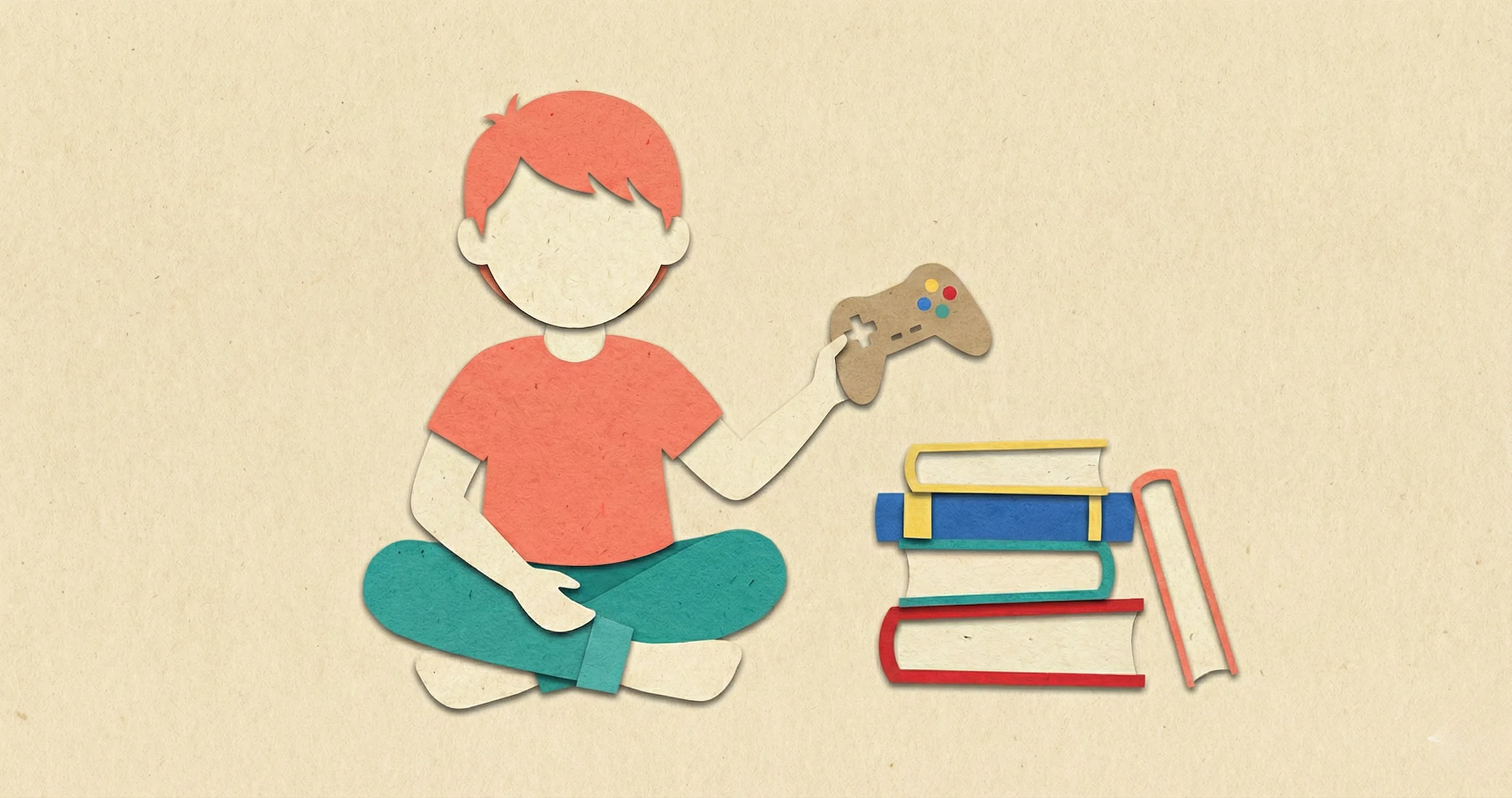
Every parent raising a child in the digital age eventually asks the same question: are video games good or bad for my kid? The answer from three decades of research is neither a reassuring yes nor an alarming no. It depends on what your child plays, how long they play, and whether anyone is helping them build boundaries around it.
This is not a listicle of scary statistics. It is a balanced, evidence-based look at the effects of video games on children — what the science actually supports, what the headlines exaggerate, and what you can do with this information as a parent. Whether your child plays Minecraft for two hours on weekends or marathons Fortnite every day after school, the research has clear implications for how to approach gaming at home.
What Does Research Actually Say About Video Games and Kids?
The short answer is that video games produce both measurable benefits and measurable risks. The research is not ambiguous on this point. A 2013 review published in American Psychologist by researchers at Radboud University concluded that video game play may provide learning, health, and social benefits. The same body of research also documents clear risks when gaming is unstructured, excessive, or age-inappropriate.
The problem is that most coverage of this research takes one side. Headlines either celebrate gaming as cognitive training or condemn it as digital addiction. Neither framing serves parents who need to make practical decisions about their children.
Here is what makes the research useful: the video games effects on kids are not random. They follow predictable patterns based on three variables — game type, play duration, and the presence or absence of parental engagement. Once you understand these variables, the question shifts from “are video games good or bad for kids” to “how do I set up gaming so that benefits outweigh risks?”
The following sections break down each side of the evidence, starting with the cognitive benefits that the most rigorous studies consistently find.
The Cognitive Benefits: Problem-Solving, Spatial Skills, and More
The evidence for cognitive benefits is substantial. A 2022 NIH study using ABCD data from nearly 2,000 children found that those who played video games for three or more hours daily performed better on cognitive tests involving impulse control and working memory than children who never played. Brain imaging showed increased activity in regions associated with attention and memory processing.
This is not an isolated finding. The research on cognitive benefits clusters around several specific skills.
Spatial reasoning and navigation
A 2013 meta-analysis cited by the APA found that playing action video games improved spatial navigation and 3D reasoning at rates comparable to formal academic training in these same skills. Strategy games like Minecraft and puzzle games like Portal require players to mentally rotate objects, plan paths through complex environments, and predict spatial outcomes.
Problem-solving and strategic thinking
The same APA review found that adolescents who played strategic games — role-playing games, real-time strategy titles — showed improvements in problem-solving ability and school grades the following year. Gaming teaches iterative problem-solving: try an approach, fail, adjust the strategy, try again. This feedback loop mirrors the scientific method.
Social connection and collaboration
An Oxford Internet Institute study published in 2020 found that video game play was positively correlated with well-being, particularly when players experienced competence and social connection through gameplay. Multiplayer games require coordination, negotiation, and real-time communication — skills that transfer to offline social settings when gaming stays within reasonable limits.
Creativity
The 2013 APA review also noted that children who played video games — including action games — demonstrated greater creativity than peers who used other forms of technology. Open-world games like Minecraft, where players design structures and invent systems, provide especially rich creative environments.
The Real Risks: From Sedentary Behavior to Social Isolation
The risks are equally well-documented. When parents search for the 10 negative effects of video games, they are not being paranoid — the research identifies real concerns that deserve honest attention.
Sedentary behavior and physical health
Extended gaming sessions displace physical activity. Children who game for three or more hours daily are significantly less likely to meet the WHO recommendation of 60 minutes of daily physical activity. Prolonged sitting is linked to increased obesity risk, poor posture, and repetitive strain injuries in the hands and wrists.
Sleep disruption
Gaming before bed is particularly disruptive. The combination of blue light exposure, emotional arousal, and stimulating content delays melatonin production and reduces sleep quality. For children and adolescents, whose brains require more sleep for healthy development, this is a meaningful risk. For more on how screens affect sleep, see our guide on screen time before bed.
Social withdrawal
While moderate multiplayer gaming can support social skills, excessive solo gaming displaces face-to-face interaction. Children who spend most of their free time gaming alone may miss developmental milestones in reading social cues, managing conflict, and building friendships through shared physical experiences.
Compulsive play patterns
Some children develop compulsive gaming behaviors that interfere with daily life. The WHO recognized “gaming disorder” as a diagnosable condition in 2018, characterized by impaired control over gaming, increasing priority given to gaming over other activities, and continuation despite negative consequences. If you are concerned your child may be showing signs of compulsive gaming, our guide on gaming addiction signs in kids covers the specific behavioral red flags and when to seek professional support.
Emotional dysregulation
Competitive games that rely on rapid reward cycles can overstimulate the dopamine system, making offline activities feel boring by comparison. Children may become irritable, anxious, or angry when gaming is interrupted — not because they are defiant, but because their reward system has been temporarily recalibrated by the intensity of the gaming experience.
The Violence Debate: What 30 Years of Studies Really Show
No topic in the video game research generates more heat and less clarity than violence. Parents who ask whether video games are good or bad for kids often have violent content at the top of their concerns. Here is what the meta-analyses actually conclude.
The APA's 2020 resolution on violent video games, building on their 2015 task force report, found “insufficient evidence to link violent video game use to criminal violence.” The research does find a small, statistically significant association between violent game exposure and increased aggressive thoughts and decreased empathy in laboratory settings. However, the effect sizes are small, and the link from laboratory aggression to real-world violence has not been reliably established.
A large-scale 2019 study from Oxford, led by Professor Andrew Przybylski, found no relationship between time spent playing violent video games and aggressive behavior in teenagers. The study used objective playtime data rather than self-reports, which made it more methodologically rigorous than many earlier studies.
What parents should take from this
Violent video games are unlikely to turn a well-adjusted child into a violent person. However, age ratings exist for a reason. Exposing young children to graphic violence, even in a game context, can cause anxiety, nightmares, and desensitization to violent imagery. The concern is not that your 8-year-old will become violent from playing a shooter game. The concern is that the content is emotionally inappropriate for their developmental stage.
Follow ESRB age ratings as a baseline. Play or watch new games before handing them to your child. And distinguish between cartoon-style action (appropriate for most ages) and realistic graphic violence (designed for mature audiences).
Good Games vs Harmful Games: A Framework for Parents
The question of whether video games affect child development depends heavily on which video games. Not all games carry the same benefits or risks. Treating “video games” as a single category is like asking whether “food” is healthy — it depends entirely on what is on the plate.
Here is a framework for evaluating any game your child wants to play.
Three questions to ask about any game
- Does the game require thinking or just reacting? Games that involve strategy, planning, building, or puzzle-solving (Minecraft, Zelda, Civilization) deliver stronger cognitive benefits than games built entirely on reflexive tapping or scrolling. Both can be entertaining, but they are not equal for development.
- Is the game social or isolating? Cooperative multiplayer games where your child communicates with teammates offer social skill practice. Solo games with no narrative or collaborative element provide less developmental value. Ask your child who they play with and what they talk about during gameplay.
- Does the game have natural stopping points? Games with levels, chapters, or mission-based structures make it easier for children to stop at a logical break. Games designed around infinite scrolling mechanics — endless runners, loot box cycles, gacha systems — are engineered to prevent stopping. This distinction matters more than most parents realize.
A quick game evaluation table
Use this as a starting point for conversations with your child about game selection:
- Higher developmental value: Minecraft (creative/survival mode), puzzle games, strategy titles, educational games, cooperative multiplayer games with communication
- Moderate value: Story-driven adventure games, sports simulations, well-designed competitive multiplayer with ranked progression
- Lower developmental value, higher risk: Games built around loot boxes, pay-to-win mechanics, chat-heavy social platforms marketed as games, or games rated above your child's age
The distinction between active and passive screen time applies directly here. A child building a redstone circuit in Minecraft is doing something cognitively different from a child passively watching YouTube videos of someone else playing Minecraft.
How Many Hours of Gaming Is Healthy for a Child?
This is the question every parent wants a specific number for. The research provides useful ranges, but the right answer depends on your child's age, temperament, and what else fills their day.
Age-by-age guidelines
- Under 2 years: No recreational screen time, including games. The WHO and AAP are aligned on this.
- Ages 2–5: Maximum 1 hour of total screen time per day. If gaming is part of that hour, prioritize educational and interactive content with a parent present.
- Ages 6–12: No universal hourly limit from the AAP, but most pediatric guidelines suggest capping recreational gaming at 1–2 hours on school days. Weekends can be slightly more flexible if gaming does not displace sleep, physical activity, or homework.
- Ages 13+: The focus shifts from strict hour limits to balance. Teenagers need increasing autonomy. Set expectations around what must happen first (schoolwork, exercise, family time) rather than imposing a hard clock.
For a more comprehensive breakdown by age, see our screen time recommendations by age guide.
The displacement test
Rather than fixating on a specific number, ask a more useful question: what is gaming displacing? If your child games for 90 minutes but still gets enough sleep, finishes homework, exercises, and spends time with family and friends, the duration is likely fine. If gaming displaces any of those activities, the amount is too much — regardless of whether it falls within published guidelines.
Building a Balanced Gaming Plan Without Banning Games
Banning video games rarely works. Children with total bans often binge-play at friends' houses, develop an outsized obsession with what they cannot have, and miss the genuine cognitive benefits that moderate gaming provides. A better approach is to build a structure that keeps gaming in its place.
Step 1: Make the conversation collaborative
Sit down with your child and discuss gaming expectations together. When children help create the rules, they are more likely to follow them. Talk about which games they want to play, when they want to play, and what they need to do before gaming starts.
Step 2: Use an earn-based approach
Instead of treating gaming as a default right that gets taken away for bad behavior, frame it as something that is earned through real-world activities. Homework, chores, physical activity, and family time come first. Gaming comes after. This approach teaches children that screen time is part of a balanced day, not the center of it.
Timily's Task and Chore System lets parents set specific offline activities that earn points. Those points can then be redeemed for gaming time through the Reward and Redemption System, giving kids a tangible connection between effort and entertainment.
Step 3: Choose games together
Rather than issuing blanket approvals or bans, review new games with your child. Check the ESRB rating, watch a few minutes of gameplay footage, and discuss why certain content may or may not be appropriate. This builds your child's media literacy and keeps the door open for honest conversations about what they encounter online.
Step 4: Build in natural breaks
Set up gaming sessions with clear start and stop times. Use a timer or system that provides warnings before the session ends. Abrupt cutoffs trigger stronger negative reactions than graduated transitions. If your child knows they have a five-minute warning before their session ends, the transition is significantly smoother.
For a more detailed guide on building sustainable gaming routines, see our guide on healthy gaming habits for kids.