
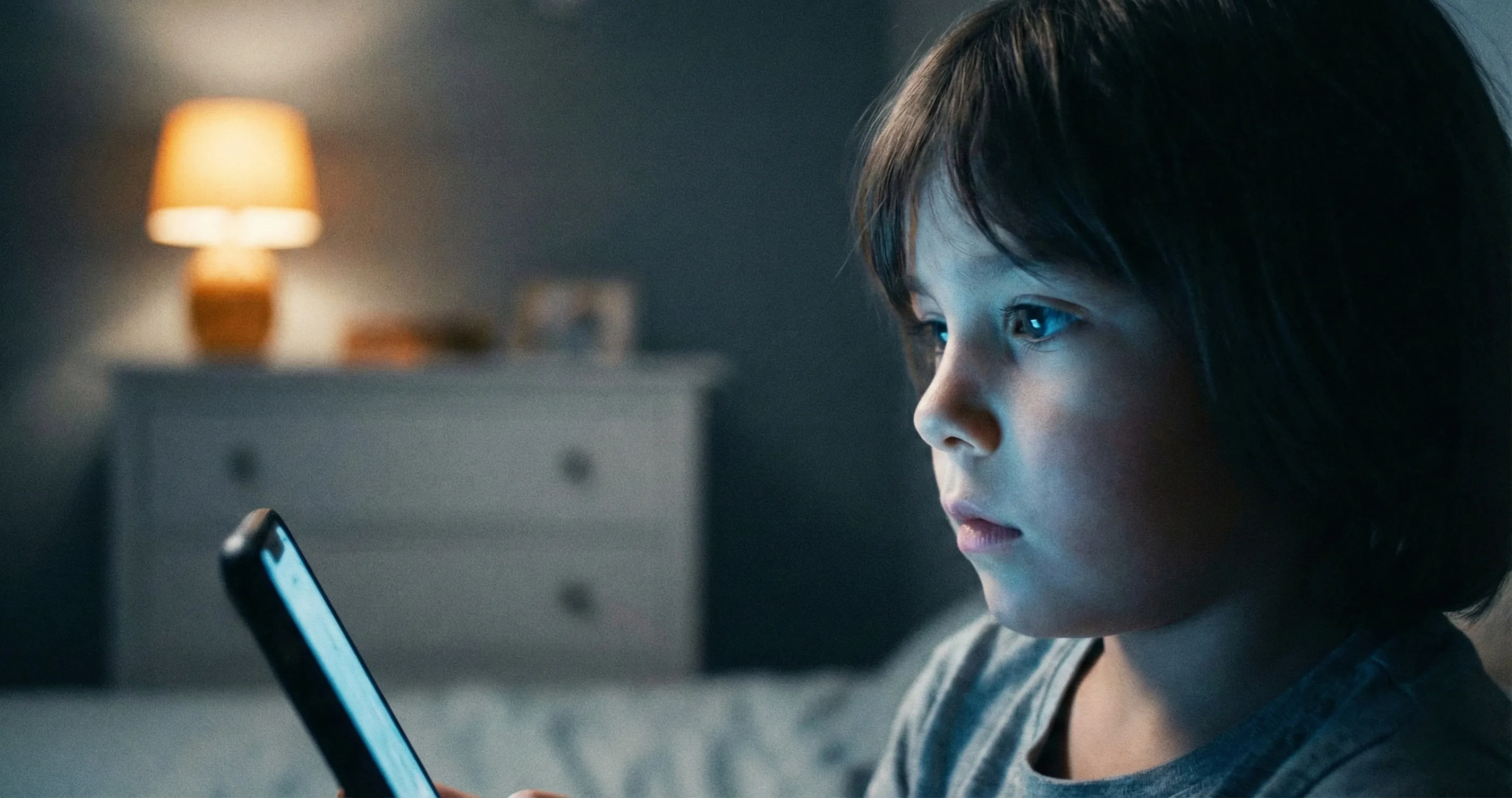
Your child watches a 15-second dance clip. Then a cooking hack. Then a dog in a costume. Then a life hack they will never try. Every swipe delivers a fresh hit of novelty, and the next video starts before the last one has fully registered. After an hour of this, you ask them to read a chapter of their book. They cannot get through the first page. This pattern has a name. Researchers and clinicians increasingly call it tiktok brain — a measurable shift in how the developing brain processes attention, patience, and reward after sustained exposure to short-form video.
This is not a moral panic about a social media app. It is a neuroscience conversation about what happens when a child’s brain is trained, thousands of times per session, to expect something new every few seconds. In this guide, we will walk through the research on tiktok brain rot, explain the specific neural mechanisms involved, help you identify the signs, and lay out an evidence-based recovery plan. For a broader look at how all forms of screen exposure affect neural development, see our guide on screen time and the developing brain.
What Is “TikTok Brain”? The Science Behind Short-Video Addiction
TikTok brain describes a cluster of cognitive changes observed in heavy short-form video users: shortened tiktok attention span, increased impulsivity, difficulty sustaining focus on tasks that lack constant novelty, and a rising threshold for what feels stimulating enough to hold attention. It is not a formal clinical diagnosis, but the underlying neuroscience is well established.
The mechanism centers on two systems in the brain working together: the dopamine-driven reward circuit and the attentional orienting response. Short-form videos are uniquely effective at hijacking both simultaneously.
The dopamine acceleration
Every time a child swipes to a new video, the brain releases a small burst of dopamine — not because the video is pleasurable, but because the brain anticipates that it might be. This anticipation-based dopamine firing is the same mechanism that makes slot machines compelling. TikTok’s algorithmic feed amplifies this effect because the content is personalized: the probability of the next video being interesting is genuinely high, which keeps the dopamine system firing at an elevated rate. For a deeper exploration of how dopamine circuits interact with screen use, see our guide on dopamine and screen time.
The orienting response on overdrive
The orienting response is an involuntary mechanism that directs attention toward novel stimuli — a survival adaptation that helped our ancestors notice threats. Short-form video triggers this response every time the scene changes, a new video loads, or an unexpected sound plays. In a typical TikTok session, this happens every 3–15 seconds. The brain never gets the chance to settle into sustained attention because it is constantly being pulled toward the next novel stimulus.
A 2023 study published in Nature Communications by Lorenz-Spreen et al. analyzed collective attention span across multiple datasets spanning decades and found that the average duration of public attention to any single topic has been shrinking — accelerating precisely as short-form content has become the dominant media format. While this study examined societal trends rather than individual children, it provides the macro context for what parents observe at home: a child whose brain has been calibrated for 15-second content intervals struggles with anything that asks for sustained engagement.
How 15-Second Videos Rewire Your Child’s Attention
The word “rewire” is used carefully here. The developing brain physically reorganizes itself based on repeated experience — this is neuroplasticity. When a child spends an hour watching short-form video, the brain is not passively absorbing entertainment. It is actively learning a pattern: expect novelty every few seconds, and if the current input becomes boring, something better is one swipe away.
The attention fragmentation cycle
Researcher Gloria Mark at the University of California, Irvine, has documented a steady decline in average attention duration on screens — from 150 seconds in 2004 to approximately 47 seconds by 2023. Her work suggests that digital environments train attentional habits, and those habits transfer to offline settings. A child who spends significant time in a 15-second content loop does not switch to a different attentional mode when they sit down for homework. The brain carries its trained patterns with it.
This is the core concern with does tiktok shorten attention span. The answer from the research is nuanced but clear: short-form video does not destroy attention capacity, but it recalibrates the brain’s expectations for stimulation frequency. A child whose brain expects novelty every 15 seconds will experience a 20-minute math assignment as agonizingly slow — not because they lack intelligence, but because their attentional system has been trained for a different tempo.
What happens in the prefrontal cortex
The prefrontal cortex — responsible for sustained attention, impulse control, and task persistence — continues developing into a person’s mid-twenties. During childhood and adolescence, this region is particularly susceptible to environmental training. Activities that require sustained focus strengthen prefrontal circuits. Activities that reward rapid switching between stimuli — like scrolling through short videos — exercise different circuits entirely.
A 2022 study in NeuroImage by Maza et al. examined adolescents’ habitual social media checking frequency and found that those who checked social media more frequently showed altered neural sensitivity in brain regions associated with reward anticipation and cognitive control. The prefrontal cortex showed the most pronounced changes, suggesting that habitual rapid-switching behavior physically shapes how these regions develop.
TikTok vs YouTube Shorts vs Reels: Are They All Equally Harmful?
Parents often ask is tiktok bad for your brain specifically, or whether competing platforms are any different. The honest answer: from a neuroscience perspective, the platform matters far less than the format.
TikTok, YouTube Shorts, Instagram Reels, and Snapchat Spotlight all share the design elements that drive attention fragmentation:
- Vertical full-screen format that eliminates visual distractions and creates an immersive attention tunnel
- Autoplay with infinite scroll that removes decision friction — the next video starts without any deliberate choice
- Algorithmic personalization that increases the hit rate of rewarding content, keeping dopamine anticipation high
- Ultra-short duration (15–60 seconds) that triggers the orienting response at the highest possible frequency
A 2024 meta-analysis in Computers in Human Behavior examined the social media attention span effects across platforms and found no significant difference in attentional outcomes between TikTok users and users of other short-form video platforms. The variable that predicted attention problems was total time spent in short-form video feeds, regardless of which app delivered the content.
This matters practically because parents who restrict TikTok but allow unlimited YouTube Shorts are not solving the problem. The brain responds to the format and the usage pattern, not the brand name on the app icon.
Signs Your Child Has Developed TikTok Brain
The following signs do not require a clinical assessment to identify. They are behavioral patterns that parents, teachers, and pediatricians consistently report in children with heavy short-form video habits.
Cognitive signs
- Inability to sit through content that used to hold their attention — a child who previously enjoyed 30-minute television episodes now finds them “boring” and reaches for their phone
- Difficulty completing tasks that require multi-step focus — homework, reading chapters, following recipes, building models
- Frequent task-switching during non-screen activities — starting homework, then getting up, then checking something, then sitting back down, unable to sustain one thread of work
- Expressed boredom with activities that are not fast-paced — “this is so boring” becomes the default response to anything requiring patience
Behavioral signs
- Increasing resistance to stopping — the emotional reaction when asked to put the phone down has intensified over time
- Phantom checking — reaching for the phone even when it is not present, or unlocking the screen without a specific purpose
- Reduced enjoyment of previously loved activities — hobbies, sports, art, or social outings feel less satisfying than they used to
- Sleep disruption — difficulty falling asleep, especially if short-form video was consumed within an hour of bedtime
If you notice three or more of these signs consistently over a two-week period, it suggests that short-form video is meaningfully affecting your child’s attentional patterns. This does not mean your child is addicted or damaged. It means their brain has adapted to a particular type of stimulation and needs help recalibrating.
Can You Reverse TikTok Brain? The Attention Recovery Timeline
The most important thing parents need to hear: tiktok brain is reversible. The same neuroplasticity that allows short-form video to shift attentional patterns also allows the brain to recover when those patterns change. The developing brain is remarkably adaptive in both directions.
What the research shows about recovery
A 2023 experimental study published in Nature Human Behaviour assigned participants to reduce their social media use for one week. Participants reported significant improvements in concentration, reduced compulsive phone checking, and better subjective wellbeing — changes that persisted even after the study ended. While this study included adults, the effects are expected to be even more pronounced in children, whose brains are more plastic.
Research on media reduction in school-age children shows a general timeline for recovery:
- Days 1–5: Increased boredom, irritability, and “phantom scrolling” urges. This is the dopamine recalibration phase and it is the hardest period for families. The brain is adjusting its reward threshold
- Week 1–2: Boredom begins shifting to curiosity. Children start re-engaging with activities they had abandoned — drawing, building, outdoor play. Sleep quality often improves noticeably within the first week
- Week 2–4: Sustained attention measurably improves. Teachers and parents report that the child can sit through longer tasks with less fidgeting and fewer interruptions. The “everything is boring” complaints decrease
- Week 4+: New attentional habits begin to consolidate. The brain has established a lower stimulation baseline, making non-screen activities feel genuinely rewarding again rather than punishing by comparison
Why gradual reduction outperforms cold turkey
An abrupt total ban on TikTok and similar apps often backfires — particularly with children over age 10 — because it triggers reactance (the psychological tendency to desire something more when it is forbidden) and removes the opportunity for the child to develop internal regulation skills. Research on behavioral interventions consistently shows that gradual, negotiated reduction produces more durable outcomes than abrupt restriction.
The ideal approach is a structured step-down: reduce daily short-form video time by 15–20 minutes per week over a four-week period, replacing the freed time with activities that exercise sustained attention. This gives the brain time to adjust without creating a deprivation response. For specific strategies on breaking compulsive scrolling patterns, see our guide on how to stop doomscrolling.
How to Talk to Your Kids About Short-Form Video
The conversation about short-form video works best when it is collaborative rather than confrontational. Children — especially preteens and teenagers — are more receptive to information that helps them understand their own experience than to lectures about why their favorite app is bad.
Lead with their experience, not your fear
Instead of: “TikTok is rotting your brain.”
Try: “Have you noticed that it is harder to focus on reading after you have been on TikTok for a while? That is actually a real thing that happens in the brain, and it is worth understanding why.”
This framing works because it validates the child’s lived experience rather than dismissing their interests. Most children over age 9 can recognize the post-scrolling fog if you help them name it. When they connect the cause (short-form video) with the effect (difficulty focusing) through their own observation, they are far more motivated to change than when the connection is imposed by a parent.
Teach the 15-second experiment
Give your child this self-test: after 30 minutes on TikTok, try reading a page of a book or working on a puzzle for five minutes. Then, on a different day, try the same reading or puzzle task without any short-form video beforehand. Ask them to notice the difference in how their brain feels. Most children find the contrast striking and remember it far longer than any statistic you could cite.
Avoid shaming the content
The problem is not that your child likes dance videos or comedy clips. The problem is the delivery mechanism — the autoplay, the infinite scroll, the 15-second format. When you critique the content itself, children hear an attack on their taste and identity. When you critique the format, children can agree with you without feeling judged.
Managing TikTok Without a Total Ban
A total ban on TikTok and similar apps is rarely the most effective strategy, particularly for children over age 10 who have already developed social connections around these platforms. The evidence-based alternative is structured management: keeping the app available but changing the conditions under which it is used.
Set defined session boundaries
The most disruptive pattern is open-ended scrolling — picking up the phone with no planned stop point and scrolling until something interrupts. Replace this with defined sessions: a specific start time, a specific duration (20–30 minutes), and a planned transition activity afterward. The transition activity matters because it gives the brain a structured off-ramp rather than an abrupt stop.
Timily’s Collaborative App Blocking supports exactly this approach. Rather than imposing limits silently, you and your child sit down together and agree on when TikTok is available and when it is not. The child participates in setting the boundaries, which dramatically increases compliance compared to unilateral restriction. When screen time feels negotiated rather than imposed, children are less likely to find workarounds and more likely to internalize the habit.
Replace short-form time with focus challenges
Reducing TikTok time only works long-term if the freed time is filled with something genuinely engaging. The mistake many parents make is removing the stimulating activity without offering an alternative — leaving the child in a dopamine deficit with nothing to fill it.
Timily’s Weekly Focus Challenges offer one structured solution: the whole family sets a shared goal to reduce short-form video time and earn points for sustained focus activities instead — reading, creative projects, physical activity, or homework completed without interruption. This reframes the reduction as a family project rather than a punishment targeted at the child. For specific platform settings you can configure today, see our guide on TikTok parental controls.
Protect the high-risk windows
Two usage windows carry the highest risk for attention damage:
- First 30 minutes after waking: Starting the day with short-form video sets the brain’s stimulation expectation high before the child has engaged in any sustained-attention task. Keep mornings screen-free or limited to non-short-form content
- Last hour before bed: Short-form video within 60 minutes of sleep disrupts both sleep onset and sleep quality. The high-frequency stimulation and blue light exposure combine to delay melatonin release and fragment sleep architecture
Protecting these two windows alone — even without reducing total daily TikTok time — can produce noticeable improvements in focus and mood within two weeks.