
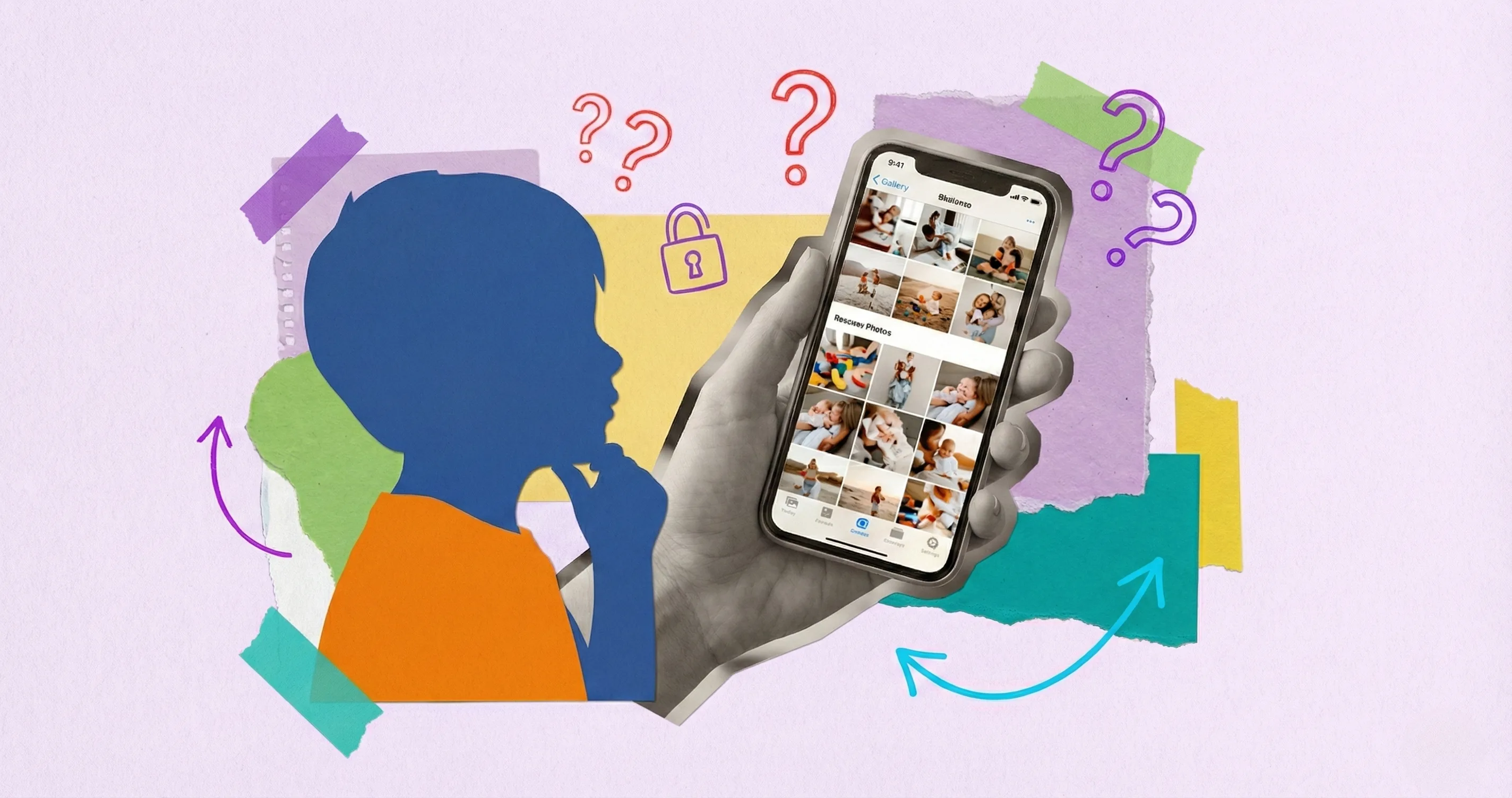
You snapped a perfect photo of your toddler covered in spaghetti sauce. Your seven-year-old just scored her first goal. Your teen gave a speech at school assembly and you could not be prouder. Of course you want to share these moments. That impulse is completely natural. But sharenting — the habit of parents posting kids on social media regularly — is building a digital life for your child that they never asked for and may not be able to undo.
This is not about shaming anyone who has ever posted a photo. Most of us have. Research suggests that over 75% of parents share information about their children online, and 80% of children have some kind of digital presence before the age of two. The question is not whether you have shared — it is whether you have paused to think about what that sharing means long-term.
This guide will help you understand the sharenting dangers that most articles gloss over, give you a practical self-audit to review what you have already shared, and show you how to keep sharing the moments that matter without putting your child at risk.
What Is Sharenting and Why Does It Matter Now?
What is sharenting? It is a blend of "sharing" and "parenting" — the practice of parents publicly posting photos, videos, stories, and personal details about their children on social media platforms. The term was coined around 2010, but the behavior has exploded since then. Today, a child may have over 1,000 photos posted online before they turn five.
What makes sharenting matter more in 2026 than it did five years ago comes down to three shifts:
- AI training data. Photos posted publicly can be scraped and used to train facial recognition models and generative AI systems. Your child's face could end up in datasets they never consented to.
- Permanence. Platforms change their privacy policies regularly. A photo you posted to "friends only" on Facebook in 2019 may not have the same protections today. Screenshots live forever.
- Kids are finding out. Children who were toddlers when Instagram launched are now teenagers. Many are discovering extensive online histories about themselves and they are not happy about it.
Sharenting is not new, but the stakes keep rising. Understanding the risks is the first step toward sharing responsibly.
The Real Risks of Sharing Your Kids Online
The sharenting dangers go beyond vague privacy concerns. Here are the specific risks that parents posting kids on social media should understand.
Digital Footprint Before Consent
Every photo, status update, and birthday announcement creates a digital footprint your child never agreed to. By the time they are old enough to Google themselves, the narrative has already been written — by you. This footprint can follow them into college admissions, job interviews, and relationships.
Identity Theft and Data Harvesting
A child's full name, date of birth, school name, and hometown — commonly included in proud-parent posts — are the building blocks of identity theft. Children are particularly vulnerable because fraudulent accounts opened in their names can go undetected for years, often not surfacing until they apply for their first credit card or student loan.
Location and Routine Exposure
Photos geotagged at your child's school, sports field, or home reveal patterns. A consistent posting schedule — "Every Tuesday at soccer practice!" — broadcasts routines to anyone watching. Even without geotags, background details like street signs, school uniforms, and house numbers can give away locations.
Image Misuse
This is the risk most parents do not want to think about, but it is real. Public photos of children can be downloaded, re-shared, or manipulated. UNICEF warns that parents should avoid posting images of children in any state of undress because bad actors may exploit them. Even innocent bath-time or beach photos can be taken out of context.
Emotional and Relational Damage
Perhaps the most underestimated risk is the impact on your relationship with your child. Oversharing kids on social media — especially embarrassing stories, tantrums, or awkward phases — can feel like a betrayal to a child who discovers those posts later. Research shows that teens whose parents shared extensively online report lower trust and more conflict at home.
How Sharenting Affects Kids at Every Age
The impact of sharenting is not one-size-fits-all. How it affects your child depends heavily on their developmental stage and growing sense of self.
Babies and Toddlers (0–3)
They cannot object, which makes it easy to share freely. But this is actually the period when the most damage gets done silently. Hundreds of photos accumulate. Full names, birth details, and milestones get posted. By the time your child is old enough to have an opinion, their digital footprint is already well established. The question is not whether sharing a baby photo is harmful in the moment — it is about what happens when those photos still exist in 15 years.
Preschool and Early Elementary (4–7)
Children at this age begin to understand that "the internet" exists but have little concept of what it means for their photo to be "online." This is actually the ideal window to begin simple consent conversations. Showing them the photo and asking, "Is it okay if I send this to Grandma?" or "Can I put this on my page?" plants the seed that their image belongs to them.
Tweens (8–12)
This is when things get complicated. Tweens are developing a strong sense of identity and social awareness. They care deeply about how peers perceive them. A parent who posts a cute-but-embarrassing story may not realize that their child's classmates can see it. At this age, why you shouldn't post your baby on social media becomes a conversation your child may actually start themselves — and you need to listen.
Teens (13+)
Teenagers who discover that their parent has been oversharing for years often react with anger, embarrassment, or withdrawal. Some teens have publicly confronted parents about their online sharing habits. At this stage, your child's consent is not a courtesy — it is a requirement. Respecting their boundaries around sharing is also one of the strongest ways to build trust as they start navigating their own social media presence.
A Sharenting Self-Audit: Five Questions Before You Post
Most of us did not start sharing with bad intentions. We shared because we were proud, because it connected us with family far away, because everyone else was doing it. The goal of a self-audit is not guilt — it is awareness. Ask yourself these five questions before every post involving your child.
1. Would my child be okay with this at age 16?
This is the front-page test adapted for parenting. Imagine your teenager scrolling through your feed and finding this post. Would they laugh with you, or would they feel exposed? If you are not sure, that is your answer.
2. Does this reveal identifiable information?
Check for school names on uniforms or buildings, street signs, house numbers, and routine patterns ("Every Wednesday morning drop-off!"). These details feel harmless individually but create a map when combined.
3. Am I sharing this for them or for me?
This one stings a little. Sometimes we share because we genuinely want to celebrate our child. But sometimes we share because we want the likes, the comments, the validation. Being honest about the motivation does not mean you are a bad parent. It means you are a thoughtful one.
4. Is this something they told me in confidence?
Your eight-year-old's fear of the dark, your teen's crush, your child's struggle with reading — these are things they trusted you with. Posting them, even in a well-meaning "parent solidarity" way, breaks that trust. Keep private moments private.
5. Have I asked my child?
If your child is old enough to have an opinion (and that starts younger than most parents think), ask. A simple "Can I share this?" gives them agency over their own image. If they say no, respect it — every time.
How to Share Safely Without Going Silent
The answer to sharenting dangers is not to never share anything again. Connection matters. Grandparents want to see milestones. Friends celebrate with you. The goal is to share intentionally, not impulsively.
Practical Steps for Safer Sharing
- Use private channels for most sharing. A family group chat, a shared photo album (like Apple Shared Albums or Google Photos), or a private family app keeps memories flowing without making them public. Save social media posts for the moments that truly warrant a wider audience.
- Avoid showing faces when possible. Photos from behind, hands holding something, feet in the sand — these capture the moment without making your child identifiable. Many parenting influencers have shifted to this approach.
- Strip metadata. Before posting, remove location data from photos. Most phones embed GPS coordinates in image files by default. Turn off location services for your camera app, or use a metadata-removal tool before uploading.
- Tighten privacy settings. Set your accounts to private. Review who can see your posts, who can tag you, and whether your content appears in search results. Do this on every platform you use, and re-check every few months since platforms update their defaults.
- Never share in real-time. Posting "At the park right now!" broadcasts your child's location to everyone who follows you. Wait until you have left. A one-hour delay eliminates the real-time tracking risk entirely.
- Skip personal details. Avoid mentioning your child's full name, school, teacher's name, age, or birth date in public posts. Use nicknames or initials if you want to reference them.
The Grandparent and Family Challenge
One of the trickiest parts of managing sharenting is when the sharenter is not you — it is a grandparent, aunt, or family friend. A direct, kind conversation usually works. Explain your family's approach, frame it as something you are doing for the child's safety, and offer alternatives. "We'd love for you to share through our family album instead of Facebook" gives them a way to stay connected without overriding your boundaries.
When Your Child Says "Stop Posting About Me"
If your child has asked you to stop sharing their photos or stories online, that moment matters more than you might realize. How you respond sets the tone for years of trust.
What to Do (and Not Do)
- Do not dismiss it. "It's just a photo" or "You're overreacting" shuts down a conversation your child was brave enough to start. Even if the request feels dramatic, the feeling behind it is real.
- Acknowledge their autonomy. "You're right — those are your photos and I should ask first" is a powerful response. It validates their sense of self and their right to privacy.
- Remove what they ask you to remove. Go through your posts together if they want. Let them decide what stays and what goes. This collaborative approach teaches them that they have agency over their own digital presence — a foundation of good digital citizenship.
- Set new ground rules together. Maybe certain photos are okay with permission. Maybe they are fine with back-of-head shots but not face-forward ones. Maybe they want veto power over any post. Let them help shape the policy.
This moment is not a failure. It is a sign that your child trusts you enough to set a boundary. Honor it.
It Starts With Us: Modeling the Online Behavior We Want
Here is the uncomfortable truth: we spend a lot of time managing our kids' screen time, monitoring their apps, and worrying about what they do online. But how often do we look at our own behavior? Technoference — the way our own phone habits interrupt family life — is one side of the coin. Sharenting is the other.
If we want our children to think carefully before they post, to protect their privacy, and to understand that the internet is permanent, we need to demonstrate those same values. Every time you ask "Should I post this?" out loud, every time you choose to keep a moment private, every time you respect your child's "no" — you are teaching them how to navigate the digital world responsibly.
Managing screen time is not just about how much time kids spend on devices. It is about the entire digital ecosystem your family operates in — and that includes what you, as the parent, put out into the world about your children. Tools like Timily's Collaborative App Blocking let you sit down with your child and make decisions about digital boundaries together. That same spirit of collaboration — making choices as a team rather than imposing rules from above — applies perfectly to sharenting. Your child's digital life is a shared responsibility, and the best policies are the ones you build together.