
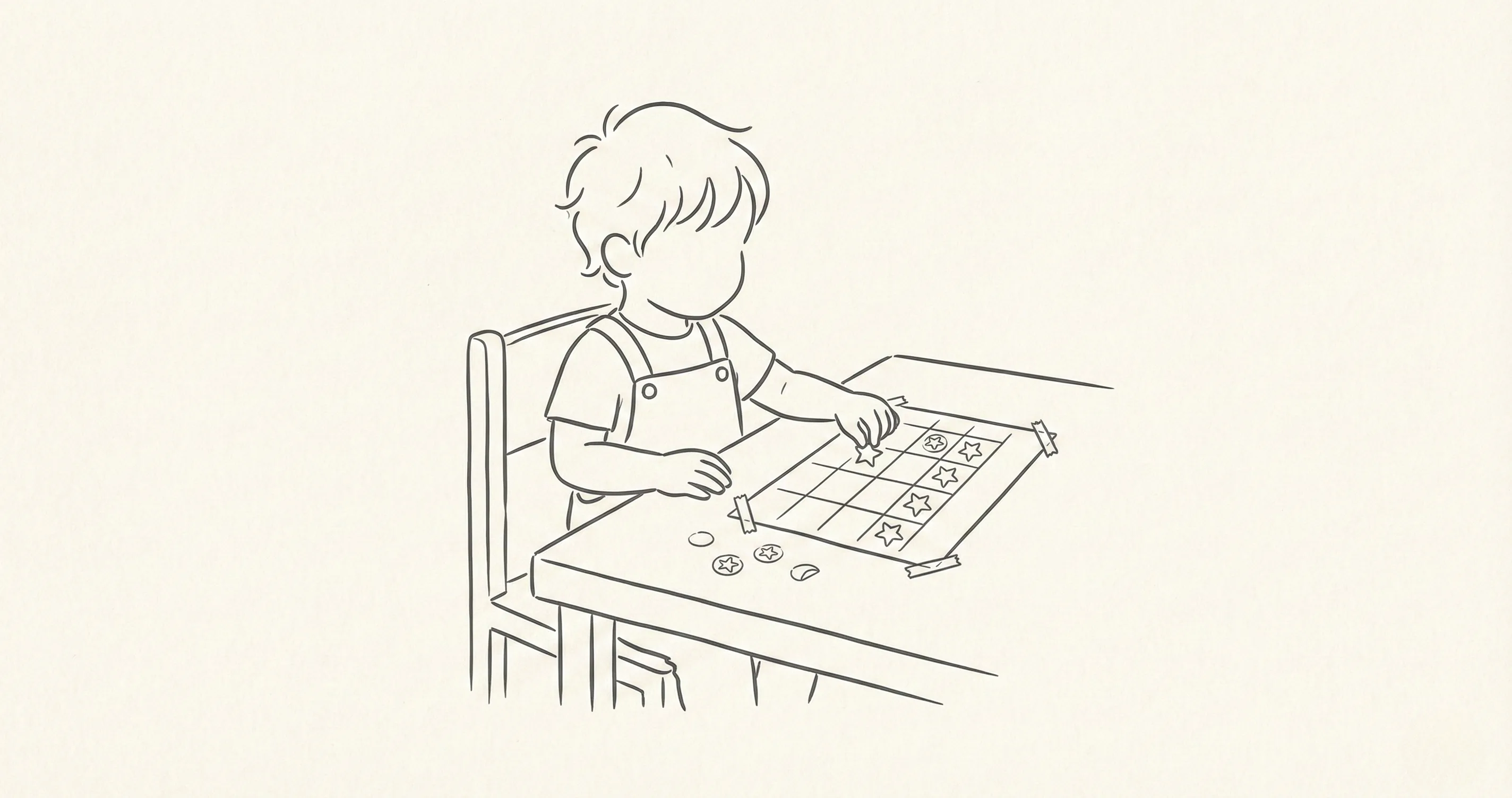
Most parents already use positive reinforcement without realizing it. When you praise a child for sharing a toy or let them pick a bedtime story after brushing their teeth, you are reinforcing a behavior by adding something the child values. Positive reinforcement parenting takes this intuition and makes it systematic — grounded in decades of behavioral science, adapted to the realities of raising children in a screen-saturated world.
The problem is not a lack of good intentions. It is a lack of precision. Parents who understand the mechanics behind reinforcement — what to reinforce, when to reinforce it, and how to evolve the system as children grow — get dramatically better results than those who rely on gut feeling alone. This guide breaks down the science of operant conditioning into the practical decisions parents face every day.
What Is Positive Reinforcement in Parenting?
Positive reinforcement is the process of increasing the likelihood of a behavior by following it with something the child finds rewarding. The word “positive” does not mean “good.” In behavioral psychology, it means “adding.” You add a consequence — praise, a privilege, a tangible reward — after a desired behavior, and the behavior becomes more likely to happen again.
B.F. Skinner, the psychologist who formalized this concept through operant conditioning parenting research, demonstrated that organisms learn most effectively when the consequences of their actions are predictable and immediate. For parents, this translates to a simple principle: if you want to see a behavior more often, make sure something good follows it consistently.
What positive reinforcement is not
Positive reinforcement is not permissive parenting. It does not mean ignoring misbehavior, eliminating boundaries, or rewarding everything a child does. It is a structured approach that requires clear expectations, consistent follow-through, and a deliberate choice about which behaviors to strengthen. Children raised with systematic positive reinforcement typically have more structure in their day, not less, because the system depends on clearly defined rules.
It is also not bribery. Bribery is reactive — offered in the moment to stop a tantrum or meltdown. Positive reinforcement is proactive — the rules are established before the situation arises. For a detailed look at this distinction, see our guide on how to motivate kids without bribing.
Why the AAP recommends positive discipline
The American Academy of Pediatrics published a policy statement on effective discipline recommending that parents use positive reinforcement as a primary strategy. The statement concluded that aversive strategies — including corporal punishment and yelling — are minimally effective in the short term and not effective in the long term. Positive reinforcement, by contrast, builds the cognitive, socioemotional, and executive functioning skills children need to regulate their own behavior over time.
The Four Types of Reinforcement Every Parent Should Know
Before choosing a reinforcement strategy, it helps to understand all four types of positive reinforcement and their counterparts. Operant conditioning describes four possible consequences for any behavior. Only the first one is positive reinforcement, but understanding the full set helps you recognize which approach you are actually using.
1. Positive reinforcement (adding something pleasant)
You add a reward after a desired behavior. The behavior increases.
- Example: Your child finishes homework without reminders. You praise the effort specifically: “You sat down and started right away — that took real discipline.”
- Example: Your child completes a chore and earns points toward a reward they chose.
This is the most effective approach for building new habits. It works because the child associates the behavior with something they value, and the association strengthens with repetition.
2. Negative reinforcement (removing something unpleasant)
You remove an unpleasant condition after a desired behavior. The behavior increases.
- Example: Your child has been asked to clean their room every day. Once they demonstrate they can keep it tidy for two weeks straight, you reduce the check-ins to once a week.
Negative reinforcement is often confused with punishment, but it is the opposite. The child is motivated to behave in order to escape or avoid something they find aversive. It is effective but can feel controlling if overused.
3. Positive punishment (adding something unpleasant)
You add an unpleasant consequence after an undesired behavior. The behavior decreases — temporarily.
- Example: Your child hits a sibling and receives a time-out.
Research consistently shows that positive punishment suppresses behavior while the authority figure is present, but the behavior often returns when the child is unsupervised. It teaches what not to do without teaching what to do instead.
4. Negative punishment (removing something pleasant)
You remove something the child values after an undesired behavior. The behavior decreases.
- Example: Your child breaks a screen time rule and loses tomorrow’s screen time.
This is the most common discipline strategy in modern parenting — taking away screen time, privileges, or playdates. It works in the short term but carries the same limitation as positive punishment: it focuses on stopping bad behavior rather than building good behavior.
Reinforcement Schedules: Timing That Shapes Behavior
Knowing what to reinforce is only half the equation. Knowing when to reinforce it — the reinforcement schedule — determines whether the behavior sticks. This is where most parents unknowingly undermine their own systems.
Continuous reinforcement (every time)
Reinforce the behavior every single time it occurs. This is the fastest way to establish a new behavior. If your child is learning to put their shoes away, praise or reward them every single time they do it for the first week or two.
The limitation: behaviors learned under continuous reinforcement extinguish quickly once the reinforcement stops. If you suddenly stop praising the shoe-putting-away, the child may stop doing it within days. Continuous reinforcement is a teaching tool, not a permanent system.
Intermittent reinforcement (sometimes)
Once the behavior is established, switch to reinforcing it unpredictably — sometimes after the third occurrence, sometimes after the seventh. Behavioral research shows that intermittent reinforcement produces the most durable, extinction-resistant behaviors. The child keeps performing the behavior because they know a reward might come, even though it does not come every time.
This is the same principle that makes slot machines compelling. The unpredictability of the reward makes the behavior persistent. For parents, this means that gradually reducing how often you praise a well-established behavior actually makes it stronger, not weaker.
How to transition between schedules
Positive reinforcement discipline that lasts follows a predictable arc:
- Week 1–2: Continuous reinforcement. Reward the target behavior every time it happens. Make the connection between behavior and reward crystal clear.
- Week 3–4: Partial reinforcement. Reward every second or third occurrence. Continue verbal acknowledgment every time, but save the tangible reward for some instances.
- Month 2+: Intermittent reinforcement. Reward unpredictably. The child has internalized the behavior and no longer needs constant external motivation.
Skipping this transition is one of the most common reasons reinforcement systems fail. Parents either stay on continuous reinforcement forever (making the child dependent on rewards) or jump straight to no reinforcement (causing the behavior to disappear).
Positive Reinforcement by Age: Preschoolers to Tweens
What counts as effective positive reinforcement for preschoolers does not work for a ten-year-old, and what motivates a tween would bore a four-year-old. The principles stay the same, but the delivery must match the child’s developmental stage.
Ages 2–4: Immediate, concrete, sensory
Toddlers and young preschoolers live in the present. The gap between behavior and reward must be under 30 seconds. Effective reinforcers at this age are tangible and sensory:
- A high-five or hug immediately after the behavior
- A sticker placed on a visible chart
- Specific verbal praise: “You put your cup in the sink all by yourself!”
- A short preferred activity (“You can pick one song to dance to”)
At this age, keep the system extremely simple. One behavior, one reward. Do not try to track multiple behaviors simultaneously.
Ages 5–7: Token systems and visual progress
Children in this range can understand cause-and-effect over a longer time horizon. This is the age when behavior reward charts become effective. The child earns tokens, stars, or points for completing specific tasks, and accumulates them toward a larger reward.
Positive reinforcement parenting examples for this age group:
- Earn 5 stars for making the bed each morning → choose a family movie on Friday
- Complete daily reading without reminders for one week → pick a new book at the library
- Finish focus time for homework → earn points toward unlocking a favorite app
The key at this age is making progress visible. Children between five and seven are motivated by watching themselves get closer to a goal. A chart on the fridge or a digital tracker that fills up as they earn points keeps the system front-of-mind.
Ages 8–12: Autonomy, choice, and natural consequences
Tweens are developing a sense of fairness and autonomy. They respond poorly to systems that feel infantilizing (sticker charts) and well to systems that give them real choices and increasing responsibility.
- Let the child choose from a menu of rewards rather than assigning one
- Involve them in setting the earning criteria (“What do you think is a fair amount of reading before screen time?”)
- Introduce delayed rewards that require planning: saving points for a larger goal over two weeks
- Begin shifting praise from “I’m proud of you” to “You should feel proud of yourself” — building internal attribution
At this age, the reinforcement system should start feeling less like a parental tool and more like a collaborative agreement. The child’s input on what earns what gives them ownership and reduces resistance.
5 Everyday Scenarios Where Positive Reinforcement Works Best
Theory matters, but parents need to see how it applies to the situations they face every day. Here are five common parenting scenarios with specific reinforcement strategies for each.
Scenario 1: Screen time management
Instead of taking screens away when rules are broken, build a system where screen time is earned through completed tasks and focus sessions. Children who earn their screen time view it as a reward for effort rather than something to sneak or argue about. For a detailed breakdown of how to apply positive reinforcement specifically to screen time, see our guide on positive reinforcement screen time strategies.
Scenario 2: Homework and studying
Reward the process, not the outcome. “Complete 25 minutes of focused study time” is a better target than “get an A on the test.” The child can control effort but cannot fully control results. Rewarding effort builds persistence. Rewarding outcomes builds anxiety.
Practical reinforcer: after a focused study session, the child earns a short break doing something they enjoy. Over time, the study-then-break rhythm becomes a habit that does not require external enforcement.
Scenario 3: Chores and household responsibilities
Attach specific, predictable rewards to specific chores. “Clean your room” is vague. “Put all clothes in the hamper and make your bed → earn 10 points” is actionable. The child knows exactly what is expected and exactly what they earn. This removes the negotiation, nagging, and ambiguity that make chores a daily battle.
Scenario 4: Social behavior and emotional regulation
Catch your child being kind, patient, or emotionally regulated — and name it specifically. “I noticed you waited your turn without complaining. That was respectful.” This kind of labeled praise is one of the most powerful reinforcers available, and it costs nothing. Research from the Incredible Years program shows that specific praise for positive social behavior reduces conduct problems more effectively than correcting negative behavior.
Scenario 5: Morning and bedtime routines
Routines are sequences of behaviors, and each step in the sequence can be reinforced. For younger children, completing each step of the morning routine (get dressed, eat breakfast, brush teeth, pack bag) earns a check mark, and a complete set earns a small privilege. For older children, completing the routine independently — without reminders — earns the reward. The independence itself becomes part of what is being reinforced.
Mistakes That Undermine Positive Reinforcement
Positive reinforcement is straightforward in theory but easy to sabotage in practice. These are the errors that cause well-intentioned systems to break down.
Reinforcing the wrong behavior
If a child whines for a cookie and you eventually give in, you have positively reinforced whining. The child learns that persistence (or escalation) produces the desired outcome. Before delivering any reward, ask: “What behavior am I actually reinforcing right now?” If the answer is “the tantrum that preceded the compliance,” you are reinforcing the tantrum.
Inconsistent delivery
If the child earns a reward on Monday but the parent forgets on Tuesday, the system loses credibility. Worse, inconsistency creates a variable-ratio schedule by accident — which actually makes the behavior harder to change later because the child learns that sometimes it pays off and sometimes it does not, keeping them trying. Consistency during the continuous phase is non-negotiable.
Rewards that are too easy or too hard to earn
If every small action earns a big reward, the child becomes dependent on external motivation for basic tasks. If the bar is so high the child rarely succeeds, the system becomes demotivating. Start with targets the child can achieve 80 percent of the time. Early success builds momentum. Raise the bar gradually.
Never fading the reinforcement
If you reinforce a behavior continuously for six months straight, you are not building a habit. You are building dependency. The goal of any reinforcement system is eventual independence — the child performs the behavior because it is part of who they are, not because a reward is waiting. Follow the continuous-to-intermittent transition described in the reinforcement schedules section above.
Using only tangible rewards
Points, stickers, and privileges are effective, but they should be paired with — and eventually replaced by — social reinforcers like specific praise, physical affection, and shared experiences. A system built entirely on tangible rewards teaches the child to ask “What do I get?” A system that balances tangible and social reinforcers teaches the child to value both the reward and the relationship.
What to Do When Reinforcement Seems to Stop Working
Every parent who implements a reinforcement system hits a wall. The child was doing well for weeks, and then suddenly the behavior deteriorates. Before you abandon the system, understand what is happening.
Extinction bursts are normal
When you change or reduce a reinforcement schedule, the child’s behavior often gets worse before it gets better. This is called an extinction burst. The child escalates the old behavior — testing whether increased effort will produce the reward they used to get. If you hold firm, the escalation is temporary. If you cave, you teach the child that escalation works, and the next burst will be more intense.
Reinforcer satiation
If the child has unlimited access to the reward, it stops being motivating. Screen time that is always available has no reinforcement value. Stickers that are given for breathing lose their appeal. The reinforcer must be somewhat scarce and genuinely valued by the child. When a reward loses its power, rotate the reward menu — not the system.
Developmental mismatch
A system designed for a five-year-old will not work for an eight-year-old. If the system suddenly stops working after months of success, the likely cause is that the child has outgrown it. Revisit the age-by-age guidelines above and adjust the rewards, expectations, and level of autonomy to match the child’s current stage.
When to use differential reinforcement
Sometimes the target behavior needs to be refined, not just maintained. Differential reinforcement means reinforcing a better version of the behavior while ignoring the adequate-but-not-great version. For example, if your child now does homework without reminders (the original goal), you might shift the reinforcement to doing homework without reminders and showing their work (the upgraded goal). This technique shapes behavior in increasingly specific directions without starting over.
Timily’s Task & Chore System uses this principle by letting parents adjust the earning criteria as children grow — what earned points last month can be updated to reflect new expectations, keeping the system aligned with the child’s development without scrapping the structure entirely.
Building a System That Grows With Your Child
Positive reinforcement parenting is not a technique you apply and forget. It is a framework that evolves as your child develops. The toddler who needed a sticker within seconds of putting away a toy becomes the tween who manages a weekly point budget and decides how to spend their earned privileges.
The science is unambiguous on this point. The AAP, clinical research on operant conditioning, and decades of applied behavior analysis all converge on the same conclusion: rewarding desired behavior produces more durable change than punishing undesired behavior. The challenge is not whether positive reinforcement works. It is building a system precise enough to keep working as your family’s needs change.
Start with one behavior. Reinforce it consistently. Fade the reinforcement as the behavior becomes habitual. Then add the next behavior. That sequence — repeated across years, adapted to each developmental stage — is the foundation of a home where children learn to manage their own behavior rather than waiting for someone else to manage it for them.
If screen time is the behavior you want to tackle first, Timily’s Reward & Redemption System lets children earn points through focus sessions and real-world tasks, then spend those points on screen time they choose. The reinforcement structure is built into the app so the system stays consistent even on busy days.