
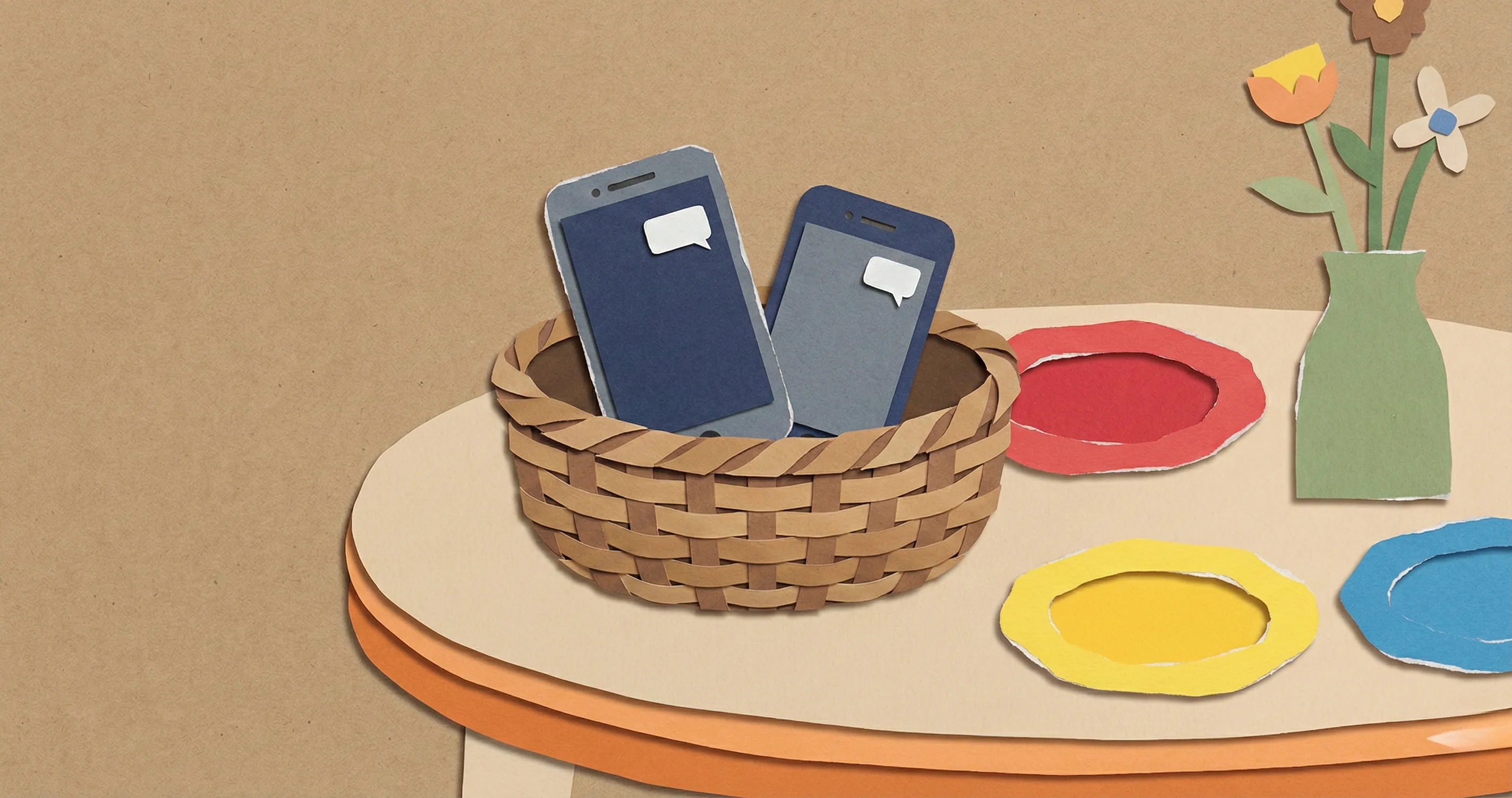
Dinner used to be the one time families actually talked. Now it is often the one time everyone sits in the same room while staring at separate screens. If you have tried enforcing a no phones at the dinner table rule and it fell apart within a week, you are not alone. The problem is rarely a lack of willpower — it is a lack of strategy. This guide gives you a concrete system for making phone-free mealtimes work, with age-specific tactics, tools you can use tonight, and a plan for getting the whole family on board.
Why No Phones at the Dinner Table Actually Matters
The case for no screen time during meals goes well beyond table manners. When a phone is present — even face-down on the table — it splits attention. Research on nonverbal communication suggests that up to 55% of what we communicate happens through body language, facial expressions, and tone of voice. A child scrolling under the table misses all of it.
Regular family meals without devices are linked to better outcomes for kids across nearly every measure that matters to parents: higher academic performance, lower rates of substance use, stronger vocabulary in younger children, and better emotional regulation. These benefits do not come from the food. They come from the conversation.
For younger kids especially, mealtime is where they learn how to take turns in conversation, read social cues, and share what happened during their day. When screens replace that practice, the skill gap compounds over time.
The Real Reason Everyone Reaches for Their Phone at Meals
Before setting rules, it helps to understand why no phones at dinner feels so hard to enforce. The answer is not that your family lacks discipline — it is that phones are engineered to be picked up.
Notifications create urgency
Every buzz or banner triggers a micro-impulse to check. Kids (and adults) are not being rude on purpose. Their brains are responding to a stimulus designed by teams of engineers to be irresistible. Silencing notifications before dinner removes the trigger entirely.
Boredom feels unbearable without a phone
If your child has spent the last two hours moving between TikTok, YouTube, and group chats, the sudden absence of stimulation at the dinner table feels jarring. That restless, fidgety energy is not defiance — it is a dopamine recalibration. Expect the first few phone-free meals to feel awkward. That is normal.
Parents model phone use without realizing it
Kids notice everything. If you check a work email "real quick" or scroll headlines while waiting for everyone to sit down, the message is clear: phones at the table are fine when it matters enough. Consistency from every family member is the single biggest predictor of whether a no-phone rule sticks. We will cover this in detail in the parents go first section below.
Phone-Free Mealtime Rules That Work (by Age)
A blanket "no electronics at the table" rule sounds simple, but enforcement looks very different for a 4-year-old than a 14-year-old. Here is how to adapt the approach.
Toddlers and preschoolers (ages 2-5)
At this age, the goal is prevention: keep devices out of the eating area entirely. If your toddler is used to watching a tablet during meals, the transition will involve some protesting. Replace the screen with something tactile — a small toy, a placemat with drawings to color, or a simple "what do you see on your plate?" game.
Do not negotiate with a 3-year-old about screen rules. Just remove the device before they sit down. Consistency here saves you years of battles later.
School-age kids (ages 6-10)
Kids this age understand rules and respond well to visible systems. Introduce a phone or tablet basket near the dining area. Frame it as a family rule, not a kid rule: "Everyone puts their device in the basket before we eat, including Mom and Dad."
If they push back, try a conversation jar — a cup filled with question cards like "What was the funniest thing that happened today?" or "If you could have any superpower at school, what would it be?" Having something to replace the screen with makes the transition smoother.
Tweens (ages 11-13)
Tweens are developing independence and will resist rules that feel childish. The key is involvement. Hold a short family meeting and ask: "How should we handle phones at dinner?" Let them help shape the rule. They might suggest a 20-minute phone-free window instead of the entire meal — and that is a perfectly good starting point.
If your tween says "none of my friends have this rule," acknowledge it. Then explain what the rule is actually about: connection, not control. For broader strategies on setting screen time rules that actually work, involve them in the process from the start.
Teens (ages 14-17)
With teens, authoritarian rules backfire. Instead, aim for a negotiated agreement. Acknowledge that their social life partly lives on their phone, and that being disconnected feels stressful. Then propose a trade: phones go away for dinner, and in return, there is no comment about how much time they spend on their phone after dinner.
Teens are also more likely to comply when they see parents following the same rule without exceptions. One "but I need to answer this work call" and you have lost credibility for a month.
What to Do When Kids Resist the No-Phone Rule
Expect pushback. It is part of the process. Here is how to stop screen time during meals without turning every dinner into an argument.
Stay calm and do not escalate
If your child refuses to put their phone away, avoid making it a power struggle at the table. A quiet "The rule is phones in the basket — you can check it after we eat" is enough. If they continue, do not engage further during the meal. Address it privately afterward.
Younger kids who throw a tantrum when the tablet is removed at mealtime are experiencing a real emotional response, not trying to manipulate you. For strategies on handling these moments, see our guide on screen time tantrums.
Validate the feeling, hold the boundary
Saying "I know it is hard to put your phone down when your friends are texting" costs you nothing and gives your child the sense of being heard. Then hold the line. Empathy and firmness are not opposites.
Use natural consequences, not punishments
If a child sneaks their phone to the table, a natural consequence is: "Since the phone came to dinner, it stays in the kitchen for the rest of the evening." This is direct and proportional. Avoid escalating to bigger consequences like "no phone for a week" — that turns a dinner rule into a family argument about screen time in general.
Parents Go First: You Cannot Skip This Step
This is the section most articles skip, and it is the reason most no phones at the table rules fail. If parents are not following the same rule — visibly, every single meal — kids will not buy in.
That means no checking work emails. No "just seeing who texted." No scrolling while waiting for the food to arrive. If your phone is on the table, even face-down, it sends a signal that the rule is flexible.
The phone-down audit
Before introducing the rule to your kids, try this for one week: track how many times you reach for your phone during meals. Most parents are surprised by the number. This self-awareness exercise makes it easier to commit honestly when you present the rule to the family.
For a deeper look at how your own screen habits shape your child's relationship with technology, our guide on technoference and parental phone use covers the research and practical strategies.
Make it a family commitment, not a parent decree
Instead of announcing "new rule: no phones at dinner," try: "I have been on my phone too much at meals, and I want to change that. Can we do this together?" This framing shifts the dynamic from enforcement to partnership. Kids are far more willing to follow a rule they helped create.
Tools That Make No Phones at the Table Easier
Rules work better when they are supported by simple physical and digital tools. Here are the ones families consistently say help the most.
The phone basket
A dedicated basket, box, or charging station near the dining table where every family member deposits their device before sitting down. The act of physically placing the phone somewhere makes the boundary concrete. Some families use a fun container — a decorated shoebox, a small wooden crate — to make it feel less like confiscation and more like a family ritual.
Conversation starter cards
When the phones go away, you need something to fill the space — especially in the first few weeks. Print or buy a set of conversation cards with age-appropriate questions. Examples: "What is something you learned today that surprised you?" or "If our family had a theme song, what would it be?" These prompts prevent the awkward silence that makes everyone want to reach for their phone.
A visible timer
For families transitioning gradually, set a timer for 15 or 20 minutes at the start of the meal. Phones stay away until the timer goes off. This works especially well for tweens and teens because it makes the commitment feel finite rather than open-ended.
Timily's Task System for reinforcement
If your family uses an earn-based approach to screen time, you can add "phone-free dinner" as a daily task in Timily's Task and Chore System. When everyone completes the meal without devices, kids earn points toward rewards they care about. This connects the habit to a positive outcome rather than relying on willpower alone.
How to Turn Phone-Free Dinners into a Lasting Habit
Getting through one phone-free dinner is easy. Making it a permanent part of your family culture takes a deliberate approach.
Start small and expand
If every-night phone-free dinners feel overwhelming, start with three nights a week. Pick the nights when the whole family is most likely to be home and least stressed. Once those feel natural, add more. Gradual expansion beats ambitious rules that collapse after a few days.
Create a mealtime ritual beyond "no phones"
The most successful phone-free families replace the device habit with a new ritual. Some do "highs and lows" — each person shares the best and worst part of their day. Others take turns choosing a conversation topic or play a quick table game. The ritual gives mealtime a positive identity beyond just "the time we cannot use our phones."
Revisit the rule every month
As kids grow, the rule may need adjusting. A monthly check-in — "How is the no-phone dinner rule working? Anything we should change?" — keeps everyone invested and prevents resentment from building silently. The Family Dinner Project calls this a "tech reboot" approach — regularly re-evaluating rather than setting a permanent ban.
Celebrate the wins
After a full week of phone-free dinners, acknowledge it. A simple "We did a whole week — that was actually nice" reinforces the behavior without being over the top. For kids, the recognition matters more than you think.
The AAP's Family Media Plan tool can help you formalize phone-free mealtimes as part of a broader screen time agreement that covers the whole day, not just dinner.
Bringing It All Together
A no phones at the dinner table rule does not need to be dramatic or complicated. Start with a basket, get buy-in from every family member (including yourself), match the approach to your children's ages, and give it at least three weeks before judging whether it is working.
The goal is not perfection. It is building a daily habit where your family sits together, talks, and pays attention to each other — even if it is only for 15 minutes. That small window, repeated consistently, makes a measurable difference in how connected your family feels.