
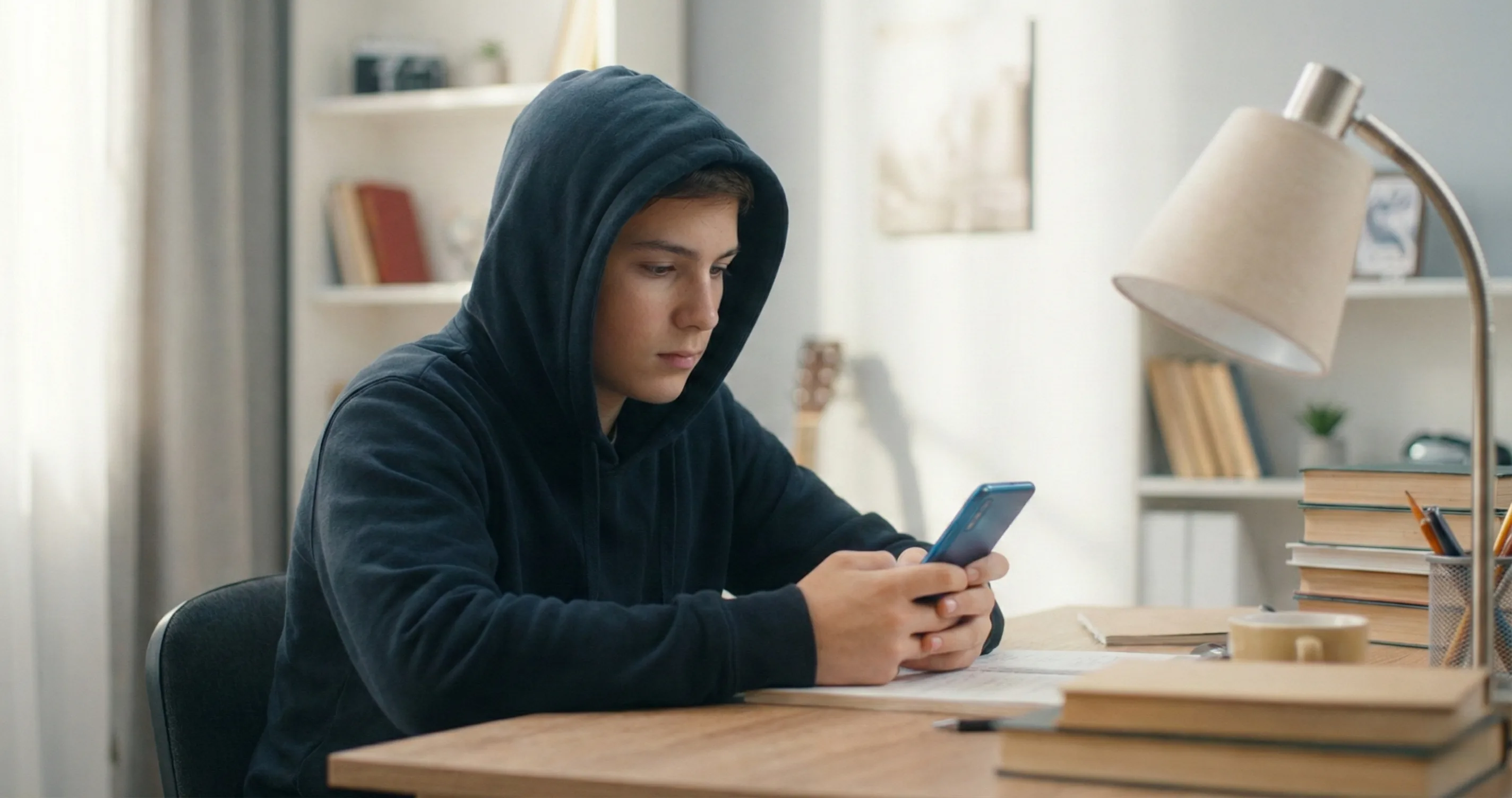
Your teenager locks themselves in their room after dinner. Not to do homework — to scroll. They check their phone before brushing their teeth and again the moment they wake up. When you bring it up, the conversation ends with a slammed door. If this sounds familiar, you are not alone, and you are right to wonder how to stop social media addiction before it reshapes your child’s daily life.
This is not the same problem as too much TV or even too many video games. Social media is built on a fundamentally different engine — one that ties a child’s self-worth to real-time feedback from peers. Understanding that difference is the first step toward building a plan that actually works.
What Makes Social Media Uniquely Addictive for Kids
Social media addiction in kids is not simply about screen time quantity. It is about the type of psychological loop these platforms create. A child watching a movie is passively consuming content. A child on Instagram is actively performing for an audience and waiting to be judged — a process researchers call the social validation loop.
Here is how the loop works:
- Post: Your child shares a photo, story, or video.
- Wait: They check repeatedly for likes, comments, and views — sometimes every few minutes.
- Evaluate: The response (or lack of response) directly affects how they feel about themselves.
- Repeat: They post again, chasing the next positive hit or trying to recover from a perceived rejection.
This cycle is powered by dopamine. Every notification delivers a small neurochemical reward, and teen brains are especially sensitive to it because the prefrontal cortex — the part responsible for impulse control — is still developing until the mid-twenties.
On top of the validation loop, algorithmic feeds keep kids engaged by serving a never-ending stream of content tailored to their interests. There is no natural stopping point, no “end of the magazine.” The Surgeon General’s 2023 advisory on social media and youth mental health warned that these design choices pose a “profound risk” to young people.
Then there is FOMO — fear of missing out. When a child sees classmates hanging out without them, or a group chat blowing up while they are offline, the anxiety is immediate and visceral. FOMO does not just make kids want to use social media. It makes them feel like they have to.
Social Media Addiction Signs Every Parent Should Recognize
Regular social media use and social media addiction symptoms are not the same thing. Plenty of kids use these platforms without developing a problem. The shift happens when social media starts to control the child rather than the other way around.
Watch for these social-media-specific red flags:
Emotional Dependence on Feedback
Your child’s mood visibly rises or falls based on likes, comments, or follower counts. A post that gets few responses might trigger real sadness or anger — disproportionate to the situation. If their emotional baseline is set by an app rather than real-life interactions, that is a significant social media addiction sign.
Sleep Disruption From Late-Night Scrolling
They are up past midnight watching TikToks or checking Snapchat. In the morning, they are groggy, irritable, and hard to wake. This is not just a sleep hygiene issue — it is a sign that the pull of the feed is stronger than their ability to stop.
Withdrawal Reactions When Access Is Removed
Taking the phone away produces anxiety, anger, or panic that seems out of proportion. If your child acts like losing Instagram for an hour is a genuine emergency, that intensity mirrors what clinicians call withdrawal — a hallmark of addictive behavior.
Declining Interest in Offline Activities
Hobbies, sports, or friendships that used to matter start fading. Not because your child found new interests, but because nothing competes with the constant stimulation of their feed. A child addicted to social media may describe offline life as “boring” without being able to explain why.
Secrecy and Defensiveness
They switch apps when you walk by, create hidden accounts, or become hostile when asked about their online activity. Some secrecy is normal in adolescence. But when it is specifically centered on social media usage and paired with other signs on this list, it deserves attention.
Why TikTok, Instagram, and Snapchat Hook Kids Differently
Not all social media is addictive in the same way. Each platform uses different psychological mechanisms, and understanding them helps you have smarter conversations with your child.
TikTok: The Infinite Scroll Machine
TikTok’s For You Page is the most powerful algorithmic feed in social media. It learns what a child likes within minutes and serves a bottomless stream of short videos calibrated to keep them watching. There is no friend list to curate, no following required — just an endless, personalized content pipeline. The short video format means the dopamine hits come fast and frequent, making it especially difficult for younger users to disengage.
Instagram: The Comparison Engine
Instagram revolves around curated images and Reels that invite social comparison. Kids see idealized versions of their peers’ lives — perfect outfits, exciting trips, high follower counts — and measure their own worth against those highlights. The like count acts as a public scoreboard. Research from Columbia University found that it is this addictive pattern of use, not total time, that correlates most strongly with mental health harm in young people.
Snapchat: The Streak Trap
Snapchat streaks are a masterclass in manufactured urgency. A streak is a counter that tracks how many consecutive days two users have exchanged snaps. Miss a day and the streak resets to zero. For many kids, maintaining streaks becomes an obligation that overrides homework, sleep, and family time. Losing a 200-day streak can feel like losing a friendship, which is exactly the kind of artificial social pressure that keeps social media addiction kids coming back compulsively.
Social Media Addiction in Teens vs Tweens
Social media addiction in teens looks different from the same patterns in tweens, and the approach to helping them should reflect that.
Tweens (Ages 10–12)
Many tweens access social media before officially meeting age requirements, often through a parent’s account or by misrepresenting their age. At this stage, the addiction risk centers on novelty and status. Tweens are just entering the world of peer validation, and social media supercharges that experience. They may not have the cognitive tools to recognize when a platform is manipulating their attention.
What works for tweens: clear boundaries, co-use (sitting together while they browse), and gradually introducing concepts like “this app is designed to keep you scrolling.” For guidance on whether your child is ready for social media at all, see our social media readiness guide.
Teens (Ages 13–17)
By the teen years, social media is deeply woven into social life. Friend groups organize on Snapchat. Inside jokes happen on TikTok. Being off these platforms can genuinely affect a teenager’s social standing — and they know it. That makes a simple “just quit” approach unrealistic and often counterproductive.
What works for teens: treating them as collaborators rather than subjects. Teens respond better when they have a voice in the rules. Explain the mechanics behind algorithmic feeds and let them observe their own usage patterns. When a teenager understands why they cannot stop scrolling, they are more motivated to build their own guardrails.
How to Talk to Your Child About Social Media Addiction
The conversation about how to help a child addicted to social media starts long before any rule-setting. If the first thing your child hears is “I’m taking your phone,” they will shut down. The goal of the initial conversation is understanding, not compliance.
Lead With Curiosity, Not Accusations
Instead of “You’re addicted to your phone,” try “I’ve noticed you seem stressed after scrolling. What’s going on?” Open-ended questions signal that you are trying to understand their experience, not punish it.
Name the Mechanics, Not the Behavior
Kids respond better when you frame the problem as something being done to them rather than something they are choosing. Try: “Did you know TikTok’s algorithm studies what you watch and keeps showing you more of it? It’s designed to make stopping feel impossible. That’s not your fault — it’s the app’s business model.”
Share Your Own Struggles
Parents are not immune to doomscrolling and notification anxiety. Admitting that you check your phone too often lowers defenses and makes the conversation feel like a team problem rather than a lecture. “I catch myself doing the same thing with Twitter. It’s hard for adults too.”
Avoid Ultimatums in the First Conversation
The first talk should end with your child feeling heard, not cornered. You can say: “I’m not making any decisions right now. I just want us to figure this out together.” The actual plan comes later, once trust is established.
How to Help a Child Addicted to Social Media: A Step-by-Step Plan
Once the conversation has happened and your child understands why you are concerned, it is time to build a structure that gives them agency without giving them unlimited access. Here is a practical framework.
This is where a structured tool can help. Timily’s Reward and Redemption System lets kids earn points through offline tasks and focus sessions, then spend those points to unlock specific apps. It shifts social media from an entitlement to something they actively choose to spend their earned currency on — which fundamentally changes the psychological relationship with the platform.
Building Long-Term Resilience Against Social Media Hooks
Rules manage behavior today. Resilience protects your child for years to come. The goal is not to keep controlling their social media access until they leave for college — it is to help them develop the internal awareness to manage it themselves.
Teach Algorithm Literacy
When your child understands that every swipe, pause, and like trains the algorithm to serve more of the same, they start to see the platform as a machine rather than a mirror. This perspective shift — from “these videos are perfect for me” to “this app is trying to keep me watching” — is one of the most protective skills you can teach.
Build a Dopamine Menu
Social media is not the only source of dopamine. Help your child identify offline activities that give them genuine satisfaction: playing an instrument, running, cooking, building something with their hands. The point is not to replace social media with “educational” alternatives — it is to broaden the range of things that feel rewarding.
Timily’s Task and Chore System can support this by connecting offline achievements to tangible rewards. When completing a 30-minute soccer practice or finishing a drawing project earns points that unlock something they value, the offline world starts competing with the feed on its own terms.
Model What You Want to See
If you tell your child to put down their phone while yours is in your hand, the message does not land. Set your own phone-free zones. Talk openly about your own social media habits. Kids learn more from watching than listening.
Normalize Boredom
One of social media’s subtlest effects is eliminating boredom entirely. But boredom is where creativity, self-reflection, and intrinsic motivation develop. When your child says “I’m bored,” resist the urge to fix it. That discomfort is productive — it is the brain learning to generate its own stimulation instead of outsourcing it to an algorithm.