
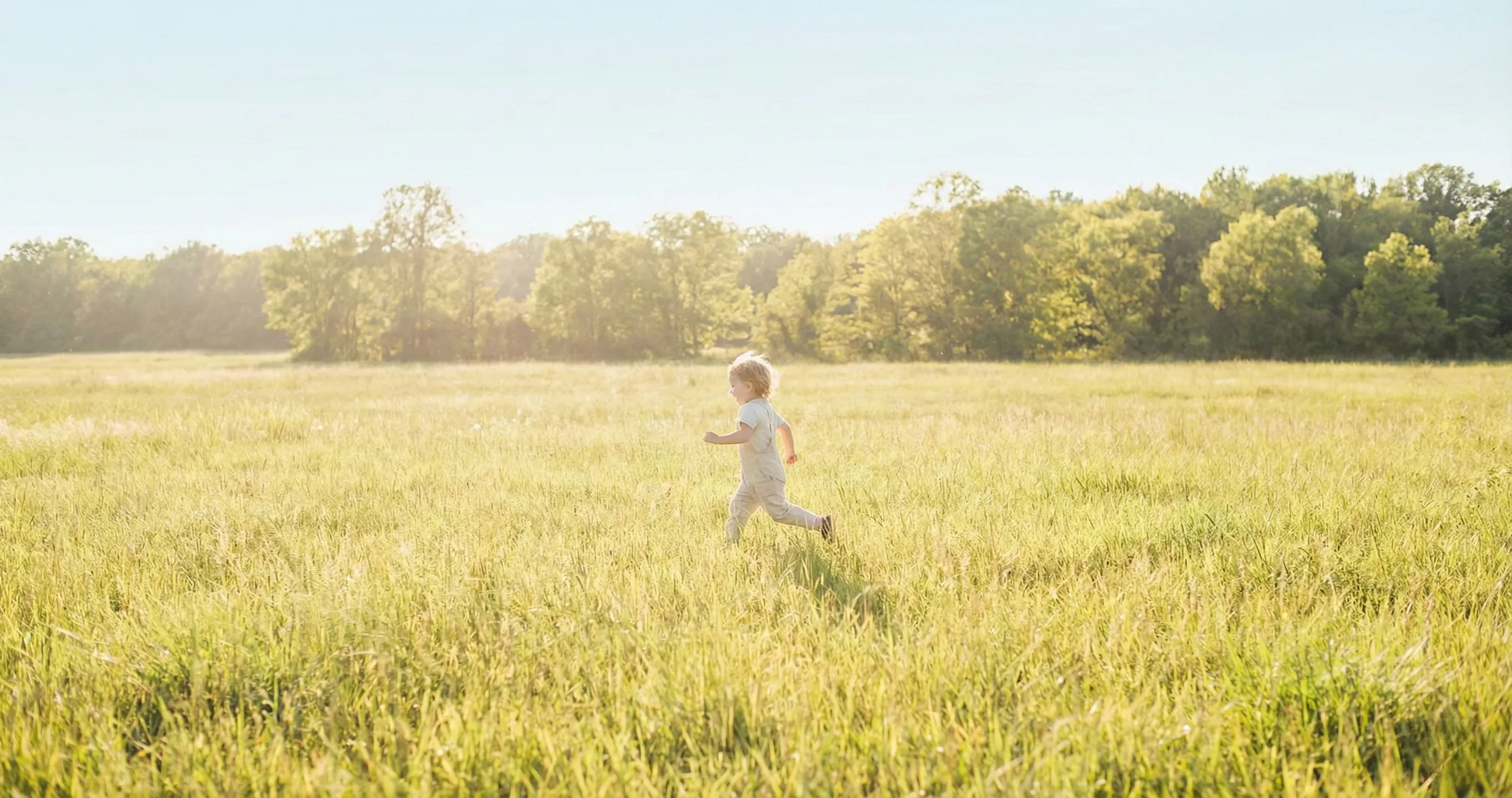
What Is Green Time (and Why It Matters More Than You Think)?
If your child would rather watch one more YouTube video than step outside, you are not alone. Most parents know their kids need more outdoor time, but knowing and actually making it happen are two very different things. The concept of green time — time spent outdoors in nature or green spaces like parks, gardens, and backyards — offers a clearer way to think about this challenge. Rather than just “limiting screens,” green time gives families something positive to aim for.
The term has gained traction in child development research as the natural counterpart to screen time. Where screen time tends to overstimulate, green time restores. Where screens narrow a child’s focus to a glowing rectangle, nature expands it. And the science behind this is not vague — it is specific and growing rapidly.
A 2020 systematic scoping review published in PLOS ONE examined the combined psychological effects of screen time and green time on children and adolescents. The conclusion was clear: less screen time combined with more green time was consistently associated with better psychological outcomes. The researchers went further, suggesting that nature may be “an under-utilised public health resource” for youth wellbeing in an increasingly digital world.
This is not about demonizing screens. It is about recognizing that the balance between active and passive screen time matters — and that green time is the most effective way to restore what excessive screen use takes away.
What the Research Says About Screen Time vs. Outdoor Play
The data on screen time vs. outdoor play is no longer a matter of opinion. Multiple large-scale studies have documented both the risks of too much screen time and the benefits of outdoor play on child development.
The Attention and Mood Connection
Children now spend an average of 7 or more hours per day on screens, compared to fewer than 10 minutes of unstructured outdoor play. That imbalance shows up in classrooms and at home. A 2024 study by Liu et al. found that higher nature exposure was significantly associated with less internet addiction in adolescents, while higher school greenness correlated with decreased depressive symptoms.
This makes intuitive sense to any parent who has watched their child come alive on a hike versus the glassy-eyed stillness of a long screen session. But the research confirms it: the benefits of outdoor play extend beyond physical fitness to directly affect how children think, feel, and regulate their emotions.
Green Time as a Buffer
Perhaps the most encouraging finding is that green time does not just add good — it actively repairs harm. A 2023 study reported by ScienceDaily found that outdoor play activities at ages 2 to 4 helped mitigate the communication and social difficulties that typically follow high screen time exposure. In other words, nature acts as a buffer against the cognitive costs of screens.
This is important because most families cannot (and should not try to) eliminate screens entirely. The realistic goal is not zero screen time — it is enough green time to offset what screens take. For a deeper look at what excessive screen use does to developing brains, see our guide on how screen time affects kids' brains.
Signs Your Child Needs More Green Time
Sometimes the need for more outdoor play is obvious — a child who has not left the house in two days, for instance. But often the signs are subtler, masked by the fact that screens keep kids quiet and occupied.
Watch for these patterns:
- Restlessness that spikes after screen sessions. If your child is fidgety, argumentative, or wired after devices go away, their nervous system may need the reset that only physical outdoor movement provides.
- Difficulty falling asleep or poor sleep quality. Screens before bed suppress melatonin, but lack of physical activity during the day also contributes. Kids who run around outside sleep better — this is one of the most consistent findings in sleep research.
- Complaints of boredom despite having unlimited content. This paradox — bored while surrounded by entertainment — is a hallmark of overstimulation. Nature’s slower pace recalibrates a child’s capacity for self-directed play.
- Increased irritability or emotional flatness. A child who seems either constantly cranky or oddly checked out may be missing the emotional regulation boost that comes from unstructured outdoor time.
- Declining interest in activities they used to enjoy. When screens crowd out everything else, hobbies and friendships can fade. Green time often reignites that spark by removing the constant pull of notifications and content.
None of these signs means you have failed as a parent. They simply mean the ratio is off. And ratios can be adjusted.
How Much Outdoor Play Do Kids Need?
The American Academy of Pediatrics recommends at least 60 minutes of active play per day for school-age children, with as much of it outdoors as possible. Preschoolers need even more — up to 3 hours of active movement spread throughout the day.
But these numbers can feel overwhelming to a family starting from near zero. If your child currently gets 10 minutes of outdoor time, jumping to 60 feels impossible. Here is a more realistic framework:
A Gradual Green Time Ramp-Up
- Week 1–2: Add 15 minutes of outdoor time before or after one screen session. No other changes needed.
- Week 3–4: Extend to 20–30 minutes. Start linking outdoor play to earning screen time (more on this below).
- Month 2+: Aim for 45–60 minutes total, split across the day if needed. Morning outdoor time plus afternoon play works better than one long block for most kids.
The key insight is consistency over intensity. A child who spends 20 minutes outside every single day will gain more than one who gets a 3-hour outdoor marathon on Saturday and nothing Monday through Friday. For age-specific screen time limits that complement your green time goals, check our guide to screen time by age.
The Earn-Based Approach: Using Green Time to Balance Screen Time
Here is where most advice articles stop: they tell you outdoor play is important, suggest you “set limits,” and wish you luck. But the actual struggle — getting a child who is deeply attached to their device to voluntarily go outside — remains unsolved.
The earn-based approach flips the dynamic. Instead of taking away screen time (which triggers resentment and power struggles), you make screen time something that is earned through outdoor play and other real-world activities. The child keeps agency. The parent keeps structure. And green time becomes the path to something the child wants, rather than a punishment.
How It Works in Practice
- Define what counts. Sit down together and agree on what qualifies as green time: park visits, backyard play, walks, bike rides, gardening, outdoor sports. Be specific so there are no arguments later.
- Set a ratio. Many families start with 1:1 — 30 minutes of outdoor play earns 30 minutes of screen time. Adjust based on your child’s age and your family’s needs.
- Track it visibly. Kids respond to seeing their progress. A simple chart on the fridge works. For a digital solution, Timily’s Task and Chore System lets you set outdoor activities as tasks that earn points toward screen time — so children see exactly how their green time translates into the screen access they want.
- Celebrate the outdoor time, not just the screen time earned. When your child comes in from playing, acknowledge the play itself: “You were out there for an hour — nice!” This gradually builds intrinsic motivation alongside the external reward.
For families who want to go beyond screen time specifically, an earn-based approach can also tie outdoor play to other rewards — a trip to the ice cream shop, choosing the family movie, or staying up 15 minutes past bedtime. The principle is the same: green time earns good things.
How to Get a Screen-Loving Kid Outside
Even with an earn-based system, some kids need help getting started. The transition from screen to green is the hardest moment. Here are strategies that actually work, drawn from parents who have made this shift:
Bridge Their Digital Interests to the Outdoors
A child who loves Minecraft might love building a fort from sticks and tarps. A kid obsessed with nature documentaries might be thrilled to photograph real insects. A Roblox fan could get into geocaching (a real-world treasure hunt using GPS). The goal is to translate digital enthusiasm into outdoor play activities, not to compete with screens head-on.
Make the First Five Minutes Easy
The biggest barrier is getting out the door. Once kids are outside, they usually stay. Lower the friction:
- Keep shoes, sunscreen, and a water bottle by the door.
- Start with the yard or sidewalk — you do not need a park every time.
- Go with them initially. Your presence makes it feel safe, not like exile.
Use Transition Rituals
A sudden “turn it off and go outside” triggers resistance. Instead, build a buffer:
- Give a 5-minute warning before screens end.
- Follow with a brief indoor transition (snack, bathroom, shoes on).
- Then move outside together.
This sequence respects the child’s need to shift gears rather than abruptly switching contexts. For more strategies on handling the screen-to-activity transition without meltdowns, see our guide on digital detox for kids.
Let Boredom Do Its Work
Parents often feel pressure to orchestrate every outdoor minute. But unstructured time is where creativity happens. If your child says “I’m bored” after five minutes outside, resist the urge to fix it. Boredom outside is far more productive than boredom inside — it leads to stick swords, made-up games, and the kind of imaginative play that screens crowd out.
Screen Free Parenting: Making It Sustainable
There is a growing community of parents exploring screen free parenting — not as an all-or-nothing commitment, but as a set of daily habits that naturally reduce screen dependence. The goal is not to become a screen-free household (that is rarely realistic). It is to create enough screen free activities in your family’s routine that screens stop being the default.
Build Screen-Free Windows, Not Screen-Free Days
A full screen-free day sounds aspirational but usually fails by 2 PM. Instead, designate specific windows: mornings before school, the hour after dinner, or weekend mornings until 10 AM. These predictable, bounded screen-free periods are easier for kids to accept and for parents to enforce.
Stock Your Outdoor Starter Kit
Keep a bin near the back door with items that make outdoor play immediate and easy:
- Sidewalk chalk and bubbles for younger kids
- A basketball, soccer ball, or frisbee
- A magnifying glass and a nature journal
- Binoculars (even cheap ones are exciting)
The purpose is not to entertain your child but to lower the activation energy. When the alternative to screens is “go outside and figure something out,” it feels daunting. When it is “grab the chalk bucket and make an obstacle course,” it feels doable.
Model It Yourself
This is the part no one wants to hear, but it matters: kids whose parents spend time outside tend to spend more time outside. You do not need to run a marathon. Gardening, reading on the porch, or walking the dog counts. What matters is that your child sees you choosing the outdoors over your own phone.
Bringing It All Together
The shift from too much screen time to a healthier balance does not require a dramatic overhaul. It requires adding green time deliberately, consistently, and in a way that your child does not experience as punishment.
Start small — 15 minutes of outdoor play before the first screen session of the day. Use an earn-based approach so your child feels ownership over the process. Let unstructured time outside do its restorative work on attention, mood, and sleep. And remember that the research is unambiguous: green time is not just “nice to have.” It is a direct counterweight to the cognitive and emotional costs of excessive screen time.
You do not have to choose between screens and nature. You just need to make sure nature gets its turn every single day.