
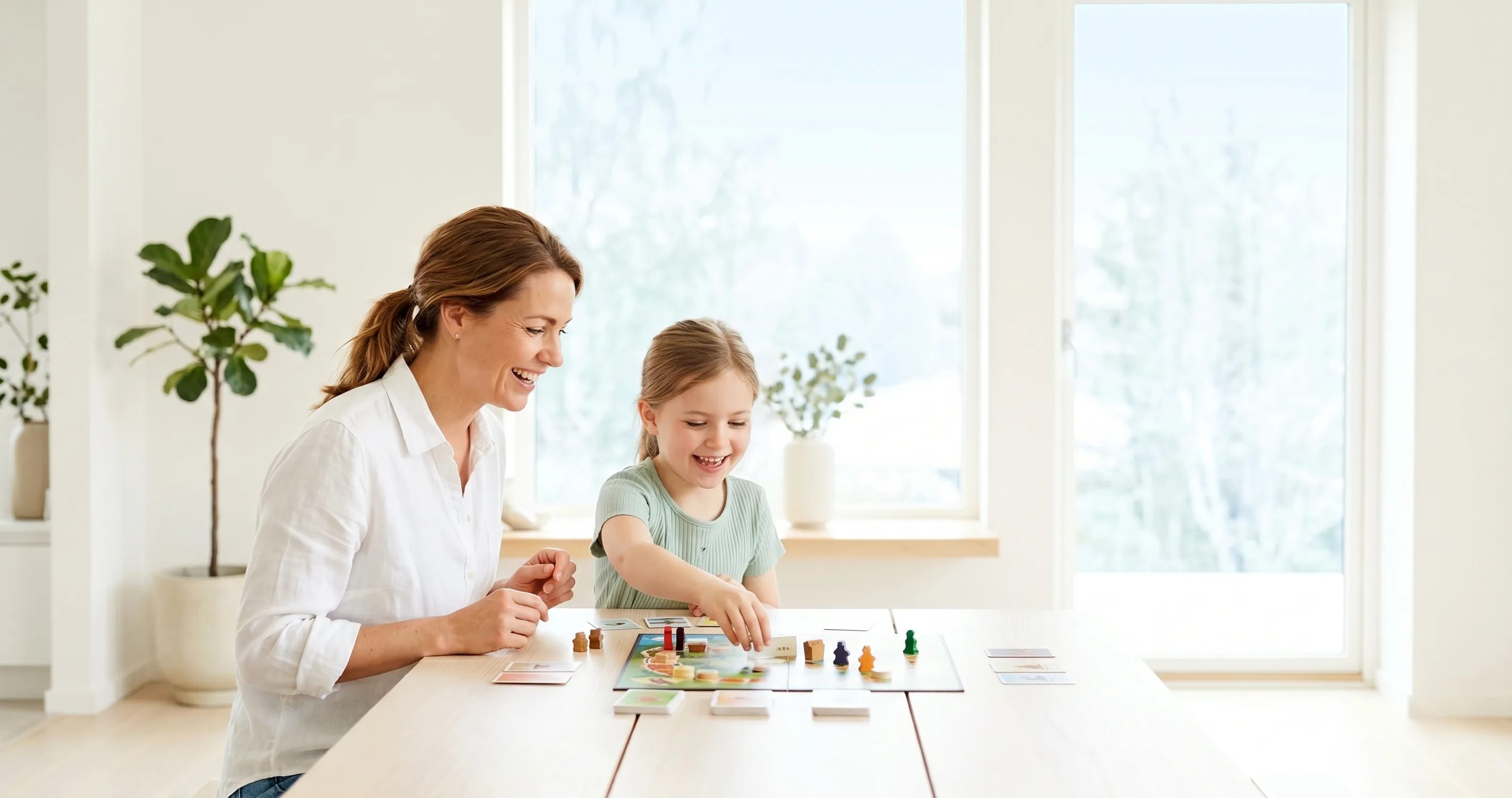
You know the scene. It is Saturday morning. Everyone is home. And every single person is on a different screen in a different room. Nobody planned it. Nobody wanted it. But without family activities ready to go, screens fill the vacuum every time.
The fix is not a lecture about screen time. It is having a better offer. This guide is that offer — 50+ family activities organized so you can grab one in five seconds flat, no matter the weather, the budget, or the ages in your house. We also cover how to turn these activities into a weekly ritual that sticks and how to connect them to an earn-based screen time system so your kids actually want to participate.
Why Family Activities Matter More Than Ever
The average American family spends less than 40 minutes of quality time together per weekday. Meanwhile, children ages 8 to 12 average over five hours of recreational screen time daily. Those two numbers are connected. When screens are the default activity, shared experiences disappear — not because families do not value togetherness, but because there is nothing competing with the pull of a device.
Family bonding activities are the antidote. Research from the Journal of Marriage and Family consistently shows that shared activities — even simple ones — strengthen attachment, improve communication, and reduce behavioral issues in children. The activity itself matters less than the fact that everyone is doing it together, without a screen between them.
Why screens win by default
Screens require zero planning, zero energy, and zero negotiation. That is their superpower. Family activities require all three — which is why they lose unless you remove the friction. The rest of this guide is designed to do exactly that: give you a pre-built list so the only decision left is picking one.
The compound effect of regular family time
One family game night does not transform your household. But one family game night every week for six months does. Children who have regular, predictable screen free family activities with their parents show higher emotional regulation, better academic performance, and stronger peer relationships. The consistency matters more than the activity. A weekly walk around the block beats an annual trip to Disneyland when it comes to building connection.
15 Outdoor Family Activities
Getting outside is the fastest way to break the screen cycle. Fresh air, movement, and a change of scenery naturally reset everyone’s mood. These fun family activities work for yards, parks, and neighborhoods — no special equipment or destination required.
Active and energetic
- Neighborhood scavenger hunt. Write a list of 15 things to find (a red car, a pinecone, something that makes noise). Split into teams or work together. Kids of all ages love the hunt, and it turns a boring walk into an adventure.
- Backyard obstacle course. Use chairs, pool noodles, jump ropes, and whatever else is lying around. Time each person and let the kids redesign it between rounds. The building is half the fun.
- Family bike ride. Pick a route, pack water, and go. No destination needed — the ride itself is the activity. Adjust distance for the youngest rider and let older kids lead the way.
- Capture the flag. A classic that works with ages 5 and up. All you need is a yard, two bandanas, and at least four people. Competitive, physical, and cooperative all at once.
- Frisbee or disc golf. Find a local disc golf course or just throw a frisbee at the park. Low skill floor, high fun ceiling. Toddlers can chase the disc even if they cannot throw it yet.
Calm and exploratory
- Nature walk with a field guide. Borrow a local plant or bird guide from the library. Walk slowly, identify three new things, and talk about what you see. This transforms a regular walk into green time with a purpose.
- Garden together. Even a few pots on a balcony count. Let each child pick a plant to grow. The daily watering becomes a micro-ritual, and harvesting something you grew together is deeply satisfying.
- Sidewalk chalk art. Draw a mural that stretches the entire driveway. Collaborative art, zero cleanup (rain does it for you), and accessible for every age from toddler to teen.
- Cloud watching. Lie on a blanket and name shapes. Sounds too simple to work, but the stillness and conversation that happen when everyone is looking up instead of down at a screen are surprisingly powerful.
- Stargazing. On a clear night, spread blankets in the backyard and learn three constellations together. Free stargazing apps can help you identify what you are looking at — the one acceptable screen use of the evening.
Seasonal and creative
- Leaf or flower pressing. Collect interesting specimens on a walk, then press them in a heavy book for a week. Great for spring and fall. The finished pressings make bookmarks or framed art.
- Water balloon relay race. Fill balloons, set up relay stations, and race. Messy, loud, and exactly the kind of chaos that creates memories. Perfect for summer afternoons.
- Build a snow fort or snowman. When winter hits, lean into it. Work together on a structure, give the snowman a personality, and take a photo for the fridge. Cold weather forces shorter, more intense togetherness.
- Picnic in a new spot. Pack simple food and find a park, a hilltop, or even your own backyard. Eating outside with no screens and no rush changes the dynamic of a regular meal.
- Geocaching. Use the free Geocaching app to find hidden containers near you. It is a treasure hunt with real treasure (small trinkets to trade). Works anywhere — urban, suburban, or rural.
15 Indoor Family Activities
Rain, cold, or just a lazy afternoon — these family activities at home work when going outside is not an option. The key is variety: mix physical activities with creative ones so you always have a match for the household’s energy level.
Games and competition
- Board game tournament. Pick three games of increasing length (Uno, Sorry, Monopoly). Play all three over the afternoon and crown an overall champion. Rotating the game choice keeps it fair and exposes everyone to different genres.
- Card game marathon. Go Fish for the little ones, Rummy for the middles, Poker (with candy chips) for the teens. Card games teach math, patience, and how to lose gracefully — skills no app can replicate.
- Indoor scavenger hunt. Hide 20 objects around the house with clue cards. Write rhyming clues for younger kids and riddles for older ones. The person who finds the most wins the right to pick the next activity.
- Family trivia night. Write questions about your own family — “What was Mom’s favorite subject in school?” — alongside general knowledge questions. Personal trivia sparks stories that screens never surface.
- Puzzle race. Buy two identical puzzles (thrift stores are great for this). Split into two teams and race to finish. Cooperative within teams, competitive between them.
Creative and hands-on
- Cook or bake together. Pick a recipe nobody has tried. Assign each person a task based on age (measuring, stirring, decorating). Eating something you made together turns a meal into an event.
- Build a blanket fort. Use every pillow, blanket, and chair in the house. Once built, eat snacks inside, read books aloud, or just talk. The enclosed space creates a surprising sense of closeness.
- Art station. Set out paper, markers, watercolors, glue, and scissors. Give everyone the same prompt (“draw your dream house” or “design a new animal”) and compare results. No artistic skill required.
- DIY science experiments. Baking soda volcanoes, slime, crystal growing, or Mentos-and-soda rockets (outside for that last one). The internet is full of simple experiments using pantry ingredients. Pick one and let the kids run it.
- Family photo album project. Print out recent photos and arrange them in an album or scrapbook together. Talking about shared memories while organizing them strengthens bonds more than scrolling through a phone gallery ever could.
Movement and silliness
- Dance party. Clear the living room, queue up a playlist, and dance like nobody is watching. Let each family member pick two songs. Physical, mood-boosting, and zero equipment needed.
- Indoor bowling. Line up plastic bottles or cups at the end of a hallway. Roll a soft ball. Keep score. Surprisingly competitive and works in small spaces.
- Charades or Pictionary. Classic party games that work just as well with four people as with fourteen. Charades for the hams, Pictionary for the artists, and both for the laughs.
- Yoga or stretching together. Follow a family-friendly yoga video (yes, one screen use is allowed here) or just make up poses together. Calm, cooperative, and a good reset after a high-energy day.
- Build with whatever you have. LEGOs, blocks, cardboard boxes, or even a house of cards. Give everyone the same materials and a 20-minute build timer. Share and vote on favorites at the end.
10 Free or Low-Cost Family Activities
Money should never be the reason your family defaults to screens. The best family bonding activities cost little or nothing. Here are ten that prove it.
- Library visit. Most libraries offer free story times, maker spaces, and activity programs. Let each person pick a book, then read together at home. The trip itself is the outing.
- Community event calendar. Check your city or town’s website for free concerts, festivals, farmers’ markets, and outdoor movie nights. Many families have no idea how much free programming is available locally.
- Volunteer together. Park cleanups, food bank sorting, or animal shelter visits. Working alongside your children for a shared purpose teaches empathy and creates memories that screens cannot.
- Have a no-spend day. Challenge the whole family to go an entire day without spending money — and without screens. Cook from what you have, play with what you own, and see what happens when consumption is off the table.
- Write and perform a family play. Each person gets a character. Someone writes a one-page script (or improvise the whole thing). Perform it for grandparents on a video call. Creative, hilarious, and completely free.
- Backyard camping. Set up a tent, roll out sleeping bags, and sleep outside (or just hang out until bedtime). No campsite fees, no driving, and all the adventure of a camping trip without the logistics.
- Map your neighborhood. Walk your neighborhood and draw a map of everything you find. Older kids can add landmarks, favorite spots, and secret shortcuts. This turns a familiar place into something worth exploring.
- Start a family journal. Keep a shared notebook where anyone can write, draw, or paste something. Pass it around at dinner or before bed. Over months, it becomes a family artifact that no one will want to throw away.
- Kitchen science. Freeze different liquids to see which one freezes first. Grow an avocado pit in water. See how many drops of water fit on a penny. Science is free, and curiosity does not require a subscription.
- Teach each other something. Each family member picks a skill they know and teaches it to everyone else. Dad teaches card shuffling. The 10-year-old teaches origami. The teen teaches a TikTok dance (screens off after learning it). Everyone is both teacher and student.
Activities by Age Group (Toddlers, Kids, Tweens, Teens)
Not every activity works for every age. A toddler cannot play Monopoly. A teen will not sit through a coloring session. Here is how to match family activities to developmental stages so everyone stays engaged.
Toddlers (ages 1–3)
At this age, the activity needs to be simple, sensory, and short. Toddlers have 5 to 10 minutes of sustained attention, so plan multiple micro-activities rather than one long one.
- Sensory bins — fill a bin with rice, dried pasta, or water beads and let them explore with cups and spoons
- Music and movement — put on songs and dance, shake homemade maracas (sealed containers with dry beans), or bang on pots
- Stacking and sorting — blocks, cups, or even tupperware lids become toys when a parent is playing alongside
- Nature exploration — a slow walk where you name everything you see (tree, bird, flower, dog) builds vocabulary and connection
Kids (ages 4–8)
This is the golden age for fun family activities. Kids in this range are old enough to follow rules, competitive enough to care about winning, and creative enough to contribute ideas. They are also the most willing participants — they genuinely want your time and attention.
- Board games with simple rules — Candy Land, Chutes and Ladders, Spot It, and Guess Who are all hits
- Cooking projects — pizza from scratch, cookies, smoothies, or anything they can measure and mix
- Outdoor sports — kickball, tag, relay races, and screen-free activities that burn energy
- Craft projects — pipe cleaner animals, painted rocks, friendship bracelets, and anything involving glitter (brace yourself)
Tweens (ages 9–12)
Tweens want activities that feel grown-up. Anything that seems “babyish” will get an eye roll. The trick is offering challenge, autonomy, and a touch of competition.
- Strategy games — Catan, Ticket to Ride, chess, or Clue give tweens the complexity they crave
- Cooking challenges — “Chopped” style competitions with mystery ingredients from the pantry
- Building projects — model kits, LEGO Technic, or designing and building a birdhouse
- Outdoor adventure — longer hikes, kayaking, fishing, or geocaching that feels like a real expedition
Teens (ages 13+)
Getting teens involved requires respecting their autonomy. Do not force participation — make the activity appealing enough that they choose it. Food helps. So does giving them control over the choice.
- Cook a full meal together — let the teen pick the cuisine and lead the cooking while the family assists
- Game night with stakes — the loser does dishes, the winner picks next week’s activity, or play for (small) real prizes
- Volunteering — teens often respond to service activities more than play because they feel purposeful
- Physical challenges — rock climbing, escape rooms, bowling, or any activity where the teen can outperform the parents (let them win — it builds goodwill)
Making Family Time a Weekly Habit
Having a list of 50 activities means nothing if you never do any of them. The difference between families who do family bonding activities regularly and those who intend to but never get around to it comes down to one thing: structure.
Pick a recurring slot
Choose a specific day and time that is the same every week. Friday evening, Saturday morning, Sunday afternoon — it does not matter when. What matters is that it is consistent. Put it on the family calendar the same way you would a doctor’s appointment. If it is not scheduled, it will not happen.
Rotate who picks the activity
Give each family member a turn choosing. This solves two problems: it eliminates the “what should we do?” debate, and it gives everyone ownership. When a child picks the activity, they are invested in making it work. When a parent picks, the child has the security of knowing their turn is coming.
Start smaller than you think
A 30-minute weekly family activity is infinitely more valuable than a three-hour plan that never materializes. Start with something easy — a card game, a walk, baking cookies — and let the habit build. Once the slot is established, the activities will naturally expand in scope and duration.
Protect the time from screens
During family activity time, all devices go in a basket or a drawer. Not on silent. Not face-down. Away. This applies to parents too. If Mom is checking her phone during the board game, the message to the kids is clear: this activity is less important than whatever is on that screen. The same principle that works for phone-free dinners works for family activity time.
Debrief and decide
After each activity, take two minutes to talk about it. “What did everyone like? Should we do this again or try something new?” This tiny ritual does two things: it reinforces the positive experience, and it builds a feedback loop that helps you choose better activities over time. Keep a running list of the ones that were hits so you can repeat them.
Earning Screen Time Through Family Activities
Here is where the screen time conversation and the family activities conversation merge. Instead of framing screen time as a right that gets restricted, frame it as something children earn — and make family activities one of the ways they earn it.
How the earn-based model works
In a traditional model, children start the day with a screen time allowance and lose minutes for misbehavior. Every interaction is negative. In an earn-based model, children start at zero and build up screen time by completing tasks: homework, chores, reading, outdoor play — and family activities.
When participating in a screen-free family activity earns screen time, two things happen. First, the child has an incentive to engage with the activity instead of resisting it. Second, the screen time that follows feels earned rather than entitled — which means the transition off screens later is smoother because the child already practiced self-regulation to earn it.
Practical setup
- Assign point values — a 30-minute family activity might earn 15 minutes of screen time. Adjust the ratio based on your family’s values and your child’s age.
- Track visually — younger kids benefit from a physical chart on the fridge. Older kids can use a digital tracker. The key is transparency — they should always know their balance.
- Include variety — family activities should be one of several earning pathways (alongside homework, chores, and focus sessions) so the system does not feel one-dimensional.
- Let the system enforce — when screen time runs out, the timer ends it, not you. This removes you from the role of screen time police and keeps the parent-child relationship intact.
Why this works better than restriction
Restriction models create adversarial dynamics. The parent is the enforcer. The child is the resistor. Every screen-related conversation is a negotiation or a conflict. Earn-based systems flip this dynamic entirely. The parent becomes the coach (“great job earning your time today”), and the child becomes the agent (“I did my activity, I earned my screen time”). Same household. Same total screen time. Completely different relationship around it.
The families who succeed with screen time management are not the ones who found the perfect number of minutes. They are the ones who built a system their children understand, contributed to, and feel is fair. Family activities are not just an alternative to screens — they are the foundation of a healthier screen time culture at home.