
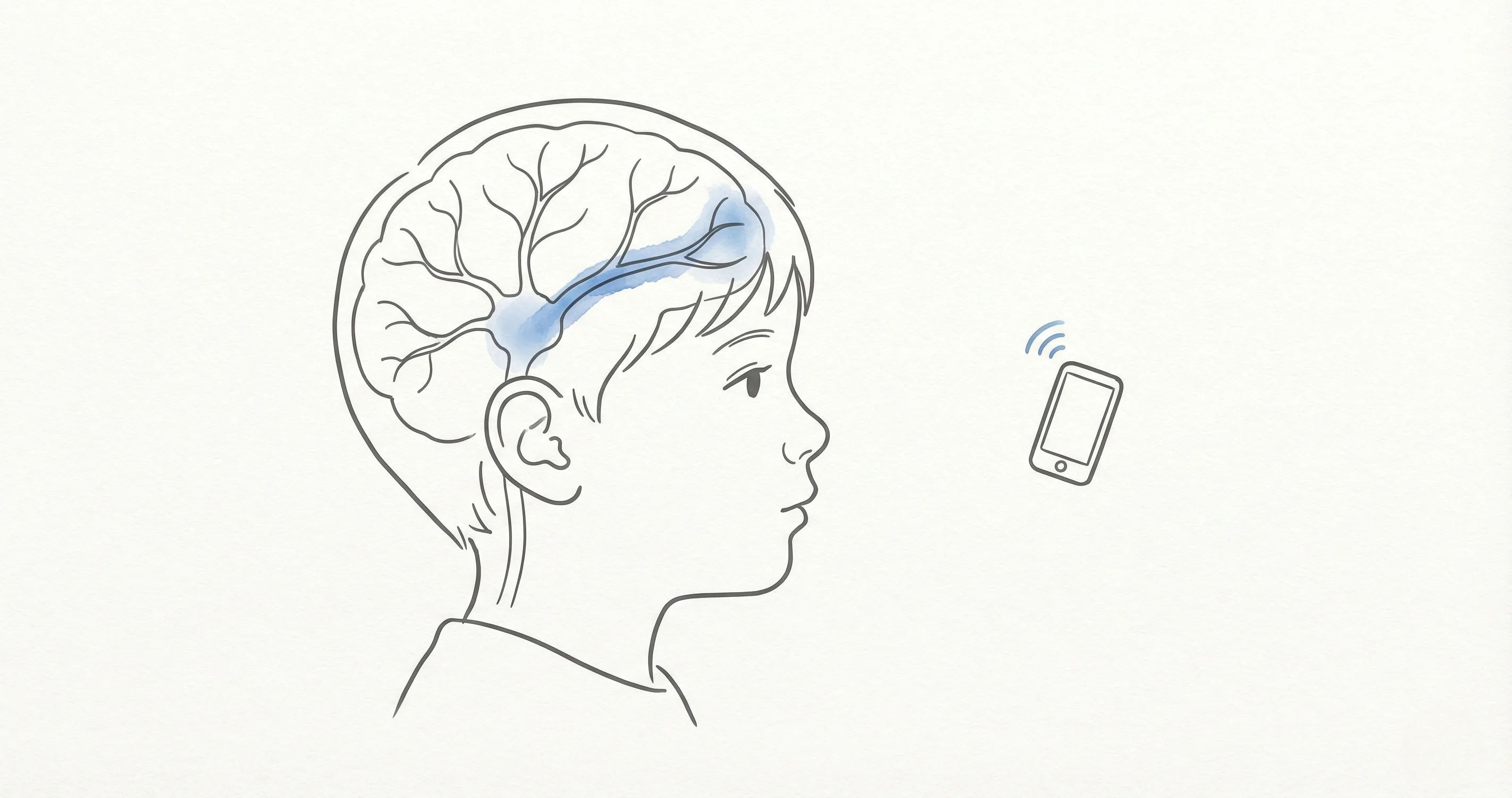
You have probably heard that screens are “like drugs” for kids’ brains. That comparison is exaggerated, but it is not entirely wrong. Dopamine and screen time are connected in ways that every parent should understand — not to panic, but to make smarter decisions about how screens fit into family life.
The real issue is not that screens release dopamine. Almost everything enjoyable does. The issue is how screens release it: in fast, unpredictable bursts that the developing brain is not equipped to regulate. Understanding this mechanism — and what to do about it — is what separates anxious headlines from useful parenting strategies.
What Dopamine Actually Does in Your Child’s Brain
Dopamine is not a “pleasure chemical.” That is the most common misconception. Dopamine is a wanting chemical — it drives desire, anticipation, and motivation. When your child’s brain releases dopamine, it is not saying “this feels good.” It is saying “do that again.”
Here is how the dopamine reward pathway works in simple terms:
- Trigger: Your child encounters something potentially rewarding — a notification, a new level in a game, a funny video thumbnail.
- Anticipation spike: The ventral tegmental area (VTA) fires dopamine into the nucleus accumbens. This creates a feeling of wanting — not pleasure, but the drive to pursue the reward.
- Reward or disappointment: If the reward matches expectations, dopamine levels stabilize. If the reward exceeds expectations (a surprise like or viral video), dopamine surges even higher.
- Baseline reset: After the dopamine spike, levels drop below baseline temporarily. This dip creates the craving for more stimulation.
This cycle — trigger, spike, dip, craving — is normal and healthy. It is how children learn to pursue goals, complete tasks, and build habits. The problem starts when one source of stimulation dominates the cycle.
How Screens Hijack the Dopamine Reward System
Not all dopamine sources are created equal. Reading a book, playing outside, and scrolling TikTok all release dopamine, but they do it in fundamentally different ways. The key difference is a concept called variable ratio reinforcement — and it explains how screens affect dopamine in kids so powerfully.
Variable Ratio Reinforcement: The Slot Machine Effect
A variable ratio reinforcement schedule delivers rewards at unpredictable intervals. This is the same mechanism that makes slot machines addictive. You never know which pull will pay off, so you keep pulling.
Screens use the same pattern:
- Social media: You do not know which scroll will show a funny video, a friend’s post, or a like on your photo. The unpredictability keeps you scrolling.
- Video games: Loot drops, random power-ups, and matchmaking algorithms ensure each session delivers unpredictable rewards.
- YouTube and TikTok autoplay: The next video might be boring or incredible. That uncertainty is the dopamine fuel.
- Notifications: Each buzz could be a message from a friend, a game alert, or junk. The unpredictability makes each notification feel urgent.
Reward Prediction Error: When the Brain Gets Fooled
Neuroscientists call the gap between expected and actual rewards a “reward prediction error.” When a reward is larger than expected, dopamine surges. When it is smaller, dopamine drops. Screen-based content is specifically engineered to maximize positive prediction errors — to keep surprising the brain in ways that a book or a board game simply cannot match.
This is not your child’s fault. App designers use A/B testing, engagement metrics, and behavioral psychology to fine-tune exactly how much unpredictability keeps users engaged. Your child’s developing brain is competing against teams of engineers optimizing for attention.
The Tolerance Cycle: Why Kids Need More and More Screen Time
The most concerning aspect of screen time and dopamine is not the initial spike — it is what happens to the brain over weeks and months of repeated high-stimulation exposure.
How Dopamine Tolerance Develops
When the brain is flooded with dopamine repeatedly, it protects itself by reducing the number of dopamine receptors (called downregulation). Fewer receptors mean the same amount of dopamine produces less effect. The result:
- More screen time is needed to get the same level of satisfaction.
- Low-stimulation activities feel boring. Reading, playing outside, and family conversations produce less dopamine than screens, and with downregulated receptors, that gap feels even wider.
- The “nothing is fun” complaint emerges. A child whose dopamine system is calibrated to screen-level stimulation genuinely struggles to enjoy everyday activities. They are not being difficult — their reward system has been recalibrated.
The ABCD Study, one of the largest longitudinal brain studies in the United States, found that daily screen exposure mediates changes in fronto-striatal connectivity over two years — the neural circuits directly involved in dopamine signaling and impulse control.
The Dopamine Crash After Screens
This tolerance cycle also explains the meltdowns many parents see when screen time ends. After a high-dopamine session, the brain’s dopamine level drops below baseline. Your child experiences this as irritability, restlessness, or a desperate craving for more. It is not a tantrum — it is a neurochemical withdrawal. For a deeper look at why this happens and how to prevent it, see our guide on screen time tantrums.
Screen Dopamine vs Healthy Dopamine: A Side-by-Side Comparison
Understanding the difference between dopamine screen time produces and the dopamine from healthy activities is the foundation of every strategy in this article.
| Factor | Screen Dopamine | Healthy Dopamine |
|---|---|---|
| Release pattern | Fast, unpredictable spikes | Gradual, sustained release |
| Effort required | Minimal (tap, scroll, watch) | Moderate (run, build, practice) |
| Tolerance risk | High — receptors downregulate quickly | Low — brain adapts slowly |
| Post-activity crash | Significant dip below baseline | Gentle return to baseline |
| Long-term effect | Raises stimulation threshold | Maintains healthy baseline |
| Examples | Social media scrolling, gaming loot boxes, autoplay videos | Exercise, creative projects, face-to-face socializing, cooking |
The takeaway is not that screen dopamine is “bad” and healthy dopamine is “good.” Both are dopamine. The difference is that screens deliver it in a pattern the developing brain was not designed to handle at high volume — fast, effortless, and unpredictable. Not all screen use falls into this category, though. Active, creative screen use like coding, digital art, or building in sandbox games produces a healthier dopamine pattern than passive consumption.
Signs Your Child’s Dopamine System May Be Overstimulated
How do you know if dopamine and screen time in children have crossed the line from normal enjoyment into overstimulation? Watch for these patterns — they indicate the tolerance cycle is gaining momentum:
Behavioral Signs
- Escalating screen demands. They used to be satisfied with 30 minutes, but now an hour is “not enough.”
- “Nothing else is fun.” Activities they used to enjoy — drawing, playing outside, board games — now feel boring.
- Difficulty transitioning. Intense resistance, anger, or emotional collapse when screens are turned off.
- Sneaking screen time. Using devices after bedtime, during homework, or in places where screens are not allowed.
Emotional and Cognitive Signs
- Restlessness and irritability during screen-free periods, especially in the first 30–60 minutes.
- Shortened attention span for tasks that require sustained focus (homework, reading, conversations).
- Decreased motivation for effort-based rewards (chores for allowance, practicing a sport or instrument).
- Mood swings tied to screen access — noticeable highs during use and lows when screens are removed.
If three or more of these signs persist for more than two weeks, the dopamine system is likely overstimulated. For a comprehensive checklist and guidance on when to seek professional help, see our screen addiction signs guide.
The Dopamine Menu: Healthy Alternatives That Satisfy the Brain
A dopamine menu is a personalized list of non-screen activities that activate your child’s reward system through healthy pathways. The concept is simple: instead of just removing screen stimulation (which creates a void), you replace it with activities that still feel rewarding — just through different mechanisms.
Building Your Child’s Dopamine Menu
Organize activities into four categories based on how they produce dopamine:
- Movement dopamine (exercise): Running, biking, swimming, dancing, climbing. Physical activity is the most reliable natural dopamine booster. Even 20 minutes of moderate exercise increases dopamine by 20–30% and keeps it elevated for hours afterward.
- Social dopamine (connection): Playing with friends in person, family game nights, team sports, calling grandparents. Face-to-face social interaction releases dopamine through a different pathway than screens, and it also triggers oxytocin, which creates a deeper sense of satisfaction.
- Mastery dopamine (achievement): Learning a musical instrument, cooking a meal, completing a challenging puzzle, building with LEGOs. The dopamine from mastering a skill is earned through effort, which makes it more sustainable and satisfying than screen-based rewards.
- Novelty dopamine (exploration): Nature walks, visiting a new park, trying a new recipe, starting a new art project. Novelty triggers dopamine through curiosity rather than variable reinforcement, training the brain to seek exploration rather than stimulation.
How to Use the Menu
Post the dopamine menu somewhere visible — on the fridge, in the family room, or as a phone wallpaper. When your child says “I’m bored” or asks for screen time, point to the menu and let them pick. The key is that they choose. Forced alternatives feel like punishment. Chosen alternatives feel like autonomy.
Rotate items every few weeks. Novelty matters — even healthy dopamine sources lose their appeal when they become routine. The menu is a living document, not a static poster.
Anti Dopamine Parenting: Practical Strategies That Work
The term anti dopamine parenting, popularized by NPR’s reporting on screen time neuroscience, does not mean eliminating dopamine. It means redesigning your child’s environment so that high-stimulation triggers do not dominate their reward system.
Dr. Anna Lembke, chief of Stanford’s Addiction Medicine Clinic and author of Dopamine Nation, recommends creating “microenvironments” — designating one room in the house as the only space where devices are used. This environmental boundary reduces the cue-triggered dopamine spikes that happen when screens are visible everywhere.
Seven Strategies for Resetting Dopamine Sensitivity
- Frontload the day with low-stimulation activities. Have your child start with breakfast, outdoor time, or chores before any screen access. This protects the brain’s dopamine sensitivity for the rest of the day.
- Create device-free zones. Bedrooms, the dining table, and the car are common choices. Reducing visual cues reduces dopamine anticipation spikes.
- Delay morning screens by at least one hour. The brain’s dopamine system is most sensitive in the morning. Starting with screens calibrates the day around high stimulation.
- Replace, do not just remove. When you cut 30 minutes of screen time, fill it with a dopamine menu activity. The void is what triggers resistance.
- Use structured screen time, not open-ended browsing. “You can watch two episodes of this show” produces less dopamine dysregulation than “you can have 30 minutes of whatever you want.” Open-ended browsing maximizes variable reinforcement.
- Build in earned screen access. When screen time follows effort — completing homework, finishing chores, hitting a focus goal — it activates the effort-reward pathway instead of the effortless-stimulation pathway. Using Timily’s Task and Chore System, parents can set specific offline tasks that earn points toward screen time, connecting digital rewards to real-world effort.
- Protect the wind-down window. No screens for at least 60 minutes before bed. The dopamine spike from evening screens disrupts melatonin production and sleep onset.
Age-by-Age Guide to Dopamine Sensitivity
How screens affect dopamine in kids depends heavily on developmental stage. The same 30 minutes of YouTube affects a 4-year-old and a 14-year-old very differently because their dopamine systems are at different stages of maturation.
Ages 2–5: Maximum Vulnerability
The dopamine system is forming its baseline sensitivity during these years. High-stimulation screen content can set the reward threshold too high before the child has experienced a full range of healthy dopamine sources. The WHO recommends no screen time under 2 and a maximum of one hour per day for ages 2–5, largely because of this dopamine calibration window.
Priority: Limit exposure to fast-paced, algorithm-driven content. Co-viewing with a parent transforms passive dopamine consumption into interactive, moderated experience.
Ages 6–9: Building the Baseline
Children in this range can handle more screen time, but their prefrontal cortex — the brain region that regulates dopamine impulses — is still years from maturity. They are highly susceptible to variable ratio reinforcement (gaming reward mechanics, YouTube recommendations) because they lack the cognitive tools to recognize and resist manipulation.
Priority: Introduce the dopamine menu concept. Help them identify their own healthy reward sources. Begin structured screen time with clear start and stop points rather than open-ended browsing.
Ages 10–13: The Critical Pruning Window
The pre-teen brain undergoes massive neural pruning — strengthening heavily used pathways and eliminating unused ones. If screens dominate the reward landscape during this period, the brain literally wires itself around screen-based stimulation. This is also when social media typically enters the picture, adding social dopamine (likes, comments, followers) to the existing screen dopamine.
Priority: Teach the neuroscience. Tweens are old enough to understand why their brain craves screens and what the tolerance cycle means. Knowledge creates self-awareness, which is the foundation of self-regulation. For broader brain development context beyond dopamine, see our guide on screen time and the developing brain.
Ages 14+: Developing Self-Regulation
The prefrontal cortex is maturing but will not be fully developed until the mid-20s. Teens have more cognitive tools to manage dopamine impulses than younger children, but they also face higher-stimulation content (social media algorithms, competitive gaming, unlimited data plans). The goal shifts from parental control to supported self-management.
Priority: Collaborative boundary-setting. Teens who understand the dopamine mechanism and participate in creating their own limits are far more likely to follow through than teens who have limits imposed on them. Timily’s Collaborative App Blocking works well here — parents and teens sit down together to identify which apps are most stimulating and agree on when they should be locked.