
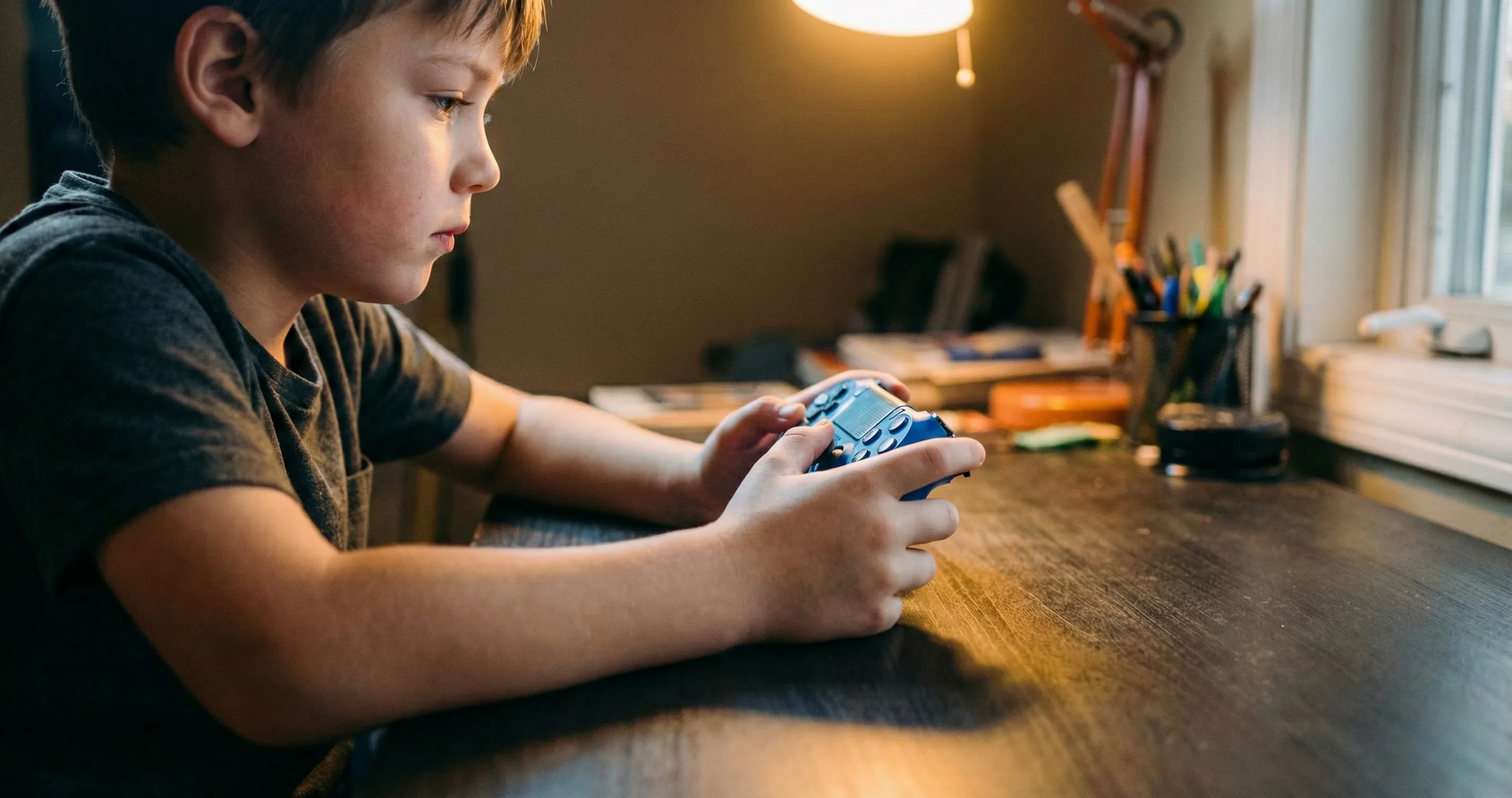
Your child plays video games for hours. They argue when you tell them to stop. They talk about their game constantly and seem uninterested in much else. You are searching for gaming addiction signs because you need to know: is this actual video game addiction, or is this just what being a kid in 2026 looks like? The answer matters, because what you do next depends entirely on which one it is. Overreact to normal enthusiasm and you damage trust. Underreact to a genuine problem and it deepens. This guide will help you tell the difference, recognize the real video game addiction symptoms that distinguish disorder from enthusiasm, and take evidence-based action — from early warning signs to proven prevention strategies.
The clinical research is clear on one reassuring point: the vast majority of children who play video games — even those who play a lot — are not addicted. But a meaningful minority are, and for those families the consequences are serious. Let us look at what the evidence actually says.
Is My Child Addicted to Video Games or Just Enthusiastic?
Before you can address video game addiction kids might have, you need to know if the problem actually exists. The word "addiction" gets used loosely in everyday conversation — "my kid is addicted to Minecraft" is something millions of parents say without literally meaning it (and if that is your situation, Minecraft parental controls are a good starting point). But gaming disorder is a clinically recognized condition, and the distinction between passionate gaming and pathological gaming is well-defined.
Gaming Disorder: The Clinical Definition
In 2019, the World Health Organization included gaming disorder in the International Classification of Diseases (ICD-11). The clinical criteria require three elements occurring together for at least 12 months:
- Impaired control over gaming — the child cannot stop or limit play despite wanting to or agreeing to
- Increasing priority given to gaming over other activities, to the point where gaming displaces sleep, school, friendships, and family life
- Continuation or escalation despite clearly negative consequences — falling grades, lost friendships, physical health decline
The 12-month duration requirement is important. A child who plays intensely during summer break but returns to normal routines when school starts does not meet the clinical threshold. Neither does a child going through a temporary gaming phase after discovering a new title. The pattern must be persistent and cause significant functional impairment.
Passion vs Pathology: How to Tell the Difference
A passionate gamer plays intensely but can still stop when required. They maintain friendships, do reasonably well in school, and engage in non-gaming activities. They may protest when gaming time ends — that is normal — but they ultimately comply and move on.
A child with problematic gaming behavior cannot stop even when they want to. They become distressed or aggressive when gaming is interrupted. They have abandoned previously enjoyed activities. Their world has narrowed to a single focus, and attempts to broaden it are met with extreme resistance.
The question to ask yourself is not "how many hours does my child play?" It is "what happens to everything else in their life because of gaming?" If the answer is "not much," you are likely dealing with enthusiasm, not video game addiction kids need help with. If the answer is "everything is suffering," you have a problem worth addressing seriously.
Gaming Addiction Signs in a Child
Recognizing the signs of gaming addiction child behavior shows requires looking beyond screen time hours. The signs cluster into three categories, and a child showing multiple signs across all three warrants careful attention. For a broader framework on screen-related behavioral changes, see our guide on screen addiction signs in kids.
Behavioral Signs
- Inability to stop — repeatedly exceeding agreed-upon time limits, sneaking gaming at night, or playing before school when they are supposed to be getting ready
- Lying about gaming — hiding how much they play, secretly creating alt accounts, or closing browsers and apps when you enter the room
- Neglecting basic needs — skipping meals, delaying bathroom breaks, or fighting sleep to continue playing
- Loss of interest in other activities — quitting sports, declining friend invitations, abandoning hobbies they previously enjoyed
Emotional Signs
- Withdrawal symptoms — irritability, anxiety, sadness, or restlessness when unable to play. This is one of the most reliable clinical indicators of video game addiction kids may be developing
- Gaming as the sole coping mechanism — turning to games exclusively when stressed, bored, lonely, or upset, with no alternative emotional regulation strategies
- Emotional flatness outside gaming — showing little enthusiasm, motivation, or emotional range when not playing
- Disproportionate anger — extreme outbursts, aggression, or even property destruction when gaming is interrupted or limited
Academic and Social Signs
- Declining grades — not because of inability, but because gaming displaces homework, study time, and cognitive energy
- Social withdrawal — preferring online gaming friends over real-world relationships, declining invitations, avoiding family activities
- Sleep disruption — staying up late to play, difficulty waking up, fatigue during school hours. Gaming before bed is particularly disruptive to sleep architecture in children
- Physical symptoms — headaches, eye strain, weight changes, poor posture, or repetitive strain injuries from extended play sessions
Why Do Kids Get Addicted to Video Games?
Understanding the root causes of video game addiction kids develop — and why most children do not develop it — is essential for prevention. The answer is never "because video games are evil." It is a combination of neurological, social, and environmental factors that converge in specific ways.
The Dopamine Loop
Video games are engineered to trigger dopamine release at precisely calibrated intervals. Every completed level, every loot drop, every competitive victory creates a small neurochemical reward. The developing brain — particularly between ages 8 and 15 — is more sensitive to these dopamine surges than the adult brain, because the prefrontal cortex (responsible for impulse control and long-term planning) is not yet fully developed.
This does not mean all games are equally problematic. Games with variable reward schedules — where the player does not know when the next reward will come — are significantly more compelling than games with fixed, predictable rewards. This is the same mechanism that makes slot machines more addictive than vending machines. Many popular multiplayer and mobile games use this principle extensively.
Social Belonging in Online Worlds
For many children, gaming is not primarily about the game itself. It is about the social world built around it. Their friends are online. Their team needs them. Their guild or clan has expectations. Walking away from the game means walking away from their social group — and for a child already struggling with real-world social connections, that feels impossible.
This social dimension is why kids addicted to video games what to do requires more nuance than simply reducing screen time. If gaming is where all their relationships live, removing gaming without building real-world social alternatives leaves the child isolated in both worlds.
Escape from Real-World Stress
Children dealing with anxiety, depression, bullying, academic pressure, family conflict, or social difficulties are disproportionately likely to develop problematic gaming patterns. The game world offers something the real world does not: predictability, competence, and control. A child who feels powerless at school can feel powerful in a game. A child who feels rejected by peers can feel valued by an online team.
This is not a weakness. It is a rational response to emotional pain. But when gaming becomes the only coping mechanism, the underlying issues go unaddressed and video game addiction kids fall into deepens. Effective intervention must address both the gaming behavior and whatever the child is escaping from.
How to Break Video Game Addiction in a Child
If your assessment indicates a genuine problem, here is a structured approach. Knowing how to break video game addiction child behavior has developed requires patience, consistency, and a willingness to address root causes — not just symptoms.
Step 1 — Assess the Severity
Before making changes, spend one to two weeks observing and documenting. Track how many hours your child plays, what they play, when they play, and — most importantly — what happens when they are not playing. Are they functioning in other areas? Are they getting enough sleep? Are they maintaining any relationships outside of gaming?
This assessment serves two purposes. First, it gives you objective data instead of impressions. Many parents discover during tracking that the situation is less severe than they feared — or occasionally, more severe. Second, it provides a baseline you can measure progress against.
Rate the severity on a simple scale: mild (some signs, basic functioning maintained), moderate (multiple signs across categories, noticeable decline in functioning), or severe (pervasive signs, significant impairment in school, relationships, and health). Your approach should match the severity.
Step 2 — Set Clear, Collaborative Limits
Sit down with your child at a calm moment — not during or right after a gaming session — and have an honest conversation. Share your observations without accusations. "I have noticed that you have been staying up past midnight gaming and your grades have dropped" is factual. "You are addicted and you need to stop" is inflammatory.
Together, establish specific boundaries:
- When gaming is allowed (after homework, chores, and physical activity)
- How long gaming sessions last (with clear stopping points)
- What happens when limits are exceeded (consequences agreed upon in advance)
- What the child gains by following the agreement (earned privileges, not just avoided punishment)
The collaborative element is critical. Research on adolescent compliance consistently shows that children who participate in creating rules are significantly more likely to follow them than children who have rules imposed on them. For more on this approach, read our guide on screen time rules that actually work.
Step 3 — Replace Gaming Time with Real-World Rewards
Reducing gaming creates a vacuum. If you do not fill it intentionally, the child will either return to gaming or become resentful and disengaged. The goal is not to subtract something from their life but to rebalance it.
Effective replacement strategies include:
- Structured physical activities that provide the same competitive and achievement elements gaming offers (sports, martial arts, climbing)
- Social activities that rebuild real-world connections (group classes, clubs, family game nights)
- Creative outlets that provide the sense of mastery games give (building, coding, music, art)
- Connecting earned gaming time to completed responsibilities — so gaming becomes a reward for effort rather than a default state
The last point is particularly important. When a child earns gaming time by completing tasks and responsibilities, the psychological dynamic shifts entirely. Gaming is no longer something being taken away. It is something being earned. This distinction matters more than most parents realize, and it is the foundation of effective alternatives to taking away screen time.
Step 4 — Know When to Seek Professional Help
Family-level strategies work for mild to moderate cases. But some situations require professional support. Seek help from a therapist specializing in adolescent behavioral issues if:
- Your child becomes physically aggressive or threatens self-harm when gaming is restricted
- The problematic pattern persists despite four to six weeks of consistent intervention
- You suspect an underlying condition (depression, anxiety, ADHD) is driving the gaming behavior
- Your child is completely socially isolated outside of gaming
- The gaming behavior is accompanied by other concerning changes (substance experimentation, extreme mood swings, academic failure)
Seeking professional help is not a failure. It is the appropriate escalation when video game addiction kids are experiencing exceeds what family intervention alone can solve. Cognitive behavioral therapy (CBT) has shown strong efficacy for gaming disorder in adolescents, particularly when combined with family therapy components.
Gaming Addiction Prevention for Kids
Prevention is always more effective than intervention. Gaming addiction prevention kids benefit from most is not about eliminating games — it is about establishing healthy patterns before problematic ones develop. If your child does not currently show signs of gaming disorder, these strategies will help keep it that way.
The Earn-Based Model
The most effective prevention framework treats gaming time as something earned rather than something restricted. Instead of setting a flat daily limit and policing it (which creates an adversarial dynamic), connect gaming access to completed responsibilities: homework, chores, physical activity, and family time.
This approach works for two reasons. First, it teaches children that enjoyable activities follow productive ones — a life skill that extends far beyond gaming. Second, it prevents the binge pattern that develops when gaming is unlimited or when restrictions feel arbitrary. The child naturally self-regulates because the system is transparent and fair.
Timily's Task and Chore System combined with its Reward and Redemption System is designed around this exact principle. Children complete defined tasks and earn access to gaming and other screen time as a reward. The system makes the connection between effort and reward visible and consistent, which is what transforms gaming from a source of conflict into a motivational tool.
Family Gaming Agreements
A family gaming agreement is a written document that everyone — parents included — agrees to and signs. It typically covers:
- When gaming happens — specific days and time windows (never before school, not after 8 PM on school nights)
- What gets done first — homework, chores, physical activity, family dinner
- Which games are approved — age-appropriate content, agreed-upon titles
- Where gaming happens — shared spaces only, not behind closed doors
- How we handle disagreements — a calm discussion protocol, not in-the-moment arguments
The power of a written agreement is that it removes in-the-moment negotiation. When your child asks "can I play longer?" the answer is not a subjective judgment — it is a reference to the agreement everyone signed. This also reduces the burden on parents, who no longer have to be the "bad guy" making arbitrary decisions. The agreement is the authority, and both sides helped create it.
For a complete framework on creating these agreements, see our digital detox guide, which covers both the reset phase and the rebuild phase of establishing healthy gaming boundaries.
Keeping Gaming in Shared Spaces
The physical location of gaming matters more than most parents realize. Children who game in their bedrooms with the door closed are significantly more likely to develop problematic patterns than those who game in shared family spaces. The reasons are practical: gaming in shared spaces creates natural social pressure to take breaks, makes it harder to game secretly at night, and keeps parents passively aware of content and duration.
This does not mean hovering over your child while they play. It means the gaming setup lives in the living room or family room, not in the child's bedroom. For portable devices, establish a charging station in a common area where devices stay overnight. These environmental design choices do more to prevent video game addiction kids might otherwise develop than most rule-based interventions.
What NOT to Do: Common Mistakes Parents Make
When parents are worried about their kids addicted to video games what to do becomes an urgent question. Urgency leads to mistakes. Here are the two most damaging ones.
Cold-Turkey Bans Backfire
The instinct to confiscate consoles and delete accounts is understandable. It feels decisive. It feels like you are doing something. But research on video game addiction kids experience consistently shows that abrupt, total removal of gaming produces worse outcomes than gradual reduction with structured alternatives.
Why? Because a cold-turkey ban does several harmful things simultaneously:
- It destroys trust between parent and child, making future collaboration harder
- It eliminates the child's primary social connections without replacing them
- It creates an intense "forbidden fruit" effect that makes gaming more desirable, not less
- It removes your leverage — once you have taken everything away, you have nothing left to negotiate with
- It does not address the underlying reasons the child was gaming excessively in the first place
The exception is a temporary, planned removal as part of a structured digital detox with a clear timeline and the child's understanding of when and how gaming will resume under new terms. That is not a ban. It is a reset with a plan.
Shaming Doesn't Build Self-Regulation
Calling your child "addicted," comparing them negatively to siblings or peers, or expressing disappointment in their gaming habits does not motivate change. It motivates secrecy. Children who feel ashamed of their gaming do not game less — they game the same amount but hide it better.
The clinical approach is descriptive, not judgmental. Instead of "you are wasting your life on that stupid game," try "I have noticed gaming is taking up time that used to go to soccer and hanging out with Jake. I want to help you find a balance that works." The first statement attacks the child's character. The second addresses a specific, observable pattern and offers partnership.
Self-regulation — the ability to manage one's own behavior without external enforcement — develops through practice, support, and graduated autonomy. It does not develop through shame, surveillance, or control. When addressing video game addiction kids are showing signs of, every interaction either moves them toward self-regulation or away from it. Choose your words accordingly.
The Bottom Line for Parents
Video game addiction in kids is real, but it is far less common than anxious headlines suggest. The research indicates that 2-3% of young gamers develop a pattern that meets clinical criteria for gaming disorder. For those families, the consequences are significant and professional help may be necessary.
For the remaining 97%, the solution is not panic or prohibition. It is structure. Children who grow up with clear, collaborative rules around gaming, who earn their play time through completed responsibilities, and who game in shared spaces with engaged parents rarely develop problematic patterns.
The difference between a child who has a healthy relationship with video games and one dealing with video game addiction kids struggle through usually comes down to the system around them — not the games themselves. Build that system proactively, adjust it as your child grows, and stay engaged without being controlling. That is what the evidence says works. That is what actually helps.