
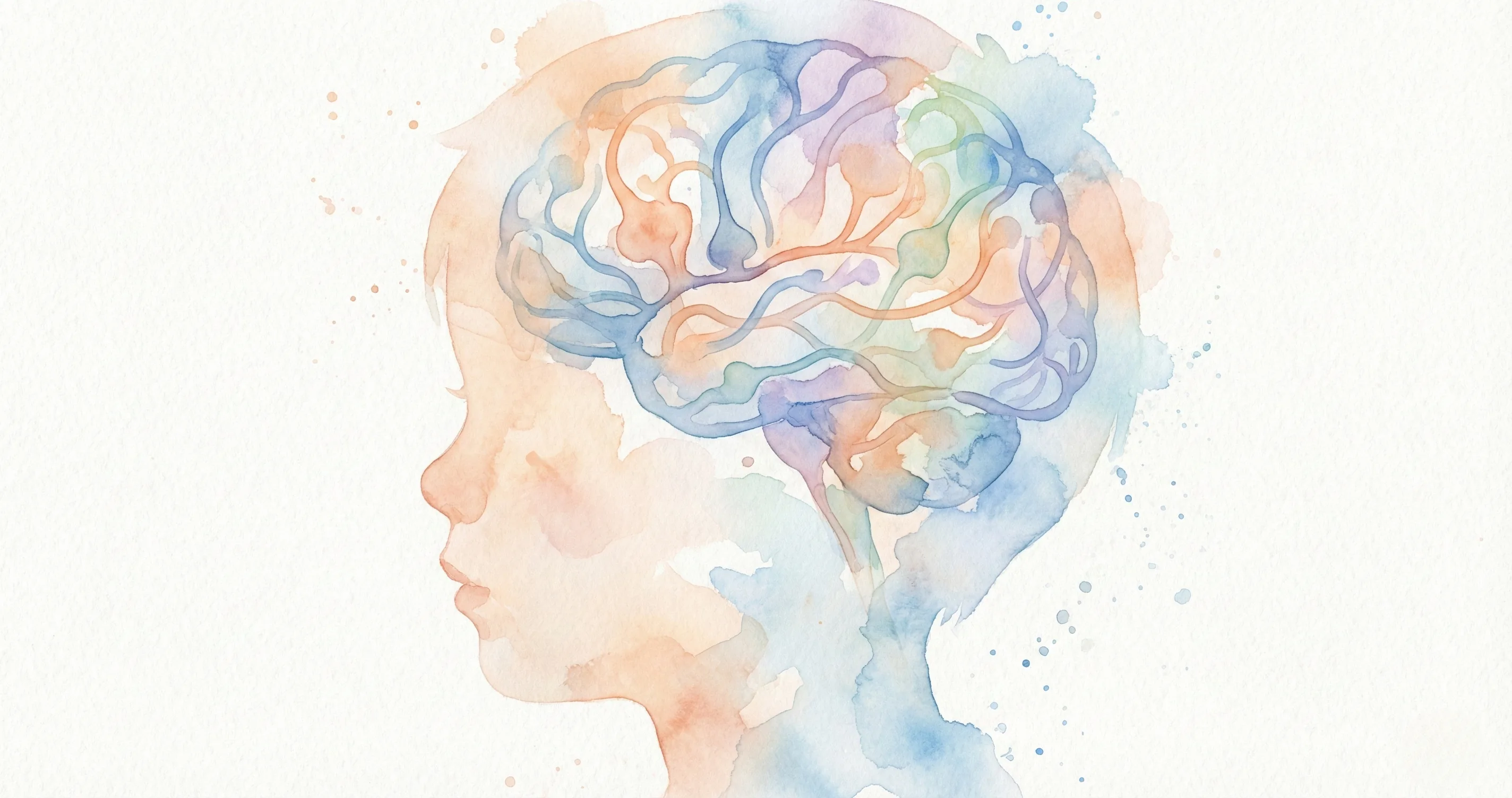
If you have searched for anything about screen time and the developing brain, you have probably encountered two extremes. On one side: alarming headlines claiming screens are “rewiring” children’s brains and creating a generation of attention-deficit zombies. On the other: dismissive takes insisting screens are no different from the television panic of the 1960s. The truth, as researchers who actually study this will tell you, sits firmly in between.
This article reviews what peer-reviewed science actually shows about screen time and the developing brain — from prefrontal cortex maturation and screen time brain development research to dopamine circuits and sustained attention. We will look at real studies with real data, note their limitations honestly, and end with something most science reviews skip entirely: practical guidance for parents who need to make decisions right now, not wait for the next decade of longitudinal research.
The goal is not to scare you. It is to give you the clearest possible picture of what we know, what we do not know, and what you can realistically do about it.
Does Screen Time Actually Damage Kids’ Brains? (The Nuanced Answer)
The short answer: the effects of screen time on the developing brain are real and measurable, but “screen time brain damage” is the wrong framing. The developing brain is extraordinarily adaptive. It responds to its environment — all environments, including digital ones — by strengthening some neural pathways and pruning others. The question is not whether screens change the brain (everything does), but whether those changes are clinically meaningful and whether they are reversible.
The landmark study in this area is the NIH’s Adolescent Brain Cognitive Development (ABCD) Study, which began in 2018 and tracks over 11,000 children aged 9–10 across 21 sites in the United States. Early findings from the ABCD dataset, published in JAMA Pediatrics (2019), revealed that children who spent more than seven hours per day on screens showed premature thinning of the cortex — the outer layer of the brain responsible for processing sensory information and higher-order thinking. Children with more than two hours of daily screen time scored lower on thinking and language assessments.
These are significant findings. But context matters enormously. Does screen time damage brain tissue the way a concussion does? No. What the data suggests is that heavy screen use during critical developmental windows may alter the pace and pattern of normal brain maturation. The question of whether those alterations persist into adulthood — or whether they self-correct when habits change — is still being studied.
How Screens Affect the Developing Prefrontal Cortex
The prefrontal cortex is the brain region most relevant to the screen time conversation. Located behind the forehead, it governs executive functions: impulse control, planning, decision-making, sustained attention, and the ability to delay gratification. It is also the last region of the brain to fully mature, continuing to develop well into a person’s mid-twenties.
This extended development timeline is precisely what makes the prefrontal cortex vulnerable. During childhood and adolescence, the prefrontal cortex is actively wiring itself based on experience. Activities that require sustained attention, problem-solving, and self-regulation strengthen these circuits. Activities that reward impulsivity and rapid task-switching — which describes much of children’s screen content — may not.
What the imaging studies show
A 2019 study published in JAMA Pediatrics by Hutton et al. used diffusion tensor imaging (DTI) to examine the brains of 47 preschool-aged children (ages 3–5). Children with higher screen use showed lower white matter integrity in tracts supporting language and literacy skills — particularly the connections between the prefrontal cortex and regions involved in language processing. White matter integrity matters because it reflects how efficiently different brain regions communicate with each other.
A separate analysis from the ABCD Study, reported by researchers at Cincinnati Children’s Hospital (Hutton et al., 2020), found that higher screen time was associated with reduced structural connectivity in brain regions related to cognitive control and attention — specifically, the prefrontal cortex and its connections to the parietal and temporal lobes.
What this means in practice
A child whose prefrontal cortex is developing under heavy screen influence may show:
- Greater difficulty waiting their turn or delaying gratification
- Trouble shifting attention from a preferred activity (like a game) to a non-preferred one (like homework)
- More impulsive decision-making in everyday situations
- Reduced ability to plan multi-step tasks independently
These are not abstract neurological concepts. They are the exact behaviors that parents report when they notice the effects of screen time on the developing brain firsthand. The encouraging news is that the prefrontal cortex remains highly plastic throughout childhood. Activities that deliberately exercise executive function — structured focus sessions, physical exercise, creative play — can strengthen the very circuits that excessive screen time may weaken. If you are concerned about your child showing some of these patterns, our guide on screen addiction signs in kids provides a clinical framework for distinguishing normal screen enthusiasm from genuinely problematic behavior.
The Dopamine Loop: Why Kids Always Want “Just Five More Minutes”
If you have ever wondered what does screen time do to your brain at a chemical level, the answer starts with dopamine. Dopamine is a neurotransmitter involved in the brain’s reward circuitry. It is not a “pleasure chemical” exactly — it is more accurately described as a motivation and anticipation chemical. Dopamine surges when the brain expects a reward, not just when it receives one.
This distinction matters for understanding screen time dopamine kids experience daily. A social media notification, a new level in a game, a surprise reveal in a video — each of these triggers a small dopamine spike. The brain learns to associate the screen with reward anticipation, which drives the compulsion to keep checking, keep playing, keep watching. The reward is not the content itself. It is the possibility of something interesting happening next.
The tolerance effect
In adults with fully developed prefrontal cortexes, this dopamine loop is manageable. Adults can (usually) recognize the pattern and override it. Children cannot, because the prefrontal cortex — the brain’s “brake pedal” — is still under construction.
Over time, repeated high-dopamine screen experiences can create a tolerance effect. The brain requires more stimulation to achieve the same level of satisfaction. This is why a child who spent 30 minutes on a tablet a year ago now needs an hour to feel satisfied — and why they resist stopping even more intensely. A 2021 meta-analysis published in Psychonomic Bulletin & Review by Parry et al. found consistent associations between media multitasking and reduced sustained attention capacity, with effect sizes that were small but statistically reliable across 118 studies. The pattern was clearest in children and adolescents, where prefrontal regulation is weakest.
Screen time dopamine vs. “real-world” dopamine
The concern is not that screens produce dopamine — so does eating a good meal, playing sports, or completing a puzzle. The concern is that screens produce dopamine with very low effort and at very high frequency. When the brain becomes accustomed to low-effort, high-reward stimulation, activities that require more effort for less immediate reward — reading, practicing an instrument, doing homework — start to feel punishing by comparison.
This is the “always wanting more” cycle that parents observe. It is not that the child is addicted in the clinical sense. It is that the brain’s reward baseline has shifted, making everything that is not a screen feel less rewarding. The good news: this baseline can shift back. Structured screen use, where screen access is earned through effort rather than given by default, interrupts the cycle by reconnecting screen time with delayed gratification rather than instant access.
Screen Time and Attention Span: What Longitudinal Studies Show
The connection between screen time and attention span kids demonstrate is one of the most studied — and most debated — areas in developmental psychology. Parents frequently report that their children cannot focus after screen time, and the research largely supports this observation, though with important caveats.
The longitudinal evidence
A landmark longitudinal study by Nikkelen et al. (2014), published in Developmental Psychology, followed over 1,000 children from infancy and found that television exposure during the first two years of life predicted attention problems at age 7. Each additional hour of daily television was associated with a measurable increase in parent-reported attention difficulties, even after controlling for socioeconomic status, parenting style, and the child’s baseline temperament.
More recent work has shifted focus from television to interactive screens. A 2022 study in JAMA Pediatrics by Heffler et al. examined screen exposure in 2,152 children and found that greater screen time at 12 months of age was associated with atypical sensory processing at 33 months — specifically, “sensation seeking” behaviors that overlap with attention regulation difficulties. Each additional daily hour of screen time at age 1 was linked to a 23% increase in atypical sensory behaviors by age 3.
The mechanism: rapid scene changes and attentional capture
Why would screens affect attention? The leading theory involves what researchers call “attentional capture.” Children’s screen content is designed with rapid scene changes, bright colors, sudden sounds, and constantly shifting stimuli. These features hijack the brain’s orienting response — the involuntary mechanism that directs attention toward novel stimuli. When a child’s brain is repeatedly subjected to high-frequency attentional capture, it may become calibrated to expect that level of stimulation. A classroom, a book, a conversation — none of these change scenes every three seconds.
Lillard and Peterson (2011) demonstrated this experimentally with preschoolers. After watching just nine minutes of a fast-paced cartoon, 4-year-olds performed significantly worse on tests of executive function compared to children who had drawn pictures or watched a slower-paced educational program. The effect was immediate and measurable.
What the data does not show
It is important to note what the attention research does not claim. There is no evidence that moderate, structured screen time permanently reduces a child’s attentional capacity. The effects appear to be dose-dependent: more screen time correlates with larger attention deficits, and the effects are most pronounced with passive, fast-paced content rather than interactive or educational material. For a deeper look at this distinction, see our guide on active vs passive screen time.
Age Matters: When the Brain Is Most Vulnerable to Screen Effects
Not all developmental stages are equally sensitive to screen exposure. The brain undergoes several critical periods where environmental input has an outsized influence on neural architecture. Understanding these windows helps parents make more targeted decisions about when to be stricter and when to relax.
Ages 0–3: the foundation window
During the first three years of life, the brain forms over one million new synaptic connections per second. This is the period when the foundations for language, social cognition, emotional regulation, and sensory processing are laid down. The WHO recommends zero screen time for children under 2 and limited, supervised use for ages 2–3.
The concern during this period is not that screens are toxic, but that they displace the face-to-face interactions, physical exploration, and language exposure that the infant brain needs most. A screen cannot respond to a baby’s coos, adjust its tone based on the child’s emotional state, or provide the tactile feedback of physical play. Every minute spent on a screen during this window is a minute not spent on activities the brain is biologically primed for.
Ages 4–9: the executive function window
This is the period when the prefrontal cortex begins its long maturation process and children start developing executive functions. Self-regulation, working memory, and cognitive flexibility are actively being wired. Screen use during this period is less about total avoidance and more about quality control. Interactive, age-appropriate educational content can support development during this window, while passive or fast-paced entertainment may undermine it.
Ages 10–14: the pruning window
The preteen brain undergoes a process called synaptic pruning, where unused neural connections are eliminated and frequently used ones are strengthened and myelinated (insulated for faster signaling). This “use it or lose it” phase means that the activities a preteen spends the most time on disproportionately shape their adult brain architecture. The effects of screen time on teenage brain development are particularly significant during this window because the neural circuits being pruned are the same ones governing impulse control and decision-making.
A preteen who spends four hours daily on passive screen consumption is effectively telling their brain to optimize for passive consumption. A preteen who splits that time between focused homework sessions, physical activity, creative projects, and moderate screen use is telling their brain to build a more versatile neural toolkit. This is why the preteen years deserve particular attention when it comes to screen habits — and why our guide on screen time before bed emphasizes protecting sleep during this critical period, since sleep is when the brain consolidates the day’s learning and performs neural maintenance.
Active vs Passive Use: Why Not All Screen Time Affects the Brain Equally
One of the most important shifts in screen time research over the past five years has been the move away from measuring total screen time toward measuring types of screen time. This distinction is critical because it fundamentally changes the conversation about how screen time affects child development and reframes what we know about screen time and the developing brain.
Defining active vs passive use
Passive consumption includes watching videos, scrolling social media feeds, and consuming content with minimal cognitive engagement. The brain is receiving stimulation but not actively processing, creating, or responding to it. This is the category most associated with negative outcomes in the research literature.
Active use includes creating digital art, programming, video chatting with family, playing educational games that require problem-solving, and using creative tools. These activities engage higher-order cognitive functions — planning, execution, evaluation — in ways that passive consumption does not.
What the research distinguishes
A 2023 systematic review published in Frontiers in Psychology analyzed 45 studies examining different types of screen use and cognitive outcomes in children. The findings were striking: passive screen use was consistently associated with poorer attention, language development, and executive function outcomes. Active, interactive screen use showed either neutral or mildly positive associations with the same measures.
Przybylski and Weinstein (2017), in a study of over 120,000 English adolescents published in Psychological Science, found that the relationship between screen time and wellbeing followed a “Goldilocks” pattern. Moderate use — particularly of interactive and social screen activities — was associated with slightly better wellbeing than no use at all. Only at high levels of passive consumption did the association turn negative.
The practical implication
This research suggests that asking “how much screen time?” is the wrong question. The right question is “what kind of screen time?” A child who spends 90 minutes building a Minecraft world, coding a simple program, or video-calling grandparents is having a fundamentally different neurological experience than a child who spends 90 minutes watching autoplay videos on YouTube.
For parents, this means that the most impactful intervention is not necessarily reducing total screen time but shifting the ratio of active to passive use. Encourage creation over consumption, interaction over observation, and intentional use over open-ended scrolling.
Can the Brain Recover? What Happens When Screen Time Is Reduced
Here is the part most articles leave out: the same brain plasticity that makes children vulnerable to screen effects also means the brain can recover when habits change. Neuroplasticity is not a one-way street. The developing brain reshapes itself in response to whatever environment it encounters — and that includes an environment with less screen time and more real-world engagement.
The prefrontal cortex remains highly plastic throughout childhood and adolescence. Reducing screen time and replacing it with real-world experiences — physical play, conversation, reading, time in nature — provides exactly the kind of stimulation the prefrontal cortex needs to develop normally. The neural circuits governing impulse control, sustained attention, and delayed gratification strengthen when they are actually used, not when they are bypassed by screens.
Dopamine baseline recovery
When screen time is reduced, the dopamine system gradually recalibrates. Children may go through a “boredom phase” lasting one to two weeks where nothing feels as exciting as screens. This is a sign of recovery, not a problem. The brain is adjusting its reward threshold back to normal levels — relearning how to find satisfaction in lower-stimulation activities like drawing, building, or just playing outside.
What the research suggests
- Attention improvements have been observed within 4–6 weeks of reduced screen time in school-age children
- Sleep quality typically improves within the first week of implementing a screen curfew (no screens 1 hour before bed)
- Social skill development accelerates when screen time is replaced with face-to-face interaction
The earlier you start, the faster recovery happens. A 5-year-old’s brain is more plastic than a 12-year-old’s, meaning habit changes at younger ages produce faster results. But it is never too late — even teenage brains show remarkable recovery capacity. The brain does not stop adapting just because a child is older.
Harvard’s Michael Rich, director of the Digital Wellness Lab, has described digital media as providing “impoverished” stimulation compared to real-world interaction for developing brains. The implication is straightforward: replacing screen time with rich real-world experiences — the kind that involve all five senses, social reciprocity, and physical movement — literally feeds the brain what it needs to recover and continue developing on track.
What Parents Can Actually Do With This Information
Understanding how screen time affects the developing brain is only useful if it leads to action. Here is what the science above translates to in terms of practical parenting decisions.
1. Protect the early years (ages 0–3)
This is the developmental window where the evidence for screen restriction is strongest. Keep screens minimal — ideally zero for children under 2, and limited supervised use for ages 2–3. Prioritize face-to-face interaction, physical play, and language-rich environments. These are not negotiable for healthy brain development.
2. Focus on content quality, not just duration (ages 4–9)
After age 3, the conversation shifts from “how much” to “what kind.” Audit your child’s screen diet. How much is passive consumption versus active engagement? Replace autoplay video sessions with interactive educational content, creative apps, or video calls. Even modest shifts in this ratio can make a meaningful difference.
3. Use structured systems to prevent open-ended dopamine loops
The dopamine research points to one clear intervention: avoid open-ended screen access. When screen time has no defined beginning and end, the brain’s reward system drives continuous use. Structured approaches — like Timily’s Focus Timer, which breaks screen-related activities into defined sessions with clear start and stop points — interrupt the dopamine loop by building pauses and transitions into the experience.
4. Tie screen access to effort, not entitlement
The attention and impulse-control research suggests that the worst pattern is passive, unearned, unlimited screen access. The best pattern is active, earned, structured access. When children earn screen time through homework, chores, reading, or healthy daily routines, the brain learns to associate screens with delayed gratification rather than instant reward — directly counteracting the dopamine tolerance effect.
5. Protect sleep and exercise above all else
If you do nothing else, protect your child’s sleep and physical activity. Both are essential for the brain maintenance and development that counteracts the negative effects of screen exposure. Sleep deprivation amplifies every negative screen-related outcome in the research. Physical exercise promotes neuroplasticity and executive function development. A child who sleeps well and moves regularly is far more resilient to screen effects than one who does not.
6. Model the behavior you want to see
Children’s screen habits are strongly correlated with their parents’ habits. If you are concerned about screen time effects on your child’s brain, audit your own use. Demonstrating intentional, structured screen habits — putting your phone away during meals, reading instead of scrolling before bed — does more than any rule you can set.